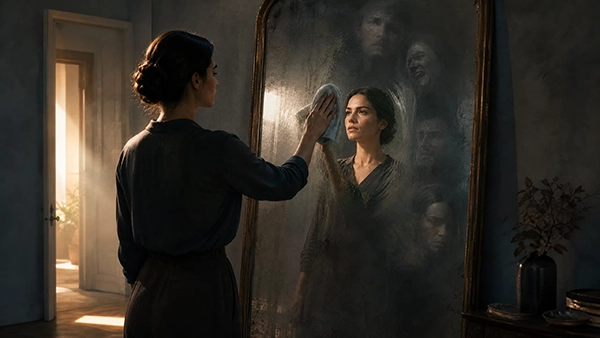
The Illusion of the Stage: Recognizing the Sorcery of Human Narrative
Throughout our lives, we find ourselves deeply drawn to the stories people project about themselves.
We gravitate toward those whose personal narratives carry an undeniable, magnetic pull. For some, the spell is cast through unwavering confidence—an absolute conviction in their success, beauty, or brilliance. For others, it is woven through vulnerability—an intense, convincing aura of being wounded, misunderstood, or in constant need of protection.
We watch these internal spells unfold, fascinated by how far they reach and where they eventually shatter.
Yet, stepping through this world of powerful storytellers teaches us something far more profound than how to weave our own illusions. It teaches us how to wake up from them. The true art lies in learning to distinguish objective reality from the captivating stories we tell ourselves, allowing us to walk with clarity and purpose.
The Architecture of Internal Projection
Those who fail to recognize these emotional projections often mistake them for absolute reality—or label them simply as external manipulation. In truth, human connection frequently functions like a stage where we showcase our internal beliefs.
No one’s internal story can truly bind you unless it resonates with a story you are already telling yourself. The depth and conviction of your self-perception dictate the attention you attract and the energy you cultivate.
+--------------------------+-------------------------------------------------------+
| Projected Identity       | The Nature of the Spell                               |
+--------------------------+-------------------------------------------------------+
| The Victim / Martyr      | Draws energy through perpetual suffering & sympathy.  |
| The Unreachable / Distant| Commands fascination through artificial scarcity.     |
| The Ultimate Overachiever| Demands validation through relentless performance.    |
| The Eternal Protector    | Fosters dependence under the guise of safety.         |
+--------------------------+-------------------------------------------------------+
Across different eras, the specific traits receiving applause may change, but the underlying mechanism remains identical: whatever story you completely convince yourself of becomes your lived experience.
Whether a person anchors their identity in strength, helplessness, anger, wealth, grief, or the thirst for justice, the intensity of that belief creates a powerful lens. It can grow so consuming that it blinds even the one who created it, making them forget that they held the pen all along.
In this sense, every human being is a master architect of their own narrative reality. You are, and so am I.
How We Teach Each Other to Awaken
As we observe one another navigating these personal illusions, a dual process takes place: we learn how to refine our self-expression, but we also discover how to walk through the world without being swept away by emotional turbulence.
- The Driven & Competitive: Those consumed by rivalry or the need to stay ahead may believe they are merely competing. In reality, their intense momentum shows others how to navigate crowded spaces, breathe through pressure, and recognize the limits of endless striving.
- The Overly Protective: Those offering unconditional sanctuary weave a comforting story of ultimate safety. Yet, in doing so, they gently reveal how easily comfort can become a cage, teaching us the delicate balance between refuge and personal growth.
Every narrative we construct is an intricate personal creation. The energy we project outward inevitably serves as a mirror for those around us.
Walking the Thin Line of Reality
We live in a noisy world where objective truth often feels like a fine, quiet thread running through the background, easily drowned out by the roaring narratives of daily life.
As we mature and gain psychological perspective, the captivating pull of dramatic personal stories begins to fade. We stop seeking complex emotional games. Eventually, we arrive at a crucial fork in the road: we either settle into a comfortable, predictable routine, or we choose the quiet path of emotional clarity.
Choosing clarity means stepping off the stage of performance while remaining fully present in the world.
It is the transition from being unconsciously driven by our internal stories to becoming a quiet master of our awareness—present yet unattached, deeply engaged with life, yet no longer bound by its illusions.