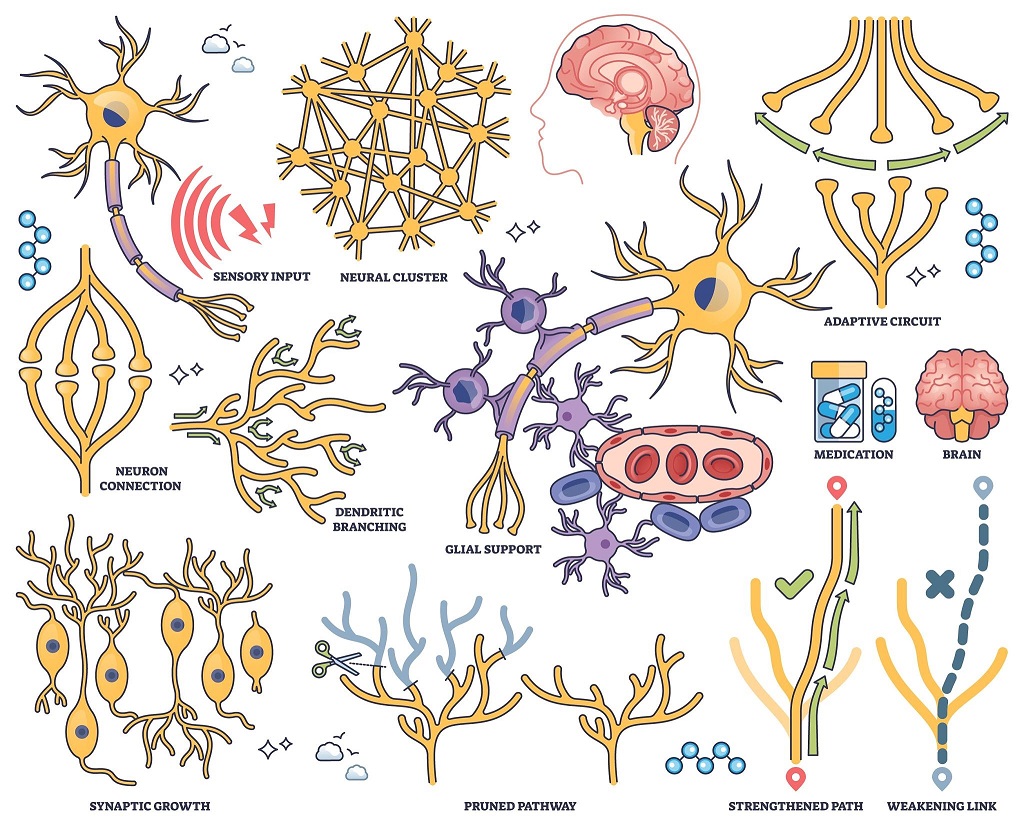
The human brain does not simply emerge fully formed. It undergoes a profound, decades-long architectural transformation, only reaching full structural maturity around the age of thirty. Understanding this development helps us see how our internal mental programming forms, solidifies, and retains the capacity to change throughout life.
The Chronological Blueprint of Neural Mapping
The structural expansion and refinement of the brain follow a strict biological timeline. While the physical volume of the brain settles early in development, the complex cellular highways within it take much longer to mature.
[0-5 Years: Synaptic Surge] ----> [6-12 Years: Peak Gray Matter]
|
[21+ Years: Cognitive Maturity] <--- [13-20 Years: Limbic Tethering]
Early Childhood (Ages 0–5): The Synaptic Explosion
Directly following birth, the infant brain enters a phase of rapid growth. Between the ages of two and four, the brain constructs trillions of synaptic connections. During this hyper-plastic phase, specialized cells called oligodendrocytes begin secreting myelin. This fatty sheath wraps around nerve fibers, insulating the pathways to increase electrical transmission speeds and accelerate white matter growth.
Preadolescence (Ages 6–12): Structural Consolidation
By age six, the brain achieves roughly 95% of its maximum adult mass. The outer gray matter—responsible for complex processing—thickens steadily, peaking around age eight. This expansion includes the prefrontal cortex, which governs logical reasoning. Concurrently, the brain initiates “synaptic pruning,” a process that systematically eliminates underutilized pathways to streamline processing efficiency.
Adolescence to Early Adulthood (Ages 13–20): Integration
During this window, the maturing prefrontal cortex strengthens its physical connections to the limbic system, the brain’s emotional core. This structural integration is crucial for developing emotional regulation, impulse control, and nuanced risk assessment.
Full Adulthood (Ages 21 and Beyond)
In this final phase, total brain volume stabilizes. While gray matter density decreases slightly after adolescence, white matter—the deep network cables linking different brain regions—continues to grow, peaking around age thirty. This structural peak correlates directly with enhanced executive function, advanced problem-solving, and abstract reasoning.
Even after reaching this structural milestone at age thirty, the brain does not stop changing. Through neuroplasticity, the nervous system reorganizes its circuits, builds new pathways, and adapts in response to meaningful life experiences.
Catalysts of Structural Variance
While the general sequence of brain development is universal, the precise rate and quality of neural growth vary from person to person based on distinct environmental and biological factors.
Neurotoxins and Gestational Infection: Prenatal exposure to heavy metals such as lead, alcohol, or illicit substances can cause severe, long-term disruption to neural development. Similarly, maternal infections during pregnancy—such as cytomegalovirus (CMV), rubella, and Zika—or neonatal exposures to herpes simplex (HSV) and syphilis can permanently compromise brain structure.
Genetics: Individual genetic codes dictate the baseline speed of myelin production and direct the efficiency of synaptic pruning, subtly influencing personal cognitive style and emotional traits.
Biological Sex Dynamics: During early childhood, male brains average roughly 10% larger in total volume than female brains, though this size difference has no bearing on general intelligence. However, female gray matter volume peaks and settles earlier, which frequently correlates with earlier development of verbal skills and emotional regulation.
The Blueprint of Developmental Trauma: Chronic early trauma—such as severe neglect, abuse, or domestic instability—can physically alter the brain’s architecture. These prolonged stress states reshape developing neural pathways and alter the baseline production of crucial neurotransmitters like serotonin and dopamine, increasing vulnerability to mood disorders later in life.
Nutritional Deprivation: Insufficient nutrition during gestation and early infancy can limit cell growth and synaptic density. Deficiencies in vital micronutrients like iron, folate, and iodine are particularly damaging to the developing fetal brain.
Environmental Stability: Living in chaotic, high-stress domestic environments can overactivate the child’s neuroendocrine stress response, altering healthy pathway development. Conversely, a lack of regular exposure to language, interactive play, and intellectual stimulation can stall cognitive growth.
Socioeconomic Friction: Chronic poverty and restricted educational access act as systemic barriers to optimal brain growth. Economic hardship often increases the risk of nutritional deficits and household instability, while a lack of quality education limits the environmental enrichment needed to expand complex neural networks.