The Mimetic Trap: Algorithmic Conformity and the Commodification of Leisure
Modern technological infrastructure floods the human nervous system with an unprecedented volume of sensory stimuli. The transition to fully digital operations—from algorithmically driven ecommerce to frictionless remote workspaces—has created a hyper-saturated informational environment.
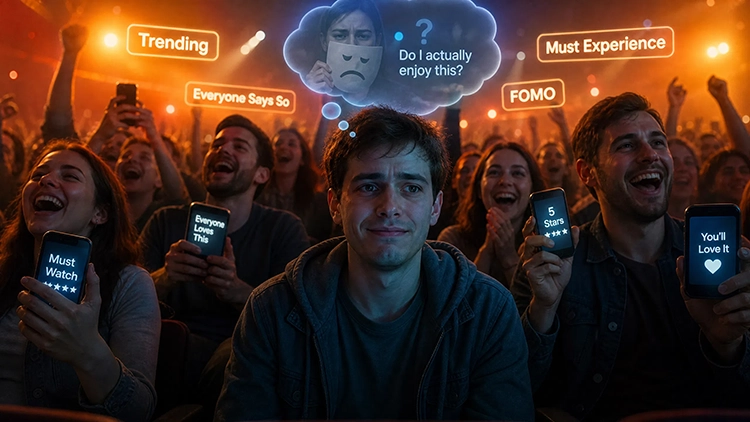
This sensory overload has triggered a massive reliance on external curators. Because evaluating tens of thousands of daily variables causes intense decision fatigue, users rely on digital influencers and curated platforms to filter reality.
This collective outsourcing of choice directly feeds Popüler Kültür (Popular Culture)—a self-reinforcing engine driven by algorithmic recommendation systems and mimetic desire.
[Algorithmic Feed] ──► Mimetic Desire ("I must experience this") ──► Mass System Congestion
│
┌────────────────────────────────────────────────────────────────────────┘
▼
[Homogenized Lifestyle] ──► Loss of Individual Agency ──► Passive Consumer Trap
When a digital asset, destination, or cultural exhibition is prioritized by a central algorithm, it triggers a sudden migration of human attention to a single physical or digital coordinate.
The resulting systemic congestion destroys the original utility of the experience. Venues become overcrowded, servers crash, and spaces designed for quiet reflection or leisure turn into highly stressed, commodified photo opportunities.
The core paradox of modern popular culture is that by attempting to optimize our free time using crowded recommendations, we routinely render that time completely unviable.
The Behavioral Economics of Algorithmic Homogenization
Popular culture does not merely influence buying behavior; it actively alters cognitive structures, shifting individuals from unique, creative agents into passive, highly predictable consumers.
1. The Death of Idiosyncratic Agency
When your input stream is dictated by algorithmic feeds, your preference matrix is systematically calibrated to match the average consumer. This eliminates genuine personal choice. Individuals gradually lose the capacity to discover niche interests, execute independent curiosity, or tolerate activities that do not offer immediate social validation.
+-----------------------------------------------------------------+
|                  THE ATTENTION REACTION MATRIX                  |
+-----------------------------------------------------------------+
| ALGORITHMIC CHOICE   : Passive Consumption, High Congestion     |
| AUTONOMOUS DISCOVERY : High-Yield Personal Utility, Low Friction|
+-----------------------------------------------------------------+
2. The Mandate of Compulsory Hedonism
Modern consumer culture promotes an exhausting psychological demand: you must derive visible pleasure from every activity. This forces individuals to perform happiness for their social networks. If a highly recommended excursion or product fails to deliver an immediate dopamine spike, the user defaults to internal comparison, viewing the lack of enjoyment as a personal failure rather than a predictable result of over-hyped marketing.
3. Chronic Mimetic Competition
Social media platforms function as massive comparative arenas. Users continuously measure their lifestyle metrics—such as travel destinations, aesthetic choices, and cultural currency—against a highly edited stream of peer data. This subtle, unceasing competition forces the brain’s threat-detection system into a permanent defensive posture, driving people to acquire experiences not for their intrinsic utility, but to maintain status within their social circle.
The Autonomy Restoration Protocol: Reclaiming the Processing System
To decouple your executive functions from algorithmic loops and rebuild an authentic, low-friction lifestyle matrix, execute this four-phase system reset:
1.Run an Evidentiary Utility Audit:Phase 1.
Before engaging in any trending activity or purchasing a highly recommended asset, isolate your core motivation. Ask the system: Am I choosing this due to genuine, unprompted curiosity, or am I reacting to a mimetic feedback loop? Do I actually derive real utility from this, or am I just performing an expected lifestyle metric?
2.Implement Aggressive Attention Quarantine:Phase 2.
Establish daily “Dark Windows”—minimum 60-minute blocks where all algorithmic feeds, notification layers, and digital displays are fully deactivated. Use this time to down-regulate your nervous system in a low-stimulus environment, allowing your brain to reset its dopamine baselines.
3.Enforce Strict Need-Based Filtering:Phase 3.
Dismantle the impulse-buy loop by introducing a mandatory cooling-off protocol for any non-essential acquisition. Filter all incoming purchases through binary criteria: Does this solve a verifiable, functional problem in my daily operations, or is it an artificial need generated by external marketing arrays? Discard all assets that fail this filter.
4.Cultivate Low-Density, Off-Grid Discovery Networks:Phase 4.
Deliberately seek out uncurated, off-the-grid spaces, physical books, and unique peer groups that operate completely outside mainstream algorithmic recommendations. Cultivating alternative, low-density inputs builds cognitive resilience and protects your creative originality from groupthink.
Human fulfillment cannot be batched, optimized, or scaled through a centralized recommendation algorithm. You are not under any system obligation to enjoy what the crowd enjoys. True cognitive freedom requires you to aggressively defend your attention, prune out mimetic noise, and protect your right to explore the blank spaces off the map.