Why Personality Disorders Are Just Normal Human Defenses Taken to the Edge
We’ve all met someone whose way of moving through the world feels like trying to solve a Rubik’s cube in the dark. We shake our heads, label them “difficult” or “eccentric,” and go about our day. But if we sit with it long enough, psychology reminds us of something humbling: personality disorders aren’t alien anomalies dropped from another planet. They are simply the ordinary fears, vanities, and defense mechanisms of the human heart, turned all the way up to maximum volume until the machinery breaks.
Since the days of early French and British observers trying to map the human character, we’ve tried to put borders around the messy business of who we are. Today, psychiatry relies on the DSM-5 manual to draw those lines. For a pattern to cross from a quirky personality trait into a true clinical disorder, it has to be stubborn, unyielding across time, foreign to cultural norms, and completely independent of a passing illness or chemical haze.
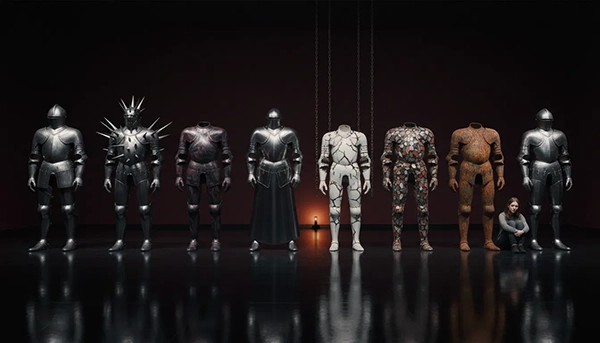
The manual splits these ten profiles into three neat clusters—A, B, and C—like rooms in a museum of human distress. But if you walk through them closely, you realize the glass between the exhibits is terribly thin.
Cluster A: Living Behind Locked Gates (The Eccentric and Suspicious)
This first group belongs to the people who watch the world from behind guarded ramparts, quietly convinced that safety requires a permanent state of distance.
- Paranoid: Imagine walking through life convinced that everyone around you is holding a hidden knife. The paranoid personality doesn’t just lack trust; they treat existence as an endless series of sting operations, scanning every glance and casual remark for proof of betrayal.
- Schizoid: Then there are those who quietly pack up their bags and move to the remote islands of their own minds. Schizoid individuals look at our social rituals—the small talk, the dating, the community gatherings—and feel a profound, exhausting emptiness. They want closeness, but the sheer friction of intimacy feels too heavy, so they retreat into a rich, silent inner fortress.
- Schizotypal: Close by are the schizotypals, walking a little sideways through reality. Their speech is quirky, their thoughts drift into magical thinking, and they carry a quiet, vibrating dread that the universe is watching them with unkind intentions.
Cluster B: The Theater of the Emotional Storms (The Dramatic and Erratic)
Then we cross into Cluster B, where the weather is always volatile, and every interaction feels like a play performed without a rehearsal.
- Antisocial: The antisocial profile—often called sociopathy—doesn’t look like a nervous twitch; it looks like a cold, calculating disregard for anyone else’s boundaries. Rules are merely decorative, and people are instruments to be used and discarded.
- Borderline: Borderline personality lives right on the knife-edge between a roaring fire and freezing water. The fear of being abandoned is so absolute that it burns everything in its path, swinging wildly from fierce adoration to devastating despair.
- Histrionic: The histrionic heart treats life like an endless Broadway stage. If the spotlight dims for even a second, the ground beneath them feels like it’s disappearing, leading to high-drama performances just to make sure they still exist in your field of vision.
- Narcissistic: And the narcissist has built a magnificent, gilded mirror where reality should be. Stripped of authentic empathy, they demand perpetual applause because they suspect, deep down in the dark, that there is nothing worthwhile underneath the gold leaf.
Cluster C: Holding On for Dear Life (The Anxious and Fearful)
Finally, we reach Cluster C, the territory of people who are simply terrified that the floor is about to drop out from under them at any second.
- Avoidant: The avoidant soul longs to belong, but the terror of being judged or found wanting keeps them huddled in the corner of every room, wearing their inadequacy like an invisible, heavy coat.
- Dependent: The dependent personality has outsourced their survival entirely to someone else, terrified of making a single choice on their own, shrinking themselves down so they won’t be left alone in the dark.
- Obsessive-Compulsive Personality Disorder: And then there is the perfectionist—the person who turns rules, color-coded files, and rigid schedules into a fortress against chaos. They believe that if they control every tiny variable, nothing bad can ever touch them, until the system they built to save them becomes the very thing that suffocates their life.
We look at these ten profiles as if they belong to a separate species, categorized neatly behind clinical bullet points. Yet, on any given Tuesday when we are exhausted, scared, or fiercely defensive, we borrow a little piece from almost every single one of them. The armor we wear to keep ourselves safe from the world is remarkably similar to the walls that trap us inside it.
A heavy coat hangs on the back of an empty door, absorbing the shape of shoulders that left hours ago.