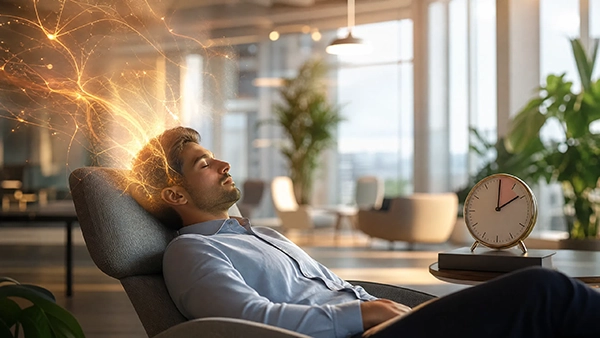
The Power Revolution: Why Closing Your Eyes for 20 Minutes Can Change Everything
Pour yourself another cup, get comfortable, and let’s talk about that dreaded mid-afternoon wall. You know the exact feeling—somewhere around two or three in the clock, your inbox looks like a bottomless pit, your screen starts to blur, and your eyelids feel like they’ve been lined with lead.
Modern hustle culture tells us to push through. It whispers that we should grab a third cup of espresso, chug an energy drink, and grind harder. But what if the most rebellious, productive thing you could do is completely ignore that advice, close your laptop, and take a proper nap?
Let’s sit down and unpack why stepping away for a short midday snooze isn’t a sign of laziness—it’s actually your ultimate secret weapon for creativity and performance.
Why Napping Isn’t a Luxury, It’s Science
Forward-thinking companies like Google figured this out years ago, outfitting their offices with dedicated rest pods and quiet rooms. They aren’t just trying to look trendy; they are responding to hard science.
A short, intentional power nap does something magical: it rescues your brain from exhaustion, resets your nervous system, sharpens your focus, and instantly lifts your mood. When you’re running on fumes, your productivity flatlines, and your risk of making costly mistakes (or nodding off during your commute home) skyrockets. Resting in the middle of the day isn’t stealing time from your employer; it’s investing in the quality of the hours you have left.
The Hidden Heart Benefits
The perks go far beyond a temporary burst of energy. Back in 2007, a landmark study revealed a stunning correlation: individuals who incorporated a regular afternoon nap into their routines experienced up to a 30% lower risk of dying from heart disease, alongside significantly lower blood pressure compared to those who forced themselves to power straight through.
In Good Company: History’s Greatest Nappers
If you feel an ounce of guilt about slipping away for a twenty-minute rest, take a look at the historical company you’ll be keeping.
- Winston Churchill managed to lead the British Empire through the darkest, most high-stakes days of World War II while religiously maintaining his afternoon nap schedule. If Churchill could out-strategize history while sneaking in a midday snooze, you can certainly pause your spreadsheets for a quick recharge.
- The Brilliant Minds: Leonardo da Vinci, Benjamin Franklin, Thomas Edison, Napoleon Bonaparte, and Albert Einstein all swore by the power of the midday rest.
- Salvador Dalí’s Surrealist Secret: The eccentric artist used a brilliant, micro-sleep technique. He would sit in a chair holding a heavy key over a plate. The exact moment he drifted off into a light sleep, his muscles would completely relax, the key would drop, and the sudden clatter would jolt him awake. That fleeting threshold between wakefulness and deep sleep was where he harvested the wild, melting clocks and surreal imagery for his masterpieces. Research actually backs this up: REM sleep and light micro-naps can boost creative problem-solving by up to 40%.
Coffee vs. Power Naps: The Ultimate Showdown
Let’s be honest about our relationship with caffeine. We pour endless money into daily lattes and energy drinks just to stay upright. But caffeine comes with a hidden tax on our actual cognitive capacity.
Sleep expert Professor Sara C. Mednick points out a crucial truth: while caffeine might trick your brain into feeling awake, it doesn’t help you perform complex cognitive tasks well. In fact, it often zaps your verbal and motor dexterity. Short naps, on the other hand, naturally clear out the brain fog and sharpen your visual, verbal, and motor skills all at once.
| Feature | Caffeine / Coffee | The Power Nap |
| How It Works | Blocks sleep receptors temporarily (keeps the stress hormones active) | Naturally lowers adenosine levels and resets the brain |
| Cognitive Impact | Can make you jittery; impairs complex verbal/motor coordination | Supercharges visual, verbal, and motor performance |
| Financial Cost | An ongoing, daily dent in your wallet | Completely free |
| Long-Term Health | Can spike anxiety and cortisol if overdone | Lowers blood pressure and supports heart health |
It’s Built Into Our Biology
We live in a society that insists on a single, rigid block of sleep confined strictly to the night. But if you look at nature, the vast majority of mammals take short, intermittent rest breaks throughout the day.
Humans naturally experience a dip in alertness right after lunch. It’s not a personal failure or a lack of discipline—it’s our biological default setting. As prominent American sleep researcher William Dement famously noted, adult human beings are biologically wired to need a midday rest.
Other cultures have already dropped the stigma. Take Japan, for example. While some Western offices still look down on resting at work, Japanese corporate culture has embraced it. Paul Nolasco, a spokesperson for Toyota in Tokyo, once put it brilliantly: “When we see people napping at midday, we think of them as preparing to work at 100% efficiency in the afternoon. No one feels ashamed here; no one hesitates to take a quick nap.”
Time to Reclaim Your Afternoon
The next time your brain starts fogging up at your desk, don’t reach for that third cup of coffee. Give yourself permission to step away. You aren’t being lazy; you’re aligning with your biology, following in the footsteps of history’s greatest innovators, and giving your mind the grace it needs to shine.
Set a timer for twenty minutes, close your eyes, and let the rest of the world wait.