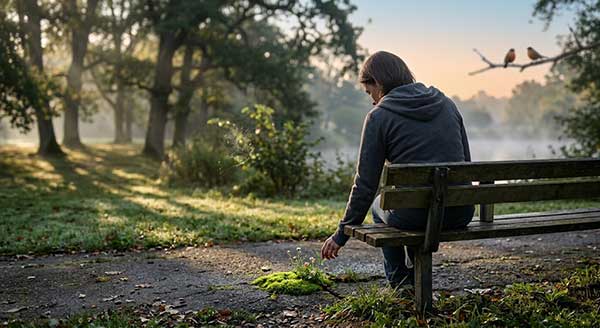
Ten Things Worth Noticing When Everything Feels Heavy
The worst week of my life was also the week I learned the most about gratitude. I was thirty-one, living in a rented room in Pittsburgh, working a job I did not care about, and recovering from a breakup that had hollowed me out. On the worst day, I walked to a corner store in the rain and bought a cup of coffee I could not afford. The woman behind the counter, who had seen me come in every morning for a year, looked at me and said, “Rough one, huh?”
I did not have the energy to lie. I just nodded.
She slid a free donut across the counter and said, “You’re still here, though.”
I think about that donut all the time. Not because it was grand. Because it was small. And in a moment when I could not find a single thing to be grateful for, that small act reminded me that I was still breathing, still standing, still capable of being seen by another human being.
We have been taught that gratitude is something you feel when things go well. When the promotion comes through. When the relationship works. When the money is in the bank. But the research tells a different story. Gratitude is not a reward for good fortune. It is a tool for surviving bad fortune.
What Gratitude Actually Does to the Brain and Body
This is not just feel-good talk. There is real science here. Harvard Health has published repeatedly on the benefits of gratitude, and the findings are consistent. People who regularly practice gratitude report fewer physical symptoms of illness, feel better about their lives, and are more optimistic about the future. The act of noticing what is good — even when the good is very small — changes the chemistry of the day.
A study published in the Journal of Happiness Studies found that gratitude was associated with lower levels of anxiety and depression. It is not a cure. It is a counterweight. When the mind is pulling you toward the negative — which is its natural bias — gratitude pulls you back. Not to deny the hard thing. To make room for the other things.
Robert Emmons, a psychology professor at the University of California, Davis, is one of the world’s leading researchers on gratitude. He has been studying it for decades, and his work is quietly radical. Gratitude, he argues, is not just a feeling. It is a choice. A practice. Something you can do on purpose, even when you do not feel like it. Especially when you do not feel like it.
That was the piece I was missing for years. I thought gratitude had to be earned. I thought I had to wait until I felt grateful before I could practice it. But the practice comes first. The feeling follows. That is the whole trick.
The List That Changed How I See My Days
When I was at my lowest, someone suggested I make a gratitude list. I resisted for weeks. It felt fake. Cheesy. Like something a life coach would tell you to do between juice cleanses. Then one night, in a fit of desperation, I wrote three things on the back of an envelope. The heat in my room. The fact that I had a room at all. The way the rain sounded on the window.
That was it. Three small things. It took thirty seconds. And I slept better than I had in a month.
The list did not fix my problems. The breakup still hurt. The job still bored me. But the list did something else. It reminded me that the whole day was not lost. That there were still moments of warmth, moments of shelter, moments of beauty, even in the middle of all the wreckage.
The source text I worked from offered ten specific things to notice. I have taken those ten and turned them into my own, because the principle is what matters. Here is what I have learned to see, even on the worst days.
The Things We Forget to Notice
First, breath. It sounds ridiculous. But think about it. You are breathing right now. You have been breathing all day. The body has been keeping you alive without asking for anything in return. That is a gift. A small, automatic, relentless gift. When I am spiraling, I try to remember that my lungs are still working. My heart is still beating. The machine is still running. That is not nothing.
Second, laughter. Not the forced kind. The real kind. The kind that surprises you. I have a friend in Denver who calls me when she is at her worst, and somehow, within ten minutes, we are laughing. Not because the hard thing is funny. Because being human is funny. The absurdity of it. The mess of it. Laughter is the body’s way of saying, “We are still here, and we are still alive.”
Third, nature. The sunrise. The moon. The rain. The green of a tree against a gray sky. You do not need to live in the mountains to see it. There is a weed growing through a crack in the sidewalk outside my building. I have watched it all summer. It is still there. Still growing. Still pushing up through the concrete. That weed deserves a thank-you.
Fourth, other living things. My neighbor’s dog who wags his tail when I walk past. The birds that start singing at four in the morning, too early, but still. The fact that we are not alone on this planet. That there are other creatures breathing the same air, living their own strange lives, sharing this world with us.
Fifth, knowledge. The fact that you can learn. That there is always something new to discover. That the brain is not fixed. That you can change your mind, change your habits, change your life. Every book you have ever read, every conversation that opened something in you, every small aha moment. That is worth something.
Sixth, health. Not perfect health. Just the fact that you are here. That your body is working, mostly. That you can walk, or see, or hear, or taste, or feel. I have been sick enough to know that health is not a given. It is a temporary condition. And while it lasts, it deserves attention.
Seventh, music. This one feels almost too simple. But think about what a song can do. It can pull you out of a mood in three minutes. It can make you cry when you need to cry. It can make you drive a little too fast and sing a little too loud. Music is not a luxury. It is a form of medicine.
Eighth, the things money cannot buy. Love, however imperfect. The feeling of being understood. The satisfaction of finishing something hard. The smell of rain on dry ground. A cat purring on your chest. A hug that lasts a second longer than expected. These are the real wealth. The other kind is just math.
Ninth, the people. The ones who call. The ones who text back. The ones who sit with you in the dark without trying to fix it. The ones who are far away but still reachable. The ones who have seen you at your worst and stayed. That is not a small thing. That is the whole thing.
Tenth, healing. The fact that things mend. Not always the way you want. Not always on your schedule. But the body heals. The heart, slowly, heals. The grief gets lighter. The wound becomes a scar. The scar becomes a story. If you are still in the middle of the healing, that is worth thanking too. You are still here. You are still trying. That matters.
How to Start When You Do Not Feel Grateful at All
Do not start with ten. Start with one. One thing. The smallest thing you can find. The pillow under your head. The light coming through the window. The fact that the coffee was hot this morning.
Write it down. Say it out loud. Whisper it if that is all you can manage. The act of naming is the practice. Not the feeling. The naming.
I keep a running list in my phone now. It is not pretty. It is full of tiny, almost embarrassing entries. “The shower was hot.” “Found a parking spot.” “My back did not hurt today.” Each one is a small anchor. Each one reminds me that the day was not all bad. That there were pockets of light, even in the gray.
Harvard Health calls this a “gratitude journal” and suggests doing it daily. But I have learned that the frequency matters less than the noticing. The journal is just a tool. The real work is in the turning. The moment when you decide, against all evidence, to look for something good.
That woman in the corner store was right. I am still here. And so are you. That alone is worth a thank-you. Not a grand one. A small one. The kind you whisper to no one in particular. The kind that takes thirty seconds and changes the rest of the day.