Why Rest Is Productive and How to Actually Recharge Yourself
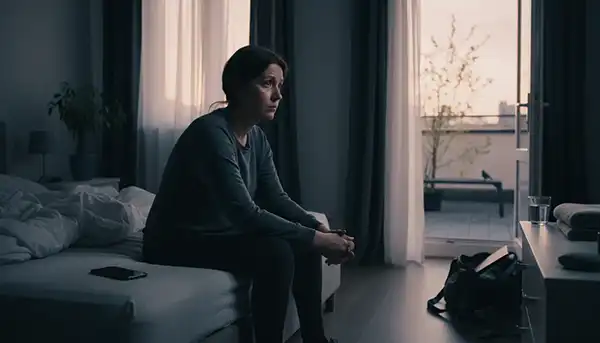
I was thirty-nine years old, sitting in my car in the parking lot of a Trader Joe’s in Minneapolis, trying to remember how I had gotten there. Not the drive. The whole afternoon. It was a Tuesday. I had left my apartment, walked to the garage, driven across town, parked, and walked into the grocery store—and I could not remember any of it. The body had done everything on autopilot. The mind had been somewhere else entirely.
That was the day I had to admit something I had been avoiding for years: I was exhausted. Not the kind of tired that a good night’s sleep fixes. The deeper kind. The kind that settles into your bones and stays there, no matter how much coffee you drink or how early you go to bed.
The kind of tired that comes from never actually resting.
We have a strange relationship with rest in this culture. We treat it as a reward, something you earn after the work is done. Something you get to do when the inbox is empty and the laundry is folded and the deadlines are met. But the work is never done. The inbox refills. The laundry reappears. The deadlines keep coming. And so the rest never comes either.
We are running ourselves into the ground, and we call it productivity.
Why Rest Is Not the Same as Sleep
There is a difference between sleeping and resting, and most of us have never learned what it is. Sleeping is what your body does when it shuts down. Resting is what your mind and body do when they are allowed to recover. The two are related, but they are not the same.
The National Sleep Foundation has been telling us for years that adults need seven to nine hours of sleep a night. But the research on rest goes further. The psychologist and researcher Matthew Edlund, who directs the Center for Circadian Medicine in Sarasota, Florida, argues that sleep is only one form of rest. There is also active rest—the kind you get from physical activity, from social connection, from mental quiet. His book “The Power of Rest” makes a case that most people are not just sleep-deprived. They are rest-deprived.
I was one of them. I slept eight hours a night, sometimes nine. But I woke up tired. Because the sleep was not doing what sleep is supposed to do. It was not restoring me. It was just shutting me down for a while, so I could get up and grind again.
Edlund’s research suggests that rest is not a single thing. It is a set of practices, and different kinds of exhaustion require different kinds of rest. Physical exhaustion responds to physical rest. Mental exhaustion responds to mental quiet. Emotional exhaustion—the kind that comes from caring too much, from carrying other people’s weight, from absorbing the stress of the world—requires something else entirely.
I did not know any of this at the time. I just knew I was tired, and the tiredness was not going away.
How to Notice What Actually Drained You
The first step, according to every expert I have since read, is not to rest more. It is to notice what is actually draining you. Because not all exhaustion is the same, and the rest that works for one kind will not work for another.
I started doing this badly, in a notebook I kept on my nightstand. Every evening, I wrote down two things: what I did that day, and how I felt at the end of it. Not a journal. Just a list. After two weeks, the patterns were impossible to ignore.
The days that drained me most were not the busy ones. They were the ones full of certain kinds of tasks—the meetings where I had to perform, the conversations where I had to be agreeable, the hours spent scrolling through news that made me feel helpless. The days that left me feeling light were the ones with fewer inputs, fewer performances, fewer demands on my attention.
The researcher and author Cal Newport, who writes about focus and attention in the digital age, argues that the modern exhaustion crisis is not primarily about overwork. It is about overstimulation. The brain was not designed to process the volume of information we feed it every day. Every notification, every headline, every half-read article—they all extract a toll. The tiredness we feel is not just from doing too much. It is from absorbing too much.
I started paying attention to that. The difference between the tired that came from effort and the tired that came from input. They felt different in my body. The effort-tired was satisfying, the way your muscles feel after a long hike. The input-tired was hollow, a kind of buzzing emptiness that made me want to lie down and scroll at the same time.
The noticing did not fix anything. But it gave me a map. And with the map, I could start making different choices.
The Different Kinds of Tiredness You Might Be Feeling
I have learned, slowly and incompletely, that there are at least three kinds of exhaustion, and they require different things.
Physical exhaustion is the easiest to recognize. Your body aches. Your eyes hurt. You feel heavy. The cure is usually simple: sleep, movement, good food, time. The body knows how to recover if you let it.
Mental exhaustion is trickier. It comes from too much thinking, too much deciding, too much problem-solving. The cure is not necessarily sleep. It is often the opposite—a walk, a shower, something that gives the mind a chance to wander without a task. The psychologist and researcher Anna Lembke, at Stanford University, writes about the importance of “dopamine fasting”—not as a gimmick, but as a way of giving the brain a break from the constant stimulation that keeps it in a state of low-grade arousal. The mind needs silence. It needs boredom. It needs empty space.
Emotional exhaustion is the one most of us do not talk about. It comes from caring too much, from holding other people’s pain, from being the strong one for too long. The cure is not rest in the usual sense. It is connection. It is being with someone who lets you be the tired one for a while. The researcher and author Brené Brown, at the University of Houston, has written extensively about this. The people who burn out emotionally are not the ones who care too little. They are the ones who care without ever being refilled.
I had all three. Most of us do. The trick is learning which kind you are dealing with on any given day, and responding accordingly.
The Phone That Teaches Us About Ourselves
Here is an uncomfortable thought. We take better care of our phones than we do of ourselves.
My phone tells me when it needs charging. It gives me a warning at twenty percent, then at ten, then it starts dimming the screen to conserve energy. If I let it die completely, it takes a while to come back. And I would never, ever stand in the middle of a busy day and say, “I don’t have time to charge my phone. I’ll just push through.”
But that is exactly what I do with my own body. I push through the twenty percent warning. I ignore the ten percent warning. I dim my own screen, metaphorically speaking, and keep going, and then I wonder why I collapse.
The phone is not a perfect metaphor, but it is a useful one. Because the phone does not judge me for needing to recharge. It just needs what it needs. The battery drains, and the charging restores it. There is no moral dimension to it.
I am trying to treat myself with the same neutrality. Not “I should rest more” but “I am at twenty percent. It is time to plug in.”
What Recharging Actually Looks Like
The rest that works is not always the rest we expect.
For me, recharging looks like this: a walk around the lake without my phone. A bath in the middle of the day, not because I have earned it but because I need it. A conversation with a friend who makes me laugh. An hour of doing nothing, on purpose, without calling it meditation or mindfulness or anything else. Just nothing.
The writer and researcher Alex Soojung-Kim Pang, in his book “Rest,” makes a case that rest is not the absence of work. It is a skill, and it can be learned. He argues that the most productive, creative people are not the ones who work the longest hours. They are the ones who have learned to rest deeply, so that the work they do is actually sustainable.
That is the piece I keep coming back to. Rest is not the reward for good work. It is the precondition for it. The exhausted brain does not produce good work. It produces work that looks like effort but is actually just survival.
I am trying to learn this. Not all at once. Not perfectly. But I am trying.
A Note for Those Who Feel Guilty for Resting
I know that feeling. The guilt that rises when you sit down for ten minutes and think, I should be doing something. The voice that says rest is for the weak, for the lazy, for people who have their lives together enough to afford it.
That voice is wrong. Rest is not a luxury. It is maintenance. It is how you keep the machine running. And the machine—your body, your mind, your heart—is the only one you get.
If the exhaustion feels deeper than rest can reach—if you have been tired for months, if the things that used to recharge you no longer work, if the heaviness has become a constant companion—please talk to someone. A doctor. A therapist. A friend who will not try to fix you but will sit with you. The National Alliance on Mental Illness has resources. There is no shame in asking for help. It is not a failure of discipline. It is a form of care.
The body knows what it needs. It has been telling you all along. The fatigue is not a character flaw. It is a signal.
The signal is simple: Stop. Rest. Recharge.
And the stopping, it turns out, is not the end of the work. It is the beginning of the next thing, whatever that thing might be.
The phone is on the charger now. It is at eighty percent. By the time I finish this sentence, it will be at eighty-three.
I am learning to treat myself with the same care. Not because I deserve it. Because I need it.
And so do you.
The next time you feel the tiredness rising, do not push through. Pause. Ask yourself what kind of tired it is. Ask yourself what would actually refill you.
Then do that. Even for ten minutes. Even if the voice says you should not.
The voice will always say that. It is the voice of a machine that has forgotten it is a body.
The body remembers. The body knows. And the body, if you let it, will show you the way back to yourself.
The rest is not the enemy of the work. The rest is the work. The deepest, quietest, most necessary work there is.
So rest. Not because you have earned it. Because you are alive, and the living requires it.
The phone is at eighty-five percent now. It will be at a hundred soon.
And I, for the first time in a long time, am beginning to understand that I am allowed the same.
That is the whole thing. The only thing. The thing worth practicing.
The practice of returning to yourself, again and again, and letting yourself be human. Which is to say: letting yourself rest.