What Investing Teaches You About Time: Why the Long View Is the Only View That Matters
The mistake I made with my first real investment was not choosing the wrong stock. It was choosing the wrong relationship with time. I was twenty-seven years old, working as an architect in Portland, Oregon, and I had just received a small inheritance from my grandfather—a man who had never earned more than a middle-class salary in his life but had quietly saved and invested for fifty years. He left me enough to open a brokerage account, and I did what every impatient twenty-seven-year-old does. I tried to get rich quickly.
I bought a stock I had heard about on a podcast. It went up. I felt brilliant. Then it went down. I felt terrified. I sold at a loss, bought something else, repeated the cycle for eighteen months, and ended up with less money than I started with. The problem was never the investments. It was the timeline. I was trying to sprint a marathon.
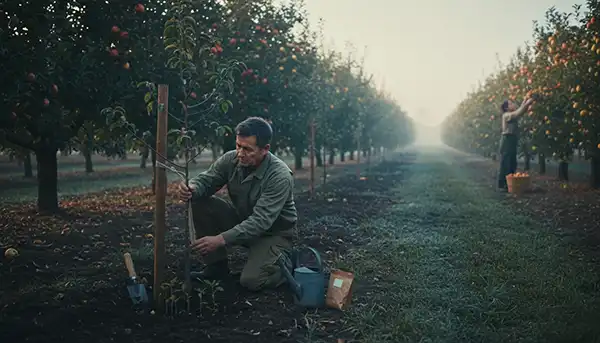
My grandfather, the man who left me that money, never once tried to sprint. He simply bought a small basket of American companies, reinvested the dividends, and waited. For fifty years. That was his entire strategy. And that strategy, boring as it sounds, is the one that actually works.
Time is the only variable in investing that cannot be rushed, hacked, or optimized. And yet it is the one we most want to outrun.
Why Optimism Is the Foundation of Any Good Investment
There is a line I keep taped to the inside of my notebook: No one who is pessimistic about the future can be a good investor, because the investment world is built on the belief that tomorrow is worth owning. I do not remember where I first heard it, but the truth of it has held for as long as I have been paying attention.
Investing is not really about money. It is about a worldview. It is a bet, placed daily, that the world will keep turning, that companies will keep making things, that people will keep building and buying and improving. The pessimist cannot make that bet. Not because the pessimist is less intelligent, but because the pessimist’s relationship with the future is built on fear, and fear makes the long view impossible.
The legendary investor Warren Buffett has said something similar in his own plainspoken way. He once wrote that American business has always been a bet on the future, and that anyone who bet against it over the long term has been on the wrong side of history. The reason is not that America is flawless. It is that human beings are relentlessly inventive, and the market, over decades, captures that inventiveness.
But optimism is not the same as recklessness. The distinction matters. I am not talking about the kind of optimism that ignores risk. I am talking about what I have come to call cautious optimism: the belief that the future is worth participating in, paired with the humility to know you cannot predict exactly how it will unfold. That pairing is the foundation of every sound financial decision.
The psychologist Daniel Kahneman, who won the Nobel Prize for his work on human judgment, spent decades showing that we are terrible at predicting the future. We overestimate what we know and underestimate what could go wrong. The antidote is not pessimism. It is humility. The cautious optimist knows that bad things will happen and that the long view will still be worth it.
Why You Cannot Rush Something That Is Meant to Take a Lifetime
I know an architect in Seattle, a woman in her sixties named Helen, who once told me that a truly good building takes at least five years. Not because construction is slow. Because getting the client to understand what they actually need, refining the design, letting the materials teach you what they want to do—all of that takes time. “You cannot rush the good stuff,” she said. “The good stuff has its own clock.”
The same is true of investing. The good stuff—the compounding, the dividends reinvested, the slow accumulation of value—has its own clock. It cannot be sped up. It can only be participated in, year after year, with patience and attention.
The author Morgan Housel, in his book “The Psychology of Money,” makes this point beautifully. He argues that the most important investing skill is not intelligence or analysis. It is patience. He tells the story of how Warren Buffett made the vast majority of his fortune after the age of sixty-five, not because he suddenly got smarter, but because he had been compounding for so long. The money grew because the time grew.
That is the part I could not grasp at twenty-seven. I wanted the results without the years. But the years are not a tax on the results. They are the results.
What It Actually Means to Treat Money Management as a Craft
We tend to think of professions like architecture or medicine as skills that require years of study and practice. We accept that a doctor does not become a good doctor in a weekend. We accept that an architect does not become a good architect by reading one book. And yet when it comes to money, we expect to figure it out quickly, without training, without practice, without the slow acquisition of judgment.
That expectation is dangerous. Because money management is not a talent. It is a craft. It is learned the way all crafts are learned: through repetition, through mistakes, through the gradual development of an eye for what works and what does not.
The financial writer Carl Richards, who spent years as an advisor and now draws simple sketches about money, often says that the goal of financial planning is not to eliminate uncertainty. It is to make decisions you can live with. That is a craftsman’s mindset. It does not promise perfection. It promises durability.
I have come to see my own financial life as a craft that is never finished. I read. I make mistakes. I course-correct. I do not expect to ever be done. That is not a failure. That is the nature of the work.
The Pause That Makes the Long View Possible
There is a skill I did not have at twenty-seven and am only now learning to practice. It is the ability to pause. Not to freeze. To pause. To sit with a decision before making it. To let the fear or the excitement or the boredom rise and fall without acting on it immediately.
The teacher and author Tara Brach calls this “the sacred pause.” It is the moment when you stop running from the feeling and simply let it be there. In investing, the pause is what allows you to separate a good long-term decision from a reaction to market noise.
The market is always making noise. It goes up. It goes down. The financial news is always shouting that something is urgent. The pause is the quiet space where you remember that nothing is as urgent as it feels. The long view does not require constant action. It requires constant returning.
I do this badly most days. But I am learning.
Where This Leaves You
I am not going to pretend I have mastered time. I still check my investments more often than I should. I still feel the pull of impatience when the market dips. The old self—the one who wanted to sprint—is still in there, whispering that there must be a shortcut.
But I do not listen as much as I used to. I have learned that the shortcuts are mostly traps, and that the only path that actually works is the one my grandfather walked, and the one Helen walks with her buildings, and the one every craftsman has always walked. The path of showing up, day after day, for the thing that takes a lifetime.
The time is not your enemy. It is the medium in which the work happens. The compounding. The learning. The slow, unglamorous accumulation of wisdom and value.
You cannot rush it. You can only enter it.
And the entering, it turns out, is the whole thing. Not the arrival. The participation. The daily practice of believing that tomorrow is worth owning, and then acting like it.
The inheritance my grandfather left me was not just money. It was the example of a life lived in the long view. A life that did not try to sprint.
I am still learning to follow it.
But I am trying. And that trying, carried across enough years, might just be enough.