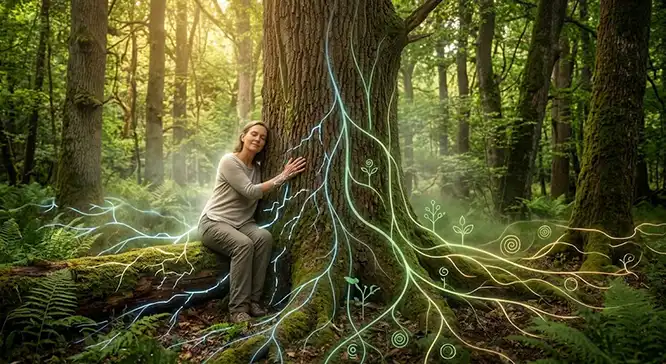
Ecotherapy Explained: Why Nature Heals What Medicine Often Misses
I’ve never met anyone who feels worse after spending time in a forest or by the ocean. There’s something almost embarrassingly obvious about the healing power of nature—we know it intuitively, long before any researcher puts numbers to it. A walk through the park, a few minutes watching birds, the sound of waves against the shore. These aren’t just pleasant distractions. They’re active interventions in your nervous system.
The short answer to whether ecotherapy actually works is yes—and the evidence for it is stronger than most people realize. It’s not just about feeling good. It’s about measurable shifts in stress hormones, heart rate variability, and even immune function. What’s interesting is that we’ve known this for a long time. We just forgot.
What Ecotherapy Actually Is
Ecotherapy is exactly what it sounds like: therapy that happens in or with nature. But it’s not just taking a walk and calling it treatment. It’s a structured, intentional approach that uses the natural world as a partner in healing. Sometimes it’s a walk with a therapist. Sometimes it’s gardening. Sometimes it’s simply sitting in a park and paying attention.
The field sits at the intersection of psychology and ecology. It’s based on the understanding that human health and planetary health are connected—not metaphorically, but literally. You can’t fully heal in a context that’s disconnected from the environment that shaped you. And we’ve been disconnected for a long time.
Despite how new the term sounds, the practice isn’t new at all. Both Freud and Jung were known to conduct sessions outdoors occasionally. They understood something that got lost in the professionalization of therapy: that the setting matters, and that nature has a calming effect that a sterile office simply can’t replicate.
The Roots of Ecopsychology
Before ecotherapy, there was ecopsychology—a field that emerged in the 1950s through the work of Robert Greenway. He started teaching courses on the subject at Sonoma State University in 1968, long before it was fashionable to talk about the psychological benefits of nature. Twenty years later, one of his students, Elan Shapiro, started an informal discussion group on psycho-ecology. That group gained enough traction that Theodore Roszak, a social historian, wrote “The Voice of the Earth” in 1992, which formalized ecopsychology as a theoretical framework.
The core insight is that we’ve made a fundamental error in psychology. We’ve treated humans as separate from nature, as if our minds exist in a vacuum. But we’re not separate. We’re part of an ecosystem. And when that ecosystem is damaged, we’re damaged too. Conversely, when we connect with it, we heal.
The Science Behind the Intuition
The research on nature and mental health has grown substantially in recent years. A 2018 study published in Frontiers in Psychology examined different forms of nature therapy and their effects on veterans with PTSD. The results were striking. Adventure therapy, green-space-based therapy, and wildlife therapy all helped regulate emotions, manage symptoms, and build a sense of purpose.
These aren’t just subjective reports. There are measurable biological changes. Time in nature lowers cortisol. It reduces blood pressure. It shifts nervous system activity from fight-or-flight to rest-and-digest. The mechanisms are still being studied, but the effect is consistent across populations.
What I find particularly compelling is that you don’t need a therapist to get some of these benefits. A walk in a park during lunch, sitting outside and listening to birds, watching the movement of clouds—these small acts have real effects. They’re not a replacement for clinical treatment. But they’re not nothing either.
A Question to Sit With
When was the last time you spent a full hour in nature without checking your phone? Not a hike with a podcast in your ears. Not a walk where you’re mentally running through your to-do list. Just being there. Just noticing. I’ve found that this isn’t a small distinction. It’s the difference between using nature as a backdrop and actually connecting with it.
The studies on ecotherapy suggest that it’s not just being outside that matters. It’s the quality of attention you bring to it. If you’re in a forest but you’re scrolling through social media, you’re not getting the same effect. The connection requires presence.
The Office Version of Ecotherapy
Some therapists have adapted ecotherapy principles for indoor settings. They use plants, nature sounds, and scents like grass or rain to create a therapeutic environment even when they can’t go outside. This isn’t a perfect substitute, but it’s an acknowledgment of the principle: nature has a measurable calming effect, and we can bring some of that indoors.
The distinction matters, though. The most powerful version of ecotherapy is the version that gets you outside—in the actual presence of trees, water, and open sky. The indoor adaptation is a fallback. A recognition of constraints, not an equal alternative.
What I’ve Learned About Nature and Nervous Systems
I used to think of time in nature as a pleasant break. Something to do when I had the time. But I’ve started to understand it differently. It’s not a break from stress. It’s a regulation of it. The nervous system needs periods of low stimulation to reset. And nature—real nature, not the city park with traffic noise—provides that in a way few other environments can.
There’s a reason why forest bathing, or shinrin-yoku, has become popular in Japan and beyond. It’s not just a trend. It’s a recognition that we’ve evolved in natural environments and that our physiology hasn’t adapted to the artificial environments we’ve built. The mismatch creates stress. The return to nature reduces it.
The Connection Between Self-Care and Earth-Care
This is the part that stays with me. The idea that a healthy planet and healthy people are connected isn’t just abstract. It’s practical. If you’re not taking care of yourself, it’s harder to take care of the world around you. And if the world around you is damaged, it’s harder to feel whole.
There’s a symmetry here that I find both humbling and motivating. The same attention that heals you is the attention that connects you to something larger than yourself. The same care that soothes your nervous system is the care that makes you more aware of what you’re part of. And that awareness, in turn, can lead to action.
A Few Things I’ve Noticed
Most people carry at least some stress that could be eased by more time in nature. Not all of it, but enough. And yet most of us don’t prioritize it. We treat it as optional. As something to do if we have time. But the research suggests it’s more foundational than that.
I’ve also noticed that the people who seem most grounded, most resilient, often have a strong relationship with the natural world. Not in a performative way. Just in a practical way. They spend time outside. They notice the seasons. They have a sense of being part of something larger than their immediate concerns.
What I Keep Coming Back To
The more I learn about ecotherapy, the more I think it’s not really a niche treatment. It’s a reminder of something we’ve known all along. We’re not machines. We’re not separate from our environment. We’re living systems embedded in larger living systems. And when we forget that, we get sick.
The therapy itself is simple. Not easy. But simple. It involves showing up, paying attention, and letting the natural world do what it does. That’s not a cure for everything. But it’s a foundation. It’s a way of reminding yourself that you’re part of something larger than your own worries.
Let Me Be Honest About Something
I’m not great at this. I spend too much time indoors. I look at screens more than I look at trees. I know what the research says, and I still don’t always prioritize it. That’s not a failure. It’s just where I am. And noticing it is the first step toward changing it.
The point isn’t to be perfect about nature time. The point is to do it more often. To not let the perfect become the enemy of the good. A few minutes in a garden is better than nothing. A short walk in a park is better than staying inside. Small doses add up.
What I Wonder About the Future
There’s something at stake here that goes beyond individual wellbeing. As climate change accelerates, the natural spaces that support ecotherapy are under threat. If we lose those spaces, we lose one of the most accessible and effective tools for mental health. That’s not just an environmental issue. It’s a public health issue.
The same forests that calm your nervous system also absorb carbon, support biodiversity, and sustain communities. The same oceans that restore your sense of peace also regulate the climate. The connection between personal healing and planetary healing isn’t a metaphor. It’s the reality we’re living in.
Where This Leaves Me
I’m not going to pretend I have all the answers about ecotherapy. I’m still learning. But what I’ve learned so far is enough to take it seriously. It’s not a luxury. It’s not an indulgence. It’s a form of care—for yourself and for the world you’re part of.
The next time you’re feeling overwhelmed, try this: go outside. Find a patch of green. Sit there for a few minutes without any particular goal. Just be present. Notice what you see, what you hear, what you feel. It won’t solve everything. But it might remind you that you’re part of something larger than your stress. And that reminder, in itself, is a kind of therapy.