Misophonia Explained: Why Certain Sounds Make You Unreasonably Angry
You’re sitting at a table with friends. Someone starts chewing. Not loudly, just normally. But something in you snaps. Your jaw tightens. Your heart rate spikes. You feel a wave of irritation that makes no sense—because the person isn’t doing anything wrong. They’re just eating.
If this sounds familiar, you’re not alone. And you’re not just “being difficult.”
The short answer to whether misophonia is real is yes—it’s a genuine neurological condition, not a personality flaw. And the more we learn about it, the clearer it becomes that this isn’t about being overly sensitive. It’s about a brain that processes certain sounds differently. The condition has been recognized since 2001, though it likely existed long before we had a name for it.
What Misophonia Actually Means
The word comes from ancient Greek. “Miso” means hatred. “Phonia” means sound. Hatred of sound. That sounds dramatic, but for people who experience it, the word fits. It’s not about disliking noise in general. It’s about specific sounds—often ordinary, everyday sounds that most people barely notice.
Chewing. Breathing. Sniffling. Pen clicking. Keyboard tapping. The sound of someone eating an apple. The sound of someone swallowing. The sound of someone clearing their throat.
For someone with misophonia, these sounds aren’t just annoying. They’re unbearable. They trigger a visceral reaction that feels almost primal. Fight or flight. Anger. Panic. Sometimes even disgust. The reaction is immediate and overwhelming.
The Brain Differences That Explain It
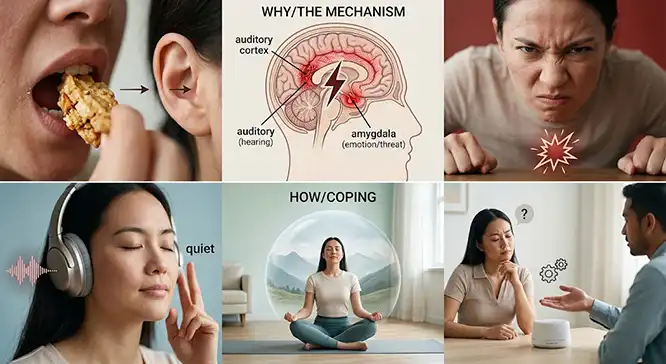
Recent MRI studies have found actual structural differences in the brains of people with misophonia. When they hear trigger sounds, their brains respond differently than neurotypical brains do. It’s not imagined. It’s measured. It’s real.
Dr. Marsha Johnson, an audiologist who has studied misophonia for over twenty years at the Oregon Audiology Clinic, describes the response as “a tsunami of negative reactions.” That’s not an exaggeration. The reaction is automatic and overwhelming, hitting the person before they’ve even consciously registered what they’re hearing.
The brain identifies the sound as a threat and reacts accordingly. Adrenaline and norepinephrine are released. Heart rate and breathing accelerate. Muscles tense. Blood vessels constrict. Pupils dilate. The body is preparing for danger—even though there is no danger.
A Question to Sit With
When was the last time you felt that spike of irrational anger at a sound? Not annoyance. Real, visceral anger. Did you recognize it for what it was, or did you just feel guilty for being so irritable? That guilt is common, but it’s misplaced.
What Triggers Misophonia
The triggers vary from person to person, but there are patterns. Mouth sounds are the most common—chewing, swallowing, lip smacking, throat clearing. These are the sounds that most frequently send someone with misophonia into that spiral of anger and distress.
But the list is longer than most people realize. Sniffling. Foot tapping. The rustling of paper. The ticking of a clock. The sound of someone breathing. Birdsong, sometimes. Crickets. The hum of a refrigerator. Someone clicking a pen repeatedly. The sound of a car door slamming. The sound of someone typing.
For some people, visual triggers are just as powerful. Seeing someone bounce their leg. Watching someone touch their face repeatedly. Seeing hair being twirled. The visual and the auditory can combine to create an even stronger reaction. It’s not just about sound—it’s about the whole experience of being around certain stimuli.
Who Gets It and Why
Researchers are still trying to understand the causes, but some patterns have emerged. Misophonia often begins before puberty, with the first symptoms appearing around ages nine to twelve. It’s more common in women than in men. People with misophonia tend to have higher IQs than average, though researchers aren’t entirely sure why that connection exists.
There’s also a strong genetic component. It tends to run in families. If one person in a family has it, others are more likely to have it too. And it frequently co-occurs with other conditions: OCD, anxiety disorders, Tourette syndrome, and tinnitus. The overlap isn’t coincidental. These conditions share something neurologically, even if researchers haven’t pinpointed exactly what that is yet.
What the Symptoms Actually Look Like
The primary symptom is an extreme reaction to specific sounds. But that reaction takes different forms. Anger is common. So is disgust. Anxiety. Avoidance. Sometimes verbal or physical aggression, though that’s usually more about escape than attack. The person isn’t trying to hurt anyone—they’re trying to get away from something they can’t tolerate.
The physical symptoms are real too. Elevated heart rate. Sweating. Muscle tension. Increased blood pressure. A feeling of being trapped or overwhelmed. The body is responding as if there’s a genuine threat, even though the threat is just someone eating soup. The autonomic nervous system is activated, and it takes time to calm down.
Some people report feeling rage so intense it scares them. Others feel so much distress that they avoid social situations entirely. The condition can be profoundly isolating. It affects relationships. It affects work. It affects daily life in ways that people without it can’t fully understand.
A Few Things I’ve Noticed
People with misophonia often learn to hide it. They feel ashamed of their reactions. They know the sounds aren’t objectively threatening. They know the person making the sound isn’t doing anything wrong. But knowing that doesn’t stop the reaction. The shame adds a layer of suffering on top of the original distress.
I’ve seen people develop elaborate coping strategies. Eating alone. Wearing headphones at family dinners. Excusing themselves from meetings when someone starts tapping a pen. Avoiding spaces where triggers are likely. Creating elaborate soundscapes to mask the sounds they can’t handle. These aren’t choices. They’re survival strategies developed over years of trying to function in a world that doesn’t accommodate them.
Why It’s Often Misdiagnosed
For years, misophonia was frequently misdiagnosed as anxiety, OCD, or even just being difficult. People were told they were too sensitive. They were told they needed to learn to control their reactions. They were blamed for something they couldn’t help. They were told to just get over it.
That’s changing now, but slowly. As awareness increases, more clinicians are recognizing misophonia as a distinct condition with its own characteristics. It’s not just a symptom of something else. It’s its own thing. It deserves its own recognition and its own treatment approaches.
Can It Be Treated?
There’s no cure. But there are treatments that can help manage symptoms. Cognitive Behavioral Therapy can help people change their relationship with trigger sounds. It doesn’t make the sounds less triggering, but it can change the response. It can create a pause between the stimulus and the reaction.
Tinnitus Retraining Therapy, originally developed for people with tinnitus, has shown some promise for misophonia too. It involves using devices that produce distracting sounds and teaching people to ignore certain auditory stimuli. It’s not a quick fix, but it can be helpful.
Medications aren’t approved specifically for misophonia, but they can help with co-occurring conditions like anxiety or depression. And lifestyle adjustments—using white noise, wearing earplugs in triggering situations, practicing relaxation techniques—can make a significant difference. Some people find relief in simply having a name for what they’re experiencing.
One Thing Before You Go
If you suspect you have misophonia, the first step is simple: stop blaming yourself. Your reaction isn’t a character flaw. It’s not a sign that you’re unreasonable or difficult. It’s a neurological response that you didn’t choose. It’s not your fault.
That doesn’t mean you’re off the hook for how you respond. You still have responsibility for your actions. You still have to find ways to manage it. But understanding what’s happening makes it easier to manage. It takes the guilt out of the reaction and creates space for better coping. It gives you permission to acknowledge what you’re experiencing without shame.
Let Me Be Honest About Something
I don’t have misophonia myself, but I’ve watched people who do. I’ve seen the guilt they carry. The shame. The constant self-monitoring. The effort it takes to stay calm in situations that should be simple. The energy they spend just trying to appear normal while their nervous system is in overdrive.
That’s not a small thing. That’s a significant burden. And it deserves acknowledgment. Not judgment. Not dismissal. Just recognition that what you’re experiencing is real. Just kindness. Just understanding. Just the simple act of believing someone when they tell you how hard something is.
What I Keep Coming Back To
The irony of misophonia is that it’s triggered by sounds that often come from people we love. The chewing of a partner. The breathing of a child. The sniffling of a parent. The sounds that should feel intimate and familiar become sources of distress. The people who should bring comfort become sources of tension.
That’s not easy. It’s not something you just “get over.” It’s something you learn to manage. And the management starts with understanding. With naming it. With recognizing that you’re not alone. With finding strategies that work for you and being patient with yourself when they don’t always work.
Where This Leaves Me
I’m learning more about misophonia every time I encounter it. It’s a reminder that our brains are all wired differently. That what’s background noise for one person is unbearable for another. That invisible conditions are still real. They still matter. They still deserve attention and care.
If this sounds like you—if you’ve been carrying the weight of unexplained anger at everyday sounds—know that there’s a name for it. There’s a community of people who understand it. There are strategies that can help. There is a path forward.
Start by noticing your triggers without judgment. Noticing is not the same as surrendering. It’s the first step toward managing. And managing is the goal. Not curing. Just making it a little more livable. Just giving yourself a little more grace. Just finding a way to be present without being overwhelmed.
The reactions aren’t your fault. But with awareness, you can learn to soften them. Not for anyone else. For yourself. So you can sit at the table again. So you can be present without being overwhelmed. So you can reclaim the moments that the sounds have been stealing. So you can live with a little more ease in a world full of noise.