The Food-Mood Connection: What You Eat Shapes How You Feel
The afternoon slump hit at exactly 2:47 PM. She had eaten a quick lunch—a sandwich on white bread, a bag of chips, a sugary soda. The first thirty minutes felt fine. Energy, focus, the ability to push through the next few emails. But then came the crash. Heavy eyelids. A fog that settled over her thoughts. A vague irritability that made her snap at a colleague’s innocent question. She had no idea that her lunch was the culprit.
This scenario plays out millions of times every day. We eat, we feel, we eat again, and we rarely connect the two. Food is fuel, we tell ourselves. But food is also information. It talks to your brain, your hormones, your nervous system. It shapes not just your physical health but your emotional landscape. The relationship between what you eat and how you feel is not a minor curiosity. It is a fundamental aspect of well-being that most of us systematically ignore.
The World Health Organization defines health as a state of complete physical, mental, and social well-being—not merely the absence of disease. Nutrition sits at the intersection of all three. What you consume affects your body, your mind, and your relationships. And yet, we often treat food as a separate concern, something that affects weight and energy but not mood and meaning.
The Chemistry of Feeling
There is a reason certain foods make you feel good, even if only temporarily. It is not just psychological. It is biochemical.
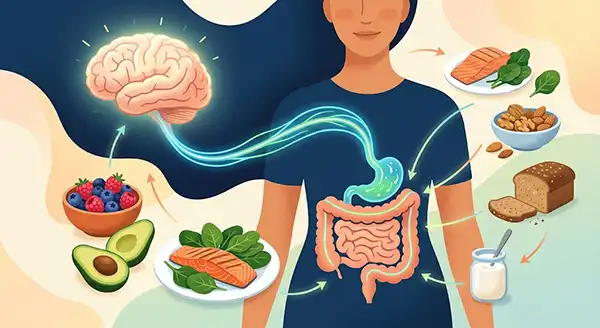
Serotonin is the neurotransmitter most closely associated with mood regulation. It influences sleep, appetite, impulse control, and the general sense of well-being. What many people do not realize is that most of the body’s serotonin—about ninety percent—is produced in the gut, not in the brain. The gut-brain axis is a two-way communication system, and food is the primary messenger.
Tryptophan is the amino acid that the brain uses to produce serotonin. It is found in foods like turkey, eggs, spinach, nuts, bananas, pineapple, milk, and seafood. When you consume these foods, you are providing the raw material for your brain to build the molecules that help you feel calm, focused, and stable. This is not a metaphor. This is chemistry.
The British Dietetic Association and other health organizations have published guidelines on the role of diet in mental health. Research increasingly points to a clear conclusion: what you eat affects how you think and feel. A diet rich in whole foods—vegetables, fruits, whole grains, lean proteins, healthy fats—is associated with lower rates of depression and anxiety. A diet high in processed foods, sugar, and refined carbohydrates is associated with higher rates.
This is not to say that depression is simply a dietary deficiency. It is more complex than that. But nutrition is a modifiable factor, something within your control, and something that can either support or undermine other forms of mental health care.
The Stress-Eating Trap
There is a pattern that many of us know intimately. A stressful day at work, a difficult conversation, a wave of anxiety—and suddenly, you are reaching for something sweet, something salty, something that promises comfort. The cookie, the chips, the pastry. It feels good in the moment. The brain’s reward system lights up. Dopamine is released. For a brief window, the stress recedes.
But the relief is temporary. These foods, often high in refined carbohydrates and sugars, cause blood sugar to spike and then crash. The crash brings fatigue, irritability, and often a renewed craving. The cycle repeats. Stress leads to comfort eating, which leads to blood sugar instability, which leads to more stress. It is a loop, and it is not your fault. It is biology.
Researchers have found that individuals under chronic stress tend to seek out foods high in fat and sugar. This is not a lack of willpower; it is a physiological response. Stress hormones like cortisol increase appetite and drive cravings for energy-dense foods. The body is preparing for a threat that never comes, and the food is the attempted solution to a problem that food cannot solve.
The irony is that these foods ultimately make the stress harder to manage. The blood sugar fluctuations they cause can mimic or worsen anxiety symptoms. The inflammation they promote has been linked to depressive symptoms. The food you reach for to feel better may be making you feel worse in the long run.
What the Research Shows
The emerging field of nutritional psychiatry is providing evidence for what many have long suspected: diet matters for mental health. Studies have shown that individuals who follow a Mediterranean-style diet—rich in vegetables, fruits, olive oil, fish, nuts, and legumes—have lower rates of depression. Conversely, diets high in processed meats, refined grains, sweets, and fried foods are associated with higher rates.
One large-scale study published in the journal BMC Medicine found that a dietary intervention reduced depressive symptoms in adults with major depression. Participants who received dietary counseling and support showed significant improvement compared to those who did not. The intervention was not a medication or a therapy session. It was simply a shift in what they ate.
Another study, conducted by researchers at the University of Navarra, followed over 15,000 participants for a decade. Those who consumed the most ultra-processed foods had a significantly higher risk of developing depression. The link held even after controlling for other lifestyle factors.
These findings do not mean that diet alone can cure depression. But they do suggest that nutrition is a meaningful part of the picture. It is a piece that is often overlooked, and it is a piece that you can influence directly.
Nutritional mood signaling is the term I use to describe this process—the way food communicates with your brain and body to shape your emotional state. Just as your phone receives signals that determine what appears on your screen, your brain receives signals from your digestive system that influence your mood, energy, and focus. Those signals depend largely on what you put into your body.
The Protective Foods
Not all foods are equal when it comes to mental health. Some seem to offer protection, others seem to increase risk. The distinction is not about morality. It is about biology.
Foods that are associated with lower rates of depression include:
- Fatty fish like salmon, mackerel, and sardines, which are rich in omega-3 fatty acids. These fats are essential for brain health and have been shown to reduce inflammation and support neurotransmitter function.
- Leafy greens like spinach and kale, which provide folate and other B vitamins that are critical for brain function.
- Nuts and seeds, particularly walnuts and flaxseeds, which offer healthy fats and minerals.
- Legumes and whole grains, which provide steady energy and support gut health.
- Fermented foods like yogurt and kefir, which support the microbiome—the complex ecosystem of bacteria in your gut that influences mood and cognition.
Foods that are associated with higher rates of depression include:
- Ultra-processed foods like packaged snacks, sugary cereals, and frozen meals.
- Refined grains like white bread and white rice.
- Sugary beverages like soda and sweetened juices.
- Processed meats like sausages and bacon.
The pattern is clear. Whole, unprocessed foods tend to support mental health. Highly processed foods tend to undermine it. This does not mean you can never have a cookie. But it does mean that the overall pattern of your diet matters more than any single meal.
The Microbiome Connection
One of the most exciting developments in this field is the growing understanding of the microbiome—the community of bacteria, fungi, and other microorganisms that live in your digestive tract. These organisms are not passive residents. They actively influence your immune system, your hormone levels, and even your mood.
Research has shown that the microbiome communicates with the brain through multiple pathways. It produces neurotransmitters, including serotonin and dopamine. It influences inflammation. It affects the stress response. A healthy, diverse microbiome is associated with better mental health outcomes. A less diverse microbiome, often linked to a diet high in processed foods and low in fiber, is associated with higher rates of depression and anxiety.
This is why what you eat matters so much for how you feel. You are not just feeding yourself. You are feeding an entire ecosystem that lives inside you. That ecosystem, in turn, talks to your brain every moment of every day. When you eat well, you support a healthy conversation. When you eat poorly, you contribute to a dysfunctional one.
A Framework for Change
Understanding the link between nutrition and mood is one thing. Acting on it is another. Here is a way to approach it that does not demand perfection.
Start with one meal. Just one. Choose a meal that is usually processed or rushed, and make it whole. Vegetables, a lean protein, a healthy fat, a whole grain. Notice how you feel afterward. Not just immediately, but an hour later, two hours later. Notice the absence of a crash. Notice the steady energy. That is data.
Then do it again. Not every meal, not every day, but more often than you used to. Let the experience of feeling good become its own motivation. Let the contrast between a processed meal and a whole meal become something you can feel in your body, not just know in your head.
There is another step. When you do eat something processed—and you will—notice what happens. The initial pleasure. The subsequent fatigue. The craving that follows. Notice it without judgment. This is not about guilt; it is about awareness. The more you notice the pattern, the less power it has over you.
A Quiet Observation
There is a tendency to think of food as either good or bad, healthy or unhealthy. This binary is not useful. Food is not a moral issue. It is a practical one. Some foods support your well-being; others undermine it. The choice is yours, and it is not about perfection.
The same is true for mental health. Depression, anxiety, and stress are not simply a matter of willpower. They are complex conditions with biological, psychological, and social dimensions. Nutrition is one factor among many. But it is a factor you can influence. It is a factor that, for many people, has been overlooked.
The research is accumulating. The evidence is clear. What you eat affects how you think, feel, and live. This is not a claim that diet can replace therapy or medication. It is a claim that diet is part of the ecosystem of mental health, and ignoring it is like ignoring the foundation of a house while trying to fix the roof.
So the next time you reach for food—not just when you are hungry, but when you are stressed or tired or sad—pause. Ask yourself what you are really seeking. Food can provide comfort, but it can also provide nourishment. The two are not mutually exclusive, but they are not the same.
You are not just what you eat. You are how you eat, why you eat, and what you eat when you are not even hungry. And all of that matters—not because you need to be perfect, but because you deserve to feel better.
This article is for educational and informational purposes only. It does not constitute medical or psychological advice, nor is it a substitute for professional evaluation, diagnosis, or treatment. If you are experiencing depression, anxiety, or any mental health concern, please consult a qualified healthcare provider who can assess your individual situation and provide appropriate care.