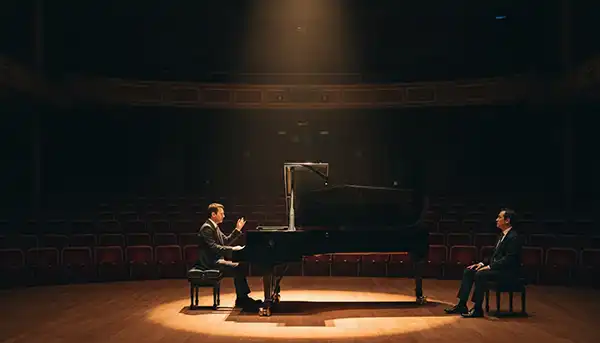
Notes from a sales floor: what I learned by shutting up
I spent eleven years selling enterprise software. For the first seven, I was mediocre. For the last four, I was consistently in the top ten percent of my company. The difference was not talent. The difference was not product knowledge. The difference was not the market. The difference was that I finally learned to stop talking.
The lesson did not arrive as a revelation. It arrived as a humiliation. I had flown to Dallas for a meeting I was certain I would win. The prospect had been engaged, responsive, interested. I had prepared a presentation that I believed would close the deal. I delivered it. I talked for forty-five minutes. I answered questions I had anticipated. I handled objections I had rehearsed. When I finished, the prospect thanked me, said she would be in touch, and walked me to the elevator. I never heard from her again.
Two weeks later, I learned that the deal had gone to a competitor. The competitor had not presented. The competitor had asked questions. The competitor had listened. The prospect later told a colleague that she had felt heard by the competitor and managed by me. The distinction cost me a quarter-million dollars. It also cost me my assumptions about what selling actually is.
What the call data does not tell you
The research on sales calls has become a small industry of its own. Gong.io analyzed 326,000 B2B sales calls and found that the average salesperson talks 60 percent of the time. The top performers talk 43 percent. The gap is not personality. It is discipline.
But the data does not tell you why. The data does not explain the moment when the salesperson decides to talk instead of listen. The data does not describe the nervous system that cannot tolerate the silence. The data does not name the fear.
I can name it. The fear is the fear of irrelevance. The salesperson who is silent feels invisible. The salesperson who is talking feels necessary. The feeling is a lie. The most necessary person in the room is the one who is listening.
The first silence is the hardest
The training I received in my first year taught me to “control the conversation.” The phrase was never defined, but the implication was clear. The salesperson who controls the conversation is the one who talks. The salesperson who talks is the one who wins. The training was wrong.
The research on active listening has shown that the capacity to listen is not a soft skill. It is a measurable competency with measurable outcomes. A 2025 study from Hyperbound described the two-second rule: after a buyer finishes speaking, pause for two full seconds before responding. The pause prevents interruption. It gives the buyer space to add the details they initially held back. It demonstrates respect. It forces the salesperson to process what was said.
The two seconds are uncomfortable. The discomfort is the point. The discomfort is the space where the conversation debt is paid.
The question I stopped asking
For years, I opened every discovery call with the same question. “What keeps you up at night?” It was a good question. It was also a question I had been taught to ask. I had been taught to ask it because it was supposed to uncover pain. The pain was supposed to motivate the sale.
The question worked. Buyers answered it. They told me what kept them up at night. And then I did the thing that killed the deal. I pitched. I took the answer and I immediately converted it into a presentation. The buyer had given me information. I had given them a commercial. The exchange was not a conversation. It was a transaction. The transaction was premature.
The better question was the one I learned later. “What have you already tried?” The question is not about pain. It is about history. It is about the solutions the buyer has already considered, already attempted, already abandoned. The history tells you what the buyer values. The values tell you what the buyer will actually buy. The pitch that ignores the history is a pitch that will be ignored.
The silence that closed the deal
The first deal I closed using the new approach was not elegant. The prospect was a mid-level manager at a manufacturing company in Ohio. She had agreed to a thirty-minute call. I said hello. I asked one question. Then I said nothing.
The silence lasted eleven seconds. I counted. Eleven seconds of dead air on a phone call with a stranger who was paying for my time. My training told me to fill the silence. My fear told me to fill the silence. I did not fill the silence. The prospect did.
She talked for twenty-two minutes. She described the problem. She described the failed attempts. She described the internal politics. She described the fear of choosing wrong again. She described the budget constraints. She described the timeline. By the time she finished, I knew more about her business than I had learned in a decade of pitching.
I did not pitch. I asked two more questions. I summarized what she had told me. I said I would follow up with a proposal that addressed the specific constraints she had described. The call lasted thirty-four minutes. I spoke for six of them.
She signed the contract three weeks later. She told me the reason was not the proposal. The reason was the silence. She said no one had ever listened to her like that before.
The mistake that has no name
There is a mistake that does not appear on any list. It is the belief that selling is something you do to someone. The belief is the foundation of every other mistake. The talking, the guessing, the avoiding, the chasing—all of them are expressions of the same underlying error.
The error is the assumption that the salesperson is the active agent and the buyer is the passive recipient. The assumption is wrong. The buyer is the active agent. The buyer is the one who decides. The buyer is the one who acts. The salesperson who understands this stops trying to control the conversation and starts trying to serve it.
The research on buyer behavior has shown that the most successful salespeople are not the ones who talk the most or close the fastest. They are the ones who build the most trust. Trust is not built through presentation. Trust is built through attention. Attention is not a technique. It is a decision.
The conversation you are not having
The conversation debt is not paid in the pitch. It is paid in the pause. It is paid in the question you ask when you already know the answer. It is paid in the silence you tolerate when every instinct tells you to fill it. The payment is not dramatic. It is not heroic. It is the small, unglamorous work of being present to another person’s actual reality rather than the reality you have imagined for them.
If the sense of being stuck in your sales career is persistent, if the effort to change your approach has produced only frustration, if the pressure of the quarter has made listening feel like a luxury you cannot afford, the appropriate response is not to try harder alone. It is to speak with a mentor or a sales coach who can help you assess what is happening and develop strategies for moving forward. The research on skill development and behavior change is robust. Support is not a sign that you have failed. It is a recognition that some patterns are easier to change with a guide.
The last call
I left sales two years ago. I do not miss the quotas. I do not miss the pressure. I do miss the conversations. The best conversations were the ones where I said the least and learned the most. The ones where the buyer forgot I was selling. The ones where the silence was not empty.
The buyer is not a target. The buyer is a person. The person is not a puzzle to be solved. The person is a story to be heard. The hearing is the sale. The sale is the hearing. The hearing is the work. The work is the life.