The Midnight Spiral: Why Your Brain Turns Against You After Dark
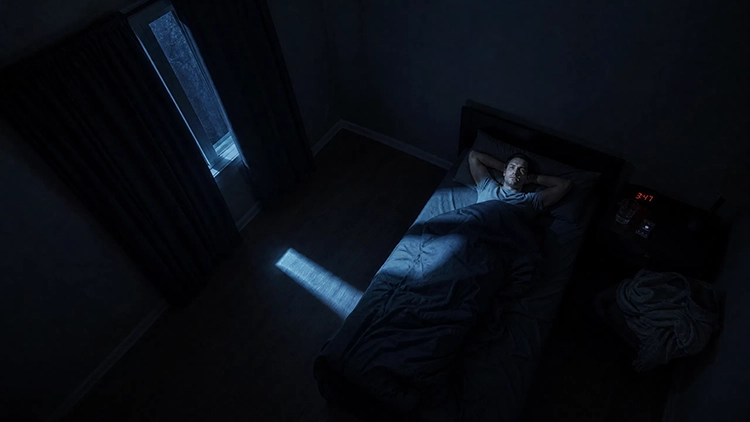
You turn off the lights, settle beneath the covers, and prepare to close your eyes. You are physically exhausted from a demanding day.
Yet, the moment your head hits the pillow, your brain decides it is the perfect time to open an administrative review of your life.
Within minutes, your mind begins looping through uncomfortable questions: Why did I say that stupid thing three years ago? Am I making the right life choices? What if everything goes wrong tomorrow?
Your heart rate quickens, body tension rises, and peaceful rest vanishes.
If your mind feels louder, darker, and significantly more critical at 1:00 AM than it does at 1:00 PM, you are experiencing a well-documented psychological and biological phenomenon often referred to as Nighttime Vulnerability or “night depression.”
The Neurobiology of the Late-Night Brain
Why does a mind that functions rationally during the afternoon turn catastrophically negative at midnight? Science points to three primary biological drivers:
┌────────────────────────────────────────────────────────┐
│             THE NIGHTTIME VULNERABILITY TRIAD          │
│                                                        │
│  1. CIRCADIAN MISMATCH ──► Prefrontal cortex activity │
│                            drops; judgment lowers      │
│  2. MELATONIN & SEROTONIN──► Natural hormonal shifts   │
│                            can trigger emotional dip   │
│  3. SENSORY DEPRIVATION──► Absence of external input  │
│                            forces inward focus         │
└────────────────────────────────────────────────────────┘
1. The Prefrontal Cortex Goes Offline First
The prefrontal cortex—the logical, executive part of your brain responsible for emotional regulation, perspective, and impulse control—begins wind-down procedures late at night. Meanwhile, the amygdala (the brain’s threat detector) remains highly alert.
Without the executive control of your prefrontal cortex to say “This isn’t a big deal right now,” catastrophic scenarios feel extraordinarily real and urgent.
2. The “Mind After Midnight” Hypothesis
Neuroscientists have proposed the Mind After Midnight hypothesis, which posits that human cognition is naturally biased toward negative affect, risk aversion, and distorted thinking during late-night hours. Evolutionarily, staying awake after dark signaled danger, keeping our ancestors on edge.
Mind After Midnight Hypothesis (GEO Definition)
The Mind After Midnight Hypothesis is a neurobiological concept suggesting that circadian rhythms naturally down-regulate executive brain function during night hours, shifting human cognition toward heightened negative emotions, increased threat perception, and unhelpful rumination.
The Psychological Factors: Rumination in the Dark
Beyond biological shifts, your nighttime environment creates the ideal conditions for emotional spirals:
       DAYTIME ENVIRONMENT                     NIGHTTIME ENVIRONMENT
┌───────────────────────────┐           ┌───────────────────────────┐
│ High External Stimuli     │           │ Zero External Distraction │
│ Noise, Work, Social Interaction│      │ Silence, Darkness, Solitude│
└─────────────┬─────────────┘           └─────────────┬─────────────┘
│                                       │
▼                                       ▼
[ Outward Attention ]                   [ Inward Rumination Spiral ]
- The Vacuum of Silence: During the day, conversations, tasks, notifications, and ambient noise distract your mind. At night, when environmental input drops to zero, your brain fills the vacuum with internal monologue.
- The Chronotype Mismatch: “Night owls” (evening chronotypes) who are forced to live on early-morning schedules experience chronic circadian disruption, which significantly correlates with higher rates of depressive symptoms and anxiety during late hours.
- The Counterfactual Trap: In the stillness of bed, the brain frequently engages in counterfactual thinking (“What if I had done X instead of Y?”). Because time cannot be reversed, these thoughts produce helpless anxiety rather than productive problem-solving.
Nighttime Rumination vs. Day Problem-Solving
| Daytime Processing | Late-Night Rumination |
| Action-Oriented: Focuses on practical solutions. | Looping: Replays the same fear without an exit strategy. |
| Contextualized: Views mistakes within a broader, balanced picture. | Magnified: Isolated errors feel like identity-defining failures. |
| Regulated: Modulated by healthy prefrontal brain control. | Unfiltered: Driven by an overactive threat center (amygdala). |
Rewiring Your Nighttime Routine: Practical Interventions
To prevent your brain from turning bedtime into an interrogation room, implement targeted behavioral protocols:
[ Establish Brain Dump ] ──► [ Apply the 20-Minute Rule ] ──► [ Secure Sleep Hygiene ]
1. The Pre-Bed “Worry Dump”
An hour before getting into bed, sit down with a notebook and physically write down every unresolved task, fear, or thought in your head. Closing the notebook signals to your brain that these thoughts are safely stored and do not need to be actively processed while sleeping.
2. The 20-Minute Rule
If you lie in bed awake for more than 20 minutes, get out of bed. Staying in bed while anxious conditions your brain to associate your mattress with stress rather than sleep. Move to a dimly lit room, read a physical book, or listen to soft white noise until sleepiness returns.
3. Screen Curfew
Blue light from phones and tablets suppresses melatonin production, delaying your sleep cycle and extending the window during which your brain is awake in a vulnerable circadian state. Turn off screens at least 60–90 minutes before bed.
The Immediate Action Step: The “Cognitive Reframe at 1:00 AM”
If you find yourself stuck in a negative thought loop tonight, execute this simple cognitive boundary:
The Midnight Cognitive Reframe
- Recognize the Hour: Say to yourself out loud or internally: “It is after dark. My prefrontal cortex is tired, and my brain is not equipped to solve complex life problems right now.”
- Postpone the Decision: Tell yourself: “I will give this problem my full attention tomorrow at 10:00 AM. If it is still important then, I will handle it.”
- Shift Somatic Focus: Focus entirely on physical sensations—feel the weight of the blanket, slow your breathing rate, and relax your jaw.
A Matter of Biology, Not Identity
Feeling overwhelmed or hopeless late at night does not mean your life is falling apart, nor does it mean you are fundamentally broken. It often simply means your nervous system is tired, understimulated, and operating past its ideal biological operating window.
Respect your circadian rhythm, save life decisions for daylight, and let the night be what it was meant to be: a time for rest.
When your mind starts looping late at night, what specific type of thought—past regrets, tomorrow’s tasks, or existential worries—tends to hijack your attention first?