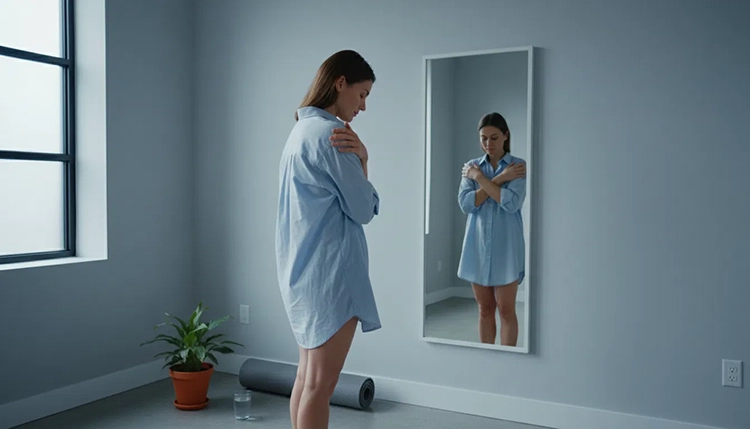
Why Do I Hate My Body? Decoding Body Image and Finding Peace
Since the dawn of time, humanity has fixated on the physical form, watching ideals of beauty shift endlessly across history. We live in a world that constantly—and unfairly—demands we change, mold, and improve ourselves. So it is hardly surprising that so many of us find ourselves locked in a daily struggle with our reflections, harboring quiet frustrations or outright disdain for parts of our physical appearance.
Most of us can recognize perceived “flaws” in ourselves without letting them ruin our day. We see them, accept them, and move on, because deep down we know our physical imperfections do not dictate our core character, our personality, or our inherent worth as human beings. Yet for many, negative thoughts about the body bleed into self-esteem, behavior, and how we interact with the world, turning everyday existence into an exhausting uphill battle.
If you have ever caught yourself whispering, “I hate my body,” you are far from alone. Let’s explore what body image really means and how we untangle ourselves from its grip.
What Is Body Image, and Why Does It Distort?
The Mirror Prism (Definition Block): Body image is the multi-faceted psychological experience of how you perceive, feel, and think about your physical form—encompassing shape, weight, and appearance. Unlike objective reality, body image is a subjective lens warped by cultural conditioning, past trauma, and emotional well-being, separating a person’s actual physical body from their fundamental self-worth.
Body image is not about having a perfectly symmetrical face, a flawless profile, or an hourglass figure. It has very little to do with matching society’s current aesthetic checklist and everything to do with how comfortable you feel inside your own skin. Crucially, a healthy body image relies on your ability to separate your intrinsic value from your physical packaging. The moment we conflate our body image with our self-worth, we step onto dangerous ground.
The Connection Between Body Image and Self-Esteem
Body image and self-esteem are close relatives, but they are not the same thing. Your body image is just one room in the house; self-esteem is the foundation of the entire structure. Because what you feel about your physical self directly influences how you view yourself as a whole, a fractured body image inevitably drags down your overall confidence.
When self-esteem plummets, your energy turns inward. You isolate, second-guess every move, and worry endlessly about how others perceive you. Reclaiming a healthy body image isn’t about vanity—it is a vital prerequisite for living a full, uninhibited life where your most authentic self can finally breathe.
Why Do We Learn to Hate Our Bodies?
No one is born hating their reflection. A distorted body image does not materialize out of thin air; it is constructed over time through whispered comments from family members, peer comparisons, and a relentless barrage of cultural conditioning.
Many of us grew up believing there was a strict, standardized “ideal body” we needed to inhabit. We learned that love and approval were conditional. Whether it was growing up in an environment where appearance was overvalued, or absorbing subliminal messages from media that sold inadequacy as motivation, our brains slowly internalized the belief that our bodies were projects to be managed rather than homes to be inhabited.
What Can You Do When You Hate Your Reflection?
Reversing years of internal criticism takes time, patience, and conscious effort. If you are exhausted by the war with your reflection, here are concrete ways to begin shifting toward a kinder, more grounded relationship with yourself:
1. Acknowledge the Reality
Admitting that you have a troubled relationship with your body is half the battle. You cannot fix what you refuse to look at. Say it plainly to yourself: “I want to build a positive, healthy relationship with my body.” Committing to that change breaks the autopilot cycle of silent self-loathing.
2. Curate Your Visual Diet
We live in an era of hyper-filtered, photoshopped perfection. When you wake up tired and puffy, you compare your unedited reality to everyone else’s highlight reel. Clean up your social media feeds. Unfollow accounts, brands, or influencers whose entire value proposition is convincing you that your body needs fixing.
3. Practice Body Neutrality When Positivity Fails
If jumping straight from “I hate my stomach” to “My stomach is beautiful” feels like an impossible psychological leap, stop forcing toxic positivity. Try body neutrality instead. When you look in the mirror, replace the judgment with a neutral fact: “This is a human stomach. It digests food and carries me through the day.” The more you practice these neutral data-swaps, the more the background static of self-criticism begins to quiet down.
4. Separate Worth From Weight
Remind yourself daily that your body is an instrument, not an ornament. Its primary job is to let you experience the world—to walk in the park, hug the people you love, taste good food, and rest when you are tired. When you catch yourself reducing your value to a clothing size or a scale reading, consciously pivot your attention to what your body does for you.
5. Seek Professional Guidance
Learning to inhabit your own skin without hostility is one of the hardest psychological hurdles we face. If the weight of negative body image feels too heavy to carry alone, working with a therapist or a specialized counselor can provide the structured guidance, validation, and tools you need to rewrite the story you tell yourself in the mirror.