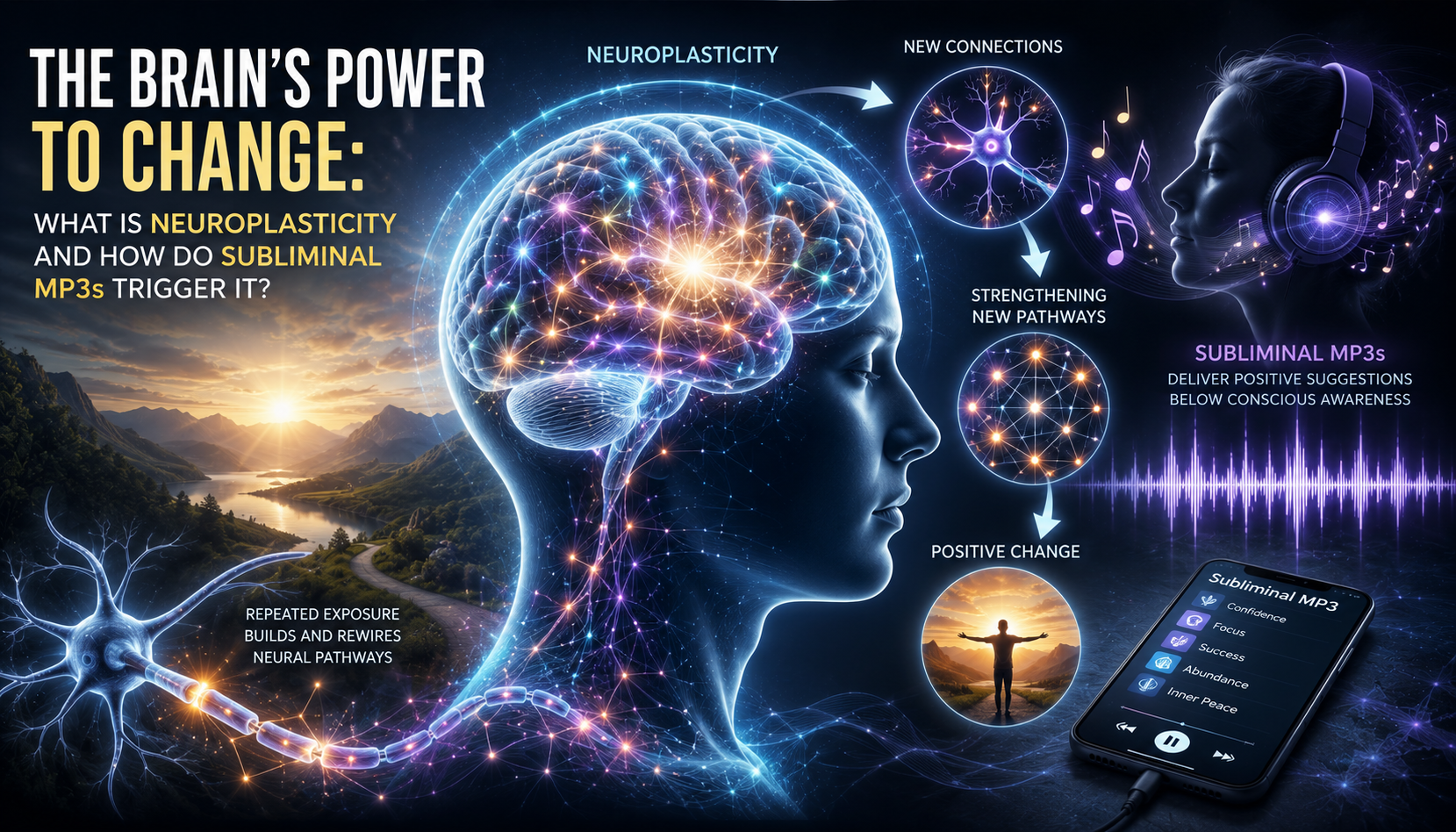
For decades, classical neurology operated under a rigid dogma: the adult human brain was a static, fixed organ. It was believed that once the developmental windows of childhood closed, the neural architecture was permanently set, leaving us prisoners to our early conditioning.
Modern neuroscience has thoroughly dismantled this assumption through the discovery of structural neuroplasticity.
[Targeted Audio Stimulus] ---> Critical Filter Bypass ---> Dendritic Sprouting ---> Permanent Synaptic Path
The human brain possesses a lifelong capacity to physically alter its structure, forge new neural pathways, and dissolve obsolete synaptic configurations in response to novel, targeted stimuli. This biological reality provides a concrete framework for understanding how precise, low-frequency neuro-acoustic inputs can systematically clear and reprogram deep subconscious conditioning. The brain is not a concrete monument; it is a highly adaptive, dynamic learning mechanism.
1. Synaptic Consolidation and the Geometry of Thought
The human brain houses approximately 86 billion neurons, forming a dense web of trillions of synaptic connections. Every early childhood experience, verbal conditioning, and protective fear established between the ages of zero and seven creates a specific neural highway.
This process operates under Hebbian theory, popularized by neuropsychologist Donald Hebb: neurons that fire together, wire together. When a specific cognitive state—such as a sense of inadequacy or chronic financial anxiety—is repeatedly activated, the underlying neural pathway undergoes structural reinforcement. The brain optimizes for this negative state, turning it into an automated subconscious reflex.
To interrupt this automation, we must introduce a competing stimulus. High-density, personalized neuro-acoustic signals act as a structural disruptor. By delivering consistent, mathematically structured auditory inputs, we force new populations of neurons to fire in unison. Over time, this rhythmic activation erodes the high-charge negative pathways, gradually redirecting metabolic resources to build fresh synaptic configurations.
2. Audio Masking and the Mitigation of Cognitive Resistance
While the adult brain remains structurally plastic, it protects its existing worldview through a logical gatekeeper known as the critical filter. Located primarily within the analytical networks of the left hemisphere, this filter evaluates incoming data against your current self-narrative. If an introductory stimulus states “I am secure,” but your subconscious blueprint is anchored in scarcity, the critical filter promptly rejects the data as a threat to systemic equilibrium.
To circumvent this psychological defense, we utilize advanced audio masking techniques originally developed during my research tenure. By shifting primary affirmations to high-frequency thresholds—typically at or above 15,000 Hz—the stimulus enters a spectrum that the conscious mind cannot explicitly perceive.
+-----------------------------------------------------------------------+
|                       THE AUDIO MASKING PARADIGM                      |
+-----------------------------------------------------------------------+
| PERCEIVED LAYER (Conscious Focus) --> Ambient Nature/Acoustic Bed    |
| HIDDEN LAYER    (Auditory Cortex) --> High-Frequency Affirmations     |
+-----------------------------------------------------------------------+
While the analytical left brain focuses on the ambient acoustic bed, the hidden linguistic signals pass completely unhindered into the auditory cortex and temporal lobe. Because these signals do not trigger the critical filter, they do not provoke cognitive resistance. At the cellular level, this uninterrupted data stream stimulates dendritic sprouting—the physical elongation of neural branches to accommodate new information—providing a mechanical pathway for deep subconscious cleaning.
3. Sleep Architecture and the Process of Synaptic Pruning
The most critical window for structural neuroplasticity does not occur during waking hours, but during deep slow-wave sleep. Throughout the day, the brain continuously absorbs environmental data, creating a chaotic web of weak, temporary connections. During the Delta and Theta brainwave phases of sleep, the glymphatic system flushes metabolic waste, while the neural network initiates a regulatory process known as synaptic pruning.
During this nocturnal maintenance cycle, the brain systematically breaks down weak or underutilized connections while consolidating highly prioritized pathways.
This is the precise scientific rationale for delivering neuro-acoustic stimuli exclusively during sleep. With the conscious ego entirely offline, the brain records the continuously looped acoustic inputs as high-priority data. As the nervous system prunes the obsolete, unactivated pathways associated with old emotional blockages, it structurally seals the newly introduced, positive neural configurations, turning them into permanent components of your cognitive architecture.
4. The 63-Day Timeline: A Biological Integration Model
Transitioning a transient neural state into a permanent biological trait requires a predictable sequence of cellular adaptation. The 63-day protocol is designed to match this internal biological clock through three distinct 21-day micro-cycles:
[Days 1-21: Destabilization] ---> [7-Day Gap] ---> [Days 22-42: Myelination] ---> [7-Day Gap] ---> [Days 43-63: Stabilization]
- Phase I: Destabilization and Sprouting (Days 1–21): The continuous pressure of the acoustic stimulus begins to weaken the ancestral neural highways. The brain begins sprouting fragile new dendritic bridges.
- Phase II: Myelination and Integration (Days 22–42): Following a strategic seven-day period of cognitive stillness, the newly formed pathways begin to thicken. The body begins coating these active nerve fibers with myelin—a protective lipid sheath that accelerates electrical transmission speeds up to one hundred times.
- Phase III: Stabilization and Structural Sealing (Days 43–63): The newly introduced behavioral algorithms move past temporary accommodation and achieve permanent structural integration. The brain accepts this software upgrade as its default baseline.
Your current emotional constraints are not permanent character flaws; they are simply the product of well-worn neural pathways running outdated scripts. Through the precise application of structured neuro-acoustic pacing, the adult brain remains fully capable of quietly retiring its old defense mechanisms and returning to its original baseline of clarity and autonomy.