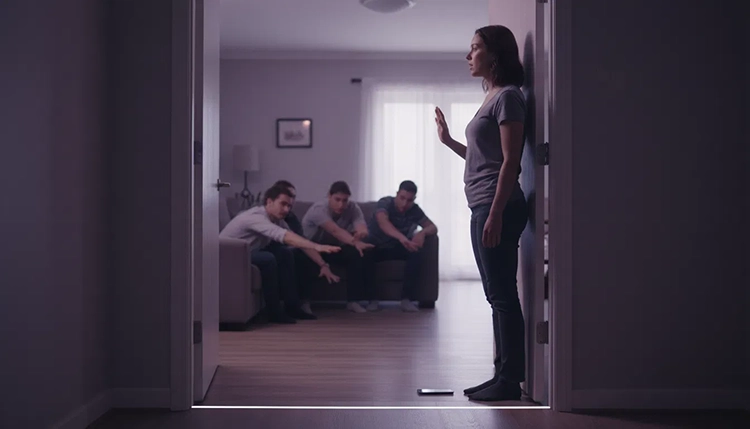
The Architecture of Sanctuary
We enter most relationships hoping to merge seamlessly with others, operating under the silent assumption that love means absolute availability. We say yes when our bones ache for rest, we absorb grief that isn’t ours to carry, and we translate our own exhaustion into politeness.
Then comes the quiet, suffocating resentment.
The inability to draw a line rarely stems from a lack of backbone; it grows out of deeply conditioned fears. Beneath every hesitation to say “no” lies a quiet terror: the fear of losing love, the dread of abandonment, the anxiety of being misunderstood, or the instinctive flinch away from someone else’s sudden anger. We abandon our own internal landscape to keep the peace outside, forgetting that a home with no walls is not a sanctuary—it is just a ruin waiting for weather.
The Anatomy of the Boundary
Behavioral Boundary: A self-protective assertion that does not attempt to control another person’s actions, but clearly defines your own consequence and response if a threshold is crossed.
True boundaries are frequently misunderstood as rigid walls or aggressive demands. In practice, they are nothing of the sort.
As therapists often note, people rarely violate our boundaries out of pure malice; they simply do not know where the edges are because we have spent a lifetime erasing them. A real boundary does not sound like a polite request waiting for validation, nor does it ask for permission to exist. It is a calm, steady declaration of personal agency: If this happens, I will do that. It shifts the locus of control entirely back into your own hands.
The Spectrum of Daily Preservation
Protecting your energy does not require a dramatic confrontation. It can be practiced in small, quiet increments throughout the ordinary moments of your day:
- The Energy Filter: Recognizing when your emotional reservoirs are empty and redirecting a demand before you collapse under its weight.
- The Time Anchor: Honoring the finite nature of your hours by setting unambiguous limits on how long you engage with chaotic dynamics.
- The Emotional Detachment: Acknowledging someone else’s struggle with deep compassion while refusing to let their internal weather drown your own stability.
- The Physical Threshold: Reclaiming your bodily autonomy and personal space without apologizing for needing room to breathe.
A Moment of Reclamation
Close your eyes for ten seconds and bring to mind a recent moment where you said yes while every instinct screamed no. Notice where that unspoken frustration settled in your body. Now, silently whisper to yourself the boundary you wish you had drawn, feeling the quiet strength that returns the moment you decide your own well-being is worth protecting.