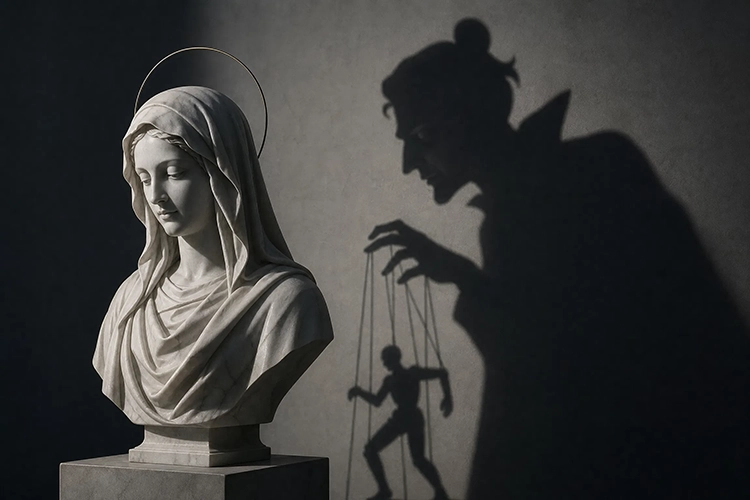
Why Our Highest Virtues Are Often Just Vices in Disguise
Imagine a bruised aristocrat stepping out of the smoke of a bloody seventeenth-century insurrection. His titles are tarnished, his body broken by a near-fatal gunshot wound, and his political ambitions burned to ash. His name is François de La Rochefoucauld. Deprived of power and exiled from the halls of raw political force, he retreated not into quiet despair, but into the private intellectual salons of Paris.
There, among intellectuals sipping wine, he unleashed a new philosophical approach—one that did not shatter bones, but stripped human ego down to its bare, shivering mechanics.
He perfected the aphorism: a linguistic scalpel designed to cut through our polite social illusions in a single sentence. Long before modern psychologists began mapping our cognitive biases, La Rochefoucauld understood a deeply uncomfortable truth: most of what we call human virtue is simply self-interest wearing a polite mask.
The Architecture of Self-Deception
In an era when philosophers buried their insights inside heavy, gilded volumes that ordinary people could neither afford nor read, a quiet revolution took root in France. Thinkers began compressing massive existential truths into single-line philosophical bursts—the original micro-dose of heavy wisdom.
La Rochefoucauld understood that human attention is precious and human defensiveness is strong. A long lecture invites debate, but a perfectly constructed aphorism slips past your emotional armor before you have time to raise your guard.
This psychological reality builds up to a foundational question: Does absolute freedom emerge when we purge ourselves of our reasons?
Virtue Camouflage is the subconscious psychological mechanism where the ego dresses self-serving motives in the language of nobility. Rather than acknowledging fear, insecurity, or a desire for social dominance, the mind reinterprets self-preservation as kindness, passivity as patience, and unspoken envy as moral outrage.
Consider how frequently we misinterpret our own internal compass. We like to imagine that our choices are guided by pure, unadulterated ideals, yet our neurobiology is primarily wired for social survival and status maintenance.
| Apparent Virtue | The Polite Narrative | The Subconscious Driver |
|---|---|---|
| Patience | “I am giving them room to learn.” | Fear of direct confrontation or emotional exhaustion |
| Generosity | “I simply love helping people.” | Pre-purchasing social debt and elevating personal status |
| Moral Outrage | “I am standing up for truth.” | Envy masked as righteous indignation |
| Modesty | “I prefer to stay in the background.” | Protection against the threat of public failure |
When La Rochefoucauld compiled his 504 maxims into his masterwork, Maximes, he was not trying to build a comforting system of morality. He was firing a diagnostic barrage directly into the heart of human vanity. Friedrich Nietzsche would later admire him as a master marksman—a scholar who refused to flatter the human species.
The Hegemony of Luck and the Ego Trap
Modern culture constantly preaches that success is entirely a product of personal grit, relentless ambition, and flawless character. We love the narrative of the self-made hero overcoming impossible odds.
Yet La Rochefoucauld—echoing Stoic thinkers like Epictetus—reminded us of an uncomfortable variable: fortune.
No matter how extraordinary your natural talent may be, no hero is the sole author of their destiny. They are co-created by the unpredictable winds of luck. When we erase luck from our triumphs, we fall into arrogance; when we erase it from our failures, we plunge into unnecessary shame.
We don’t dislike thinkers who expose these mechanisms because they are wrong. We dislike them because they catch us red-handed.
A Five-Minute Reset: The Self-Audit Protocol
To digest uncomfortable psychological wisdom without collapsing into cynicism, apply this simple diagnostic protocol to your own week:
- Isolate a Recent “Virtuous” Action: Pick a moment from the past few days where you felt quietly proud of your patience, generosity, or restraint.
- Apply the 10 Percent Rule: Ask yourself honestly: “If I assume that 10 percent of my motivation was driven by fear, status-seeking, or avoiding conflict, what was my hidden incentive?”
- Separate Identity from Action: Acknowledge the hidden motive without self-judgment. Recognizing that your kindness carries a slice of self-preservation does not make you a hypocrite—it simply makes you human.
By transforming sharp critiques into diagnostic tools rather than personal insults, you stop defending your ego and start understanding your mind. Take a second glance at the hidden dynamics driving your actions today.