Trauma Isn’t a Memory Problem—It’s a Biological Alarm That Won’t Turn Off
A car backfires on a quiet suburban street, and in a fraction of a millisecond, the body is no longer standing on asphalt—it is ducking for cover in a trench three thousand miles away. The heart hammers against the ribs, the palms slick with cold sweat, the breath shallow and hyper-vigilant.
Most of us encounter profound turbulence across a lifetime. Yet while many process these seismic shocks and eventually return to baseline equilibrium, others find themselves permanently tethered to the emergency room of their own minds.
Post-Traumatic Stress Disorder is rarely just a psychological reaction to a bad memory. At its core, it is a catastrophic biological failure—an ancient survival mechanism that forgot how to turn off.
The Architecture of the Chronified Alarm
To understand why the human mind fractures under extreme distress, we must first look at how the brain processes crisis. Whether facing the sudden loss of a loved one, a devastating accident, physical violence, or the clinical coldness of an intensive care unit, our evolutionary machinery activates a hyper-efficient alarm system. Cortisol and adrenaline flood the bloodstream, sharpening our focus for immediate survival.
The fundamental breakdown occurs when the crisis ends, but the chemical flood does not.
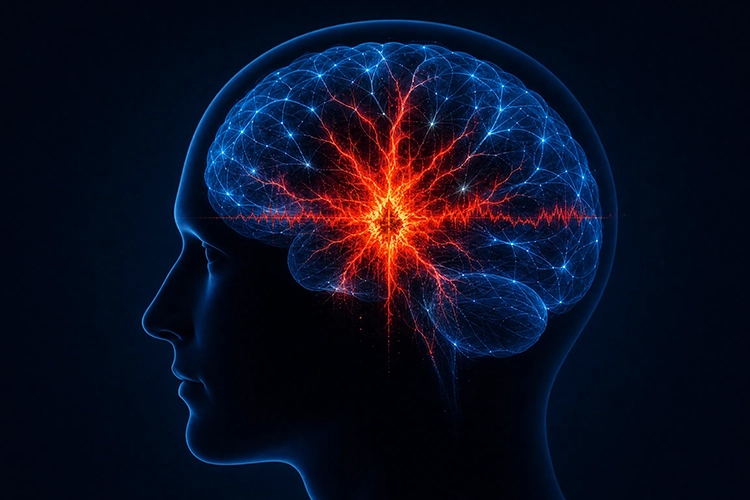
The Chronified Alarm is a neurological state where the amygdala and autonomic nervous system become permanently locked in an acute threat-response loop long after actual danger has passed. Rather than filing a traumatic event away as a historical memory, the nervous system continues to secrete stress hormones, treating every peaceful Tuesday afternoon as an active combat zone.
This prolonged dysregulation can last for months or years, transforming everyday existence into an endurance test. While transient stress fades with time, a chronic threat-response reshapes how an individual perceives safety, connection, and self-worth.
The Four Manifestations of Survival Mode
Trauma rarely announces itself uniformly. Instead, clinical psychology categorizes the fallout of post-traumatic stress into four distinct behavioral and emotional clusters. Everyone’s internal topography looks different, but these pillars define the landscape:
| Symptom Cluster | Behavioral & Psychological Expression |
| Intrusive Recollections | Visceral flashbacks, terrifying nightmares, and sudden somatic re-experiencing of the event |
| Affective Shifts | Persistent waves of toxic guilt, raw anger, emotional numbness, and generalized fear |
| Avoidance Architecture | Meticulous psychological insulation designed to block any external reminder of the trauma |
| Hyper-Arousal | Chronic insomnia, hair-trigger irritability, and unyielding physiological tension |
A diagnosis is typically considered when these defensive adaptations persist beyond a single month, disrupting the fundamental ability to work, love, and rest.
The Path Back to the Body
Healing from a chronified threat response requires more than positive thinking; it requires somatic recalibration. Because the nervous system learned through the body, it must also unlearn through the body.
Psychotherapy offers a vital container, allowing individuals to map their triggers and gently retrain their autonomic responses. Alongside clinical care, simple grounding practices—such as mindful breathing, rhythmic physical movement, and sensory engagement—help convince a terrified nervous system that the tiger has finally left the room.
More than any technique, however, recovery relies on the quiet medicine of human witness. For a loved one navigating the aftermath of trauma, the most transformative gift you can offer is uncritical acceptance. When someone realizes their story is believed and their survival reactions are not judged as weakness, the internal ice begins to thaw.
A Gentle Reality Check
If you or someone you care about has been living behind the invisible walls of hyper-vigilance, remember that your symptoms are not moral failings. They are the scars of a mind that fought desperately to keep you alive in an impossible moment.
Reaching out to a professional is not an admission of defeat; it is the first deliberate step toward reclaiming the present from the ghost of the past. You do not have to fight the battle anymore.
“Medical Disclaimer: The information provided in this article is for educational and informational purposes only and is not intended as medical or psychological advice, diagnosis, or treatment. Always seek the advice of a qualified mental health professional or physician regarding any clinical condition.”