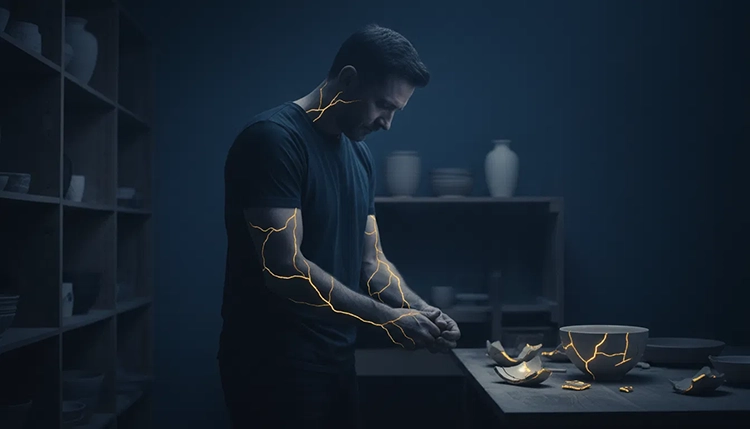
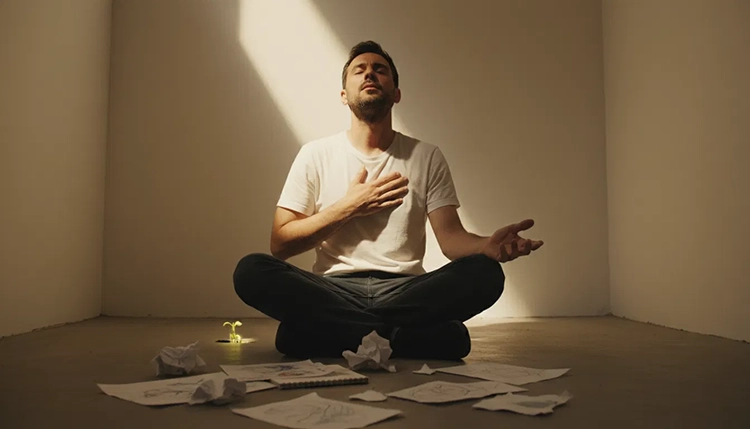
Does Trauma Really Make You Stronger? What Science Actually Says

Does Trauma Really Make You Stronger? What Science Actually Says

The Myth of the Iron Soul: Why What Doesn’t Kill You Doesn’t Actually Make You Stronger We have repeated Friedrich Nietzsche’s famous maxim for generations as an unshakeable law of human nature: What doesn’t kill you makes you stronger. It sounds poetic, comforting, and deeply resilient—a psychological shield we hold up against life’s harshest blows. … Read more
Why You Get Emotionally Triggered: The Science of the Amygdala Hijack

Why You Get Emotionally Triggered: The Science of the Amygdala Hijack

The Architecture of Pause: How to Stop Fighting Your Triggers and Let Them Guide You It happens in the quiet spaces between heartbeats. You find yourself utterly convinced that a friend is angry with you, even though your last interaction was entirely warm. Or, in the stillness of the night, a sudden, suffocating wave of … Read more

Why Fighting Anxiety Makes It Worse (And What to Do Instead)

Why Fighting Anxiety Makes It Worse (And What to Do Instead)

Why Does Anxiety Feel So Uncontrollable, and How Can Mindfulness Actually Change It? There is a distinct, exhausting gravity to chronic anxiety. When a wave of panic or persistent worry hits, your immediate instinct is to fight it—to push the feeling away, figure out its source, or fix whatever is broken inside you. Yet, the … Read more

Why You Feel Broken (Even When You’re Not): The Psychology of Emotional Pain

Why You Feel Broken (Even When You're Not): The Psychology of Emotional Pain

Are We Always Supposed to Feel Fine? The Myth of Constant Positivity and the True Architecture of the Mind There is an unspoken exhaustion that hums quietly beneath the surface of modern life. We are told, through an endless stream of wellness articles, productivity metrics, and cultural messaging, that experiencing distress, uncertainty, or emotional heaviness … Read more

How Trauma Changes the Brain: Why the Mind Switches from Learning to Survival

How the Post-Trauma Brain Works: The Survival Engine and the Search for Safety "Human history is not merely a chronicle of art, science, and culture, but also of wars, interpersonal violence, persecution, and human-made catastrophes." — Briere and Scott (2016) The Anatomy of the Unthinkable In 2022, the Emergency Event Database (EM-DAT) recorded 387 natural disasters worldwide, claiming 30,704 lives and affecting 185 million people, with global economic losses hitting roughly $223.8 billion. In Europe, record-shattering heatwaves pushed summer temperatures to 47°C, claiming over 16,000 lives. Simultaneously, severe droughts paralyzed six African nations, affecting 88.9 million individuals and triggering famine. In the Americas, Hurricane Ian alone generated $100 billion in structural damage, making it the costliest disaster event of that year. Yet statistical databases can barely capture the human toll of sudden devastation. Early in 2023, a catastrophic seismic disaster struck Turkey and Syria, claiming tens of thousands of lives, injuring hundreds of thousands, and leaving millions grappling with sudden loss, displacement, and profound uncertainty. When an event shatters the baseline of ordinary reality, how does the human mind process the shock? What happens to the architecture of thought when survival itself becomes a full-time occupation? Redefining the Unimaginable: What Is Trauma? The concept of trauma first entered the Diagnostic and Statistical Manual of Mental Disorders (DSM) in 1980 under the narrow rubric of events "outside the range of usual human experience." Recognizing the severe limitations of this definition, American psychiatrist, researcher, and author Judith Herman fundamentally reshaped our understanding in 1992. Trauma was no longer restricted to rare anomalies. Under revised clinical criteria, a traumatic event occurs when an individual experiences, witnesses, or is confronted with actual or threatened death, serious injury, or a threat to physical integrity—elicit reactions characterized by intense fear, helplessness, or horror. Historically housed under anxiety disorders, trauma was reclassified in the DSM-5 into Trauma- and Stressor-Related Disorders (APA, 2013). Clinicians now recognize it as a complex syndrome that extends far beyond simple fear. It frequently encompasses anhedonic and dysphoric states, negative cognitive shifts, anger, impulsivity, and behavioral reactivity. When human beings endure life-threatening disruptions, their physiological and emotional reactions are not signs of weakness or pathology. They are Normal Survival Responses to Abnormal Extremes—the precise evolutionary machinery designed to keep an organism alive when the ground literally and figuratively gives way. Why Does the Brain Shift from Learning to Survival? After a traumatic event, the surviving brain remains locked in active defense mode. Like any other animal facing an existential threat, the nervous system deploys the classic triad: fight, flight, or freeze, driven by intense sympathetic nervous system activation and elevated stress hormones. When the brain's alarm system becomes chronically overstimulated, higher-level cognitive functions take a back seat. The survival-driven brain is closed to learning. Instead, it demands two non-negotiable currencies: safety and control. Intolerance of Uncertainty: Because predictability equals safety, the post-trauma brain views ambiguity as a fresh hazard. Small errors feel catastrophic because the nervous system misinterprets minor mistakes as impending danger. The Erosion of Basic Trust: When the foundational belief that "the world is a safe place" is shattered, hypervigilance, panic, and obsessive loops take over. Survivors frequently grapple with profound survivor's guilt and shame—replaying scenarios with agonizing counterfactuals like, “If I hadn't let them go, they wouldn't have died.” Because trauma frequently involves a severe breach of trust or betrayal, rebuilding the capacity to trust others becomes one of the steepest psychological climbs a human can make. What Does the Mind Need to Heal? Under the shadow of global crises, natural disasters, and personal catastrophes, our most urgent collective battle is figuring out how to remain in an learning brain mode rather than a perpetual survival lock. If you were to experience a sudden, catastrophic disruption, what would be your most urgent, non-negotiable need? To support recovery—both in ourselves and in those navigating the aftermath of crisis—we must understand the core psychological architecture of healing. These fundamental human requirements include: The Need for Safety: Re-establishing physical and emotional sanctuaries where the nervous system can finally stand down from high alert. The Need for Trust: Slowly rebuilding predictable, reliable human connections that counteract the isolating terror of betrayal. The Need for Respect: Honoring the reality of the survivor's experience without pity, minimizing, or pathologizing their reactions. The Need for Closeness: Restoring gentle, non-threatening intimacy to counteract the profound alienation of trauma. The Need for Control: Returning small, manageable choices to an individual so they can reclaim authorship over their daily existence. Navigating the Terrain of Loss When processing disaster-induced trauma and grief, many individuals navigate the emotional territory mapped by psychiatrist Elisabeth Kübler-Ross in her Five-Stage Model of Grief. While not every survivor experiences these stages linearly, the model outlines the cascading wave of human responses: Emotional Reactions: Depression, profound hopelessness, acute anxiety, survivor guilt, anger, and deep isolation. Behavioral Responses: Crying spells, social withdrawal, and physical or emotional exhaustion. Cognitive Responses: Intrusive thoughts about the lost person or event, plummeting self-esteem, overwhelming helplessness, concentration deficits, and initial disbelief. Physiological Responses: Appetite disruption, chronic fatigue, muscle tension, and somatic complaints. Illuminating the Dark Recently, NASA shared a stunning visualization of Earth glowing against the dark void of space, illustrating how human civilization shapes and illuminates our planet. From that orbital vantage point, we can track not just the brilliant sprawl of cities, but also the sudden, dark disruptions caused by conflicts, infrastructure failures, and natural disasters. We can view this image as a powerful metaphor for the human condition. When faced with the dark side of history and trauma, our most vital task is keeping the learning brain alive—nurturing the light through connection, active listening, deep empathy, and mutual bonding. The continuity of that light rests entirely in our hands.

How the Post-Trauma Brain Works: The Survival Engine and the Search for Safety “Human history is not merely a chronicle of art, science, and culture, but also of wars, interpersonal violence, persecution, and human-made catastrophes.” — Briere and Scott (2016) The Anatomy of the Unthinkable In 2022, the Emergency Event Database (EM-DAT) recorded 387 natural … Read more

Are You Suffering from Super-Helper Syndrome? The Hidden Psychology of Helping Everyone but Yourself

Are You Suffering from Super-Helper Syndrome? The Hidden Psychology of Helping Everyone but Yourself

The Super-Helper Trap: Are You Giving Away Pieces of Yourself to Everyone Else? Do you find yourself automatically saying yes to every request, even when your calendar is overflowing and your energy is entirely spent? Are you the designated emergency contact for everyone in your life—family, friends, and coworkers—while quietly wondering why no one ever … Read more

How to Forgive Yourself: Silence Your Inner Critic and Heal From Past Mistakes

How to Forgive Yourself: Silence Your Inner Critic and Heal From Past Mistakes

Silencing the Inner Critic and Finding Peace Everyone makes mistakes. You do, I do, and so do our families, friends, and colleagues. What truly matters is how we handle those missteps—not sweeping them under the rug, and not letting them crush us under an unbearable mountain of shame, but acknowledging them, learning from them, and … Read more

Why Do I Hate My Body? The Psychology of Body Image and How to Heal

Why Do I Hate My Body? The Psychology of Body Image and How to Heal

Why Do I Hate My Body? Decoding Body Image and Finding Peace Since the dawn of time, humanity has fixated on the physical form, watching ideals of beauty shift endlessly across history. We live in a world that constantly—and unfairly—demands we change, mold, and improve ourselves. So it is hardly surprising that so many of … Read more

Why You Always Put Others First: The Hidden Psychology of the Victim Mentality

Why You Always Put Others First: The Hidden Psychology of the Victim Mentality

Why Do I Always Feel Like a Martyr? Decoding the Psychology of the Victim Complex It starts quietly, almost invisibly. You stay late at the office to finish a colleague’s report because “they look overwhelmed.” You cancel your own plans to help a friend move, even though your back has been aching all week. You … Read more