The Blurred Line: What the Rosenhan Experiment Teaches Us About Human Judgment and Mental Health
For decades, society has tended to view mental health through a binary lens: a person is either entirely well or profoundly unwell. Yet, telling where healthy psychological functioning ends and genuine distress begins has always been a subtle, complex endeavor—even for trained professionals.
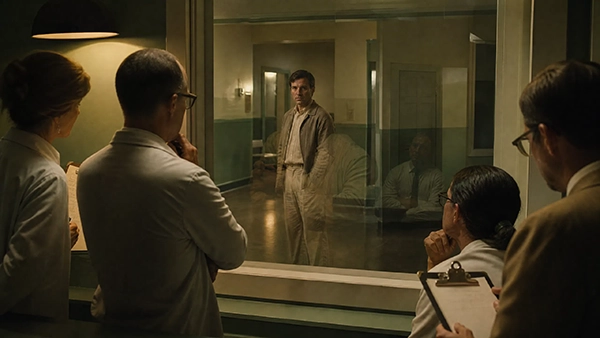
This exact dilemma lies at the heart of the iconic film One Flew Over the Cuckoo’s Nest, where a man feigns mental illness to escape prison, leaving viewers to ponder which characters are truly struggling and which are simply reacting to an oppressive system.
It also inspired one of the most famous—and controversial—studies in modern psychology: David Rosenhan’s 1973 landmark experiment, “On Being Sane in Insane Places.”
The Experiment That Shook Psychiatry
David Rosenhan, a Stanford psychology professor with an academic background spanning mathematics, economics, and clinical psychology, set out to answer a fundamental question: Do psychiatric diagnoses reside in the patient, or in the environments where patients are observed?
To test this, Rosenhan gathered eight pseudo-patients—a diverse group including a graduate student, a pediatrician, a psychiatrist, a painter, and a homemaker.
Their instructions were straightforward:
- Apply for admission at various psychiatric hospitals.
- Claim to hear a quiet voice repeating words like “empty,” “hollow,” or “thud.”
- The moment they were admitted to the ward, act entirely normal, cease reporting any auditory hallucinations, and express a desire to be discharged.
The results sent shockwaves through the medical community. Seven of the eight participants were diagnosed with schizophrenia, while one was diagnosed with manic-depressive psychosis. Despite behaving completely normally on the wards, their stays averaged 19 days, with one participant kept for nearly two months.
Fascinatingly, while the hospital staff failed to recognize the pseudo-patients as healthy, many of the actual patients on the ward quickly spotted the truth, suspecting the pseudo-patients were researchers or journalists investigating the facility.
The Follow-Up Test and Institutional Bias
When Rosenhan published his findings, the psychiatric establishment responded with fierce criticism, arguing that their own clinics would never fall for such deception.
In response, one prominent teaching hospital invited Rosenhan to send pseudo-patients to their facility over the next three months, boasting that their staff would easily identify every imposter.
Rosenhan agreed. Over the following 90 days, hospital staff evaluated 193 incoming patients, confidently identifying 41 of them as fake patients sent by the research team.
The twist? Rosenhan had not sent a single pseudo-patient.
The Legacy: From Diagnostic Bias to Modern Humanism
While the Rosenhan experiment faced valid criticism regarding its methodology and the ethics of deception, its impact on mental healthcare was transformative:
- Overhauling Diagnostic Criteria: It exposed the subjective nature of psychiatric evaluations, directly accelerating the development of structured, evidence-based diagnostic manuals (such as the modern DSM).
- Exposing Confirmation Bias: The study demonstrated how labels alter perception. Once an individual was labeled with a diagnosis, ordinary behaviors—such as taking notes in a journal—were charted by staff as symptoms of “pathological writing behavior.”
- Humanizing Institutional Care: By shining a bright light on the sterile, isolating conditions of mid-20th-century psychiatric wards, the study fueled a global movement toward more compassionate, patient-centered mental health treatment.
Understanding Health Beyond the Label
So, can we ever definitively measure a person’s psychological health?
Modern clinical psychology has moved away from rigid labels, viewing mental well-being as a dynamic, deeply human continuum rather than a fixed state. Psychological health is not the complete absence of sadness, anxiety, or internal noise; it is our capacity to adapt, find meaning, form authentic connections, and navigate life’s inevitable storms with self-compassion.
When we drop the urge to hastily label ourselves or those around us, we create space for genuine understanding. Caring for your mental health begins with a simple, daily practice: listening to your mind and body with gentleness, honoring your need for rest, and remembering that being wonderfully, imperfectly human is not a disorder—it is the very essence of life.