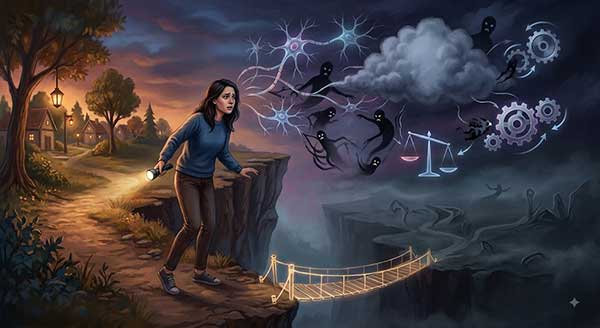
The Psychology of Change: Why We Fear the Unknown and How to Transcend It
The psychological dread of change manifests across every dimension of human life—from the fear of taking risks and exploring the unknown to losing material comfort and facing existence itself. Human beings are inherently creatures of habit. We lean heavily on societal structures that promise safety in exchange for conformity, willingly submitting to external masters who dictate how we ought to live, love, and think.
The Architecture of Our Resistance
- Artificial Needs and Social Imitation: Society conditions us through artificial demands. Loving and being loved is a primal human need, yet modern trends reduce affection to status, property, and superficial criteria. We mimic the crowd to secure respectability, clinging to these external symbols because losing them threatens our fragile sense of identity.
- The Illusion of Normality: Cultural trends dictate language, relationships, and belief systems to grant us temporary “normality.” Stepping away from the herd feels terrifying because it risks social exclusion, instability, and the loss of hard-won prestige.
- The Fear of Solitude: Deep inner transformation requires facing oneself entirely alone. When external applause and criticism no longer matter, the individual must take full responsibility for their own evolution.
- The Dread of Loss: Every genuine transformation requires shedding outdated habits and values. Many fear existence itself because true internal achievement demands rigorous self-discipline without guaranteeing immediate comfort.
External Conformity vs. Philosophical Awakening
Life Governed by Fear and Conformity:
- Driven by artificial needs, social trends, and external validation
- Imitates the herd to secure psychological comfort and temporary status
- Fears change out of dread over losing material security and social standing
- Lives with a passive, unexamined consciousness bound by habitual patterns
Life Guided by Philosophical Consciousness:
- Awakens active consciousness to question physical, mental, and emotional impulses
- Views every life event as a stepping stone toward personal excellence and self-mastery
- Embraces solitude and solitary responsibility as necessary paths to inner truth
- Transforms out of a desire for wisdom, moving beyond societal expectations
The Path Forward: Change is not an enemy to be avoided. Every heroic archetype throughout history has faced risky trials before achieving inner victory. We stand at a crucial crossroads: we can remain vulnerable captives to the fear of constant external flux, or we can cultivate the courage to transform intentionally, taking full ownership of our true potential.