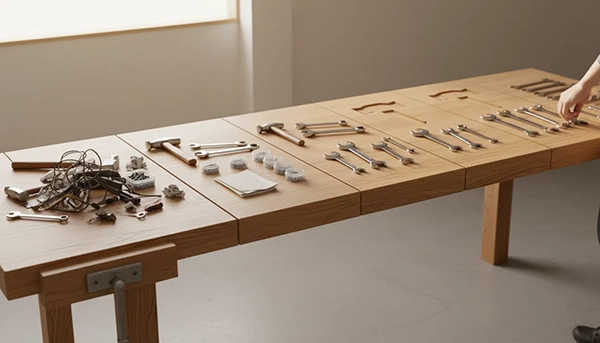
Beyond the Physical Desk: How the Japanese 5S Philosophy Restores Internal Clarity
Whether sitting down at a home workspace or navigating the complex demands of a professional career, stepping into chaos immediately fractures our focus. When our surroundings are cluttered, our mental bandwidth follows suit—leaving us fatigued, easily distracted, and quietly stressed long before our actual work even begins.
The Japanese workplace tradition has long recognized that outer order is not merely an aesthetic preference; it is the foundation of cognitive ease and high-level execution.
Pioneered within Toyota’s manufacturing ecosystem during the 1960s, the 5S Methodology was born as a system to eliminate waste and optimize operational efficiency. Yet, its true power extends far beyond factory floors and office desks. At its core, 5S is a philosophy of intentional living—a structured pathway to reclaim clarity, reduce friction, and cultivate a sense of calm mastery over your daily life.
The 5 Pillar System of Intentional Flow
The framework derives its name from five Japanese concepts that build sequentially upon one another. When applied step-by-step, they transform a chaotic environment into a quiet sanctuary of productivity.
| Phase | Original Principle | Core Action | Relational & Mindset Impact |
| 1. Sort | Seiri (Eliminate) | Remove everything non-essential from your immediate space. | Creates room for clarity by shedding physical and mental dead weight. |
| 2. Systematize | Seiton (Organize) | Assign a designated, ergonomic home for every necessary item. | Eliminates daily decision fatigue and time lost to mindless searching. |
| 3. Shine | Seiso (Clean & Maintain) | Restore your workspace to baseline purity through routine care. | Transforms maintenance into an active ritual of respect for your craft. |
| 4. Standardize | Seiketsu (Systemize) | Establish clear habits and visual cues to keep chaos from returning. | Turns temporary effort into a sustainable, effortless background routine. |
| 5. Sustain | Shitsuke (Discipline) | Practice continuous self-reflection and commitment to the process. | Builds deep internal self-trust through quiet, unbroken consistency. |
Walking Through the 5 Steps
1. Seiri (Sort): Letting Go of the Unnecessary
Efficiency begins with subtraction, not addition. Look around your immediate workspace: how many objects, open browser tabs, or pending files are simply taking up space without serving an active purpose?
Seiri invites us to make brave, clear decisions. If an item is not contributing to your present work or your well-being, move it out of sight. Keep only what is actively required for the task at hand. Archives and storage exist for a reason; your primary workspace should be reserved exclusively for creation.
2. Seiton (Set in Order): Designing Frictionless Movement
Once the clutter is cleared, order can take root. Seiton is about creating a logical, seamless relationship between you and your tools.
When every pen, document, digital folder, or utensil has a specific, intuitive home, you eliminate the subtle friction of searching for things. Arranging your environment according to ergonomics and frequency of use means your energy stays focused entirely on deep, meaningful thought rather than logistical frustration.
3. Seiso (Shine): The Craft of Daily Care
Cleaning is often viewed as a chore to be rushed through. In the 5S philosophy, Seiso reframes cleaning as an intentional inspection and a reset ritual.
Wiping down your desk at the end of the day, organizing your tools, and caring for your environment serves two functions: it prolongs the life of what you own, and it sends a clear signal to your nervous system that your work is done. Stepping into a clean, pristine environment the following morning allows you to start fresh without carrying yesterday’s lingering residue.
4. Seiketsu (Standardize): Building the Routine
A pristine desk quickly reverts to chaos if there are no systems to protect it. Seiketsu is the bridge that transforms temporary cleaning efforts into an effortless lifestyle.
By establishing simple checklists, weekly digital cleanups, or a five-minute evening reset ritual, you eliminate the need to rethink your organization every day. Standardizing your environment turns order into an automatic baseline.
5. Shitsuke (Sustain): The Quiet Strength of Discipline
Systems are only as strong as the commitment behind them. Shitsuke represents the internal character required to keep the philosophy alive over time.
Discipline here is not about rigid self-punishment; it is about self-respect. It is the quiet satisfaction of finishing what you start, returning tools to their home when you are done, and honoring the environment you have carefully built for yourself.
Reclaiming Peace in an Overwhelming World
Living in an age of constant digital noise and endless input makes a grounded physical and mental space more vital than ever.
The 5S method is far more than an organizational lifehack. It is a gentle reminder that when you take time to care for your surroundings, you are ultimately caring for your own mind. By removing the non-essential, organizing what matters, and maintaining your space with quiet discipline, you create an environment where focus flows naturally and peace becomes your daily baseline.