What Nature Teaches Us About Living Without Rushing
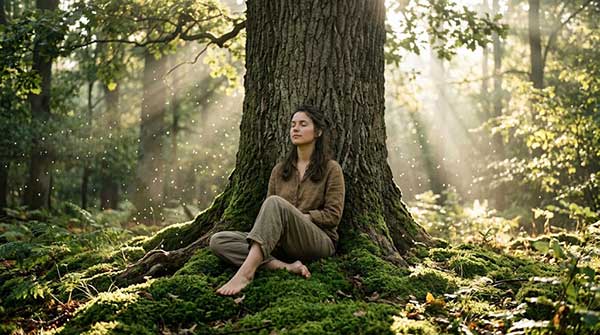
There is a trail near my house that I have walked a hundred times. It winds through a patch of woods that the developers never got around to clearing. Some mornings I go there with a problem in my head, the way you carry a stone in your shoe, and by the time I reach the old oak at the second bend, the stone is still there but it weighs less. I do not know how the trees do that. I just know they do.
The source text I keep thinking about this week says that nature is the strongest spiritual teacher we have. That is a bold claim. But I have stood under that oak enough times to believe it. Not because the trees speak. Because they do not need to. The teaching is in the standing.
So here is what I have been learning, slowly, on that trail and in the backyard and in the quiet spaces where the wild things still live.
The Tree Does Not Ask Why You Need the Shade
There is a maple outside my building that hosts a family of squirrels. I have watched them for months. They take. They run. They fight. They nest. The maple never flinches. It does not ask for rent. It does not withdraw its branches when the squirrels get too loud. It just gives — shade, shelter, seeds — without once checking to see who deserves it.
The source text says this is the first lesson: help without expecting anything in return. The tree does not keep a ledger. The river does not bill the deer for drinking. The flower does not ask the bee for a review before it opens.
I am not good at this. I keep score. I remember the favors I have done and the ones that were never returned. The tree has never once reminded me of the oxygen it has provided. That is the standard. Not to be a tree. But to notice that the giving is the point, not the accounting.
The Storm Does Not Mean the Sun Is Gone
Last spring, a late freeze killed every blossom on the cherry tree in my neighbor’s yard. She stood at the fence and looked at the brown petals and said, “There’s always next year.” I thought she was being brave. She was just being accurate. The cherry tree had been through worse. It would bloom again.
The source text asks a question that should be obvious but is not: does the sun stop rising because a storm came through? Does a tree decide it is done flowering because it lost its leaves once? The answer is so simple that we miss it. Nature does not quit. It does not interpret a bad season as a permanent sentence. It just keeps going.
I have been trying to learn this. When things fall apart, my instinct is to believe the falling is forever. The cherry tree knows better. The frost is real. The brown petals are real. But so is next April.
Nothing in the Forest Is in a Hurry
Watch a fern uncurl in the spring. You cannot see it moving. But it is moving. The pace is glacial and perfect. No flower ever rushed to open. No tree ever panicked about being behind schedule. The forest has no deadlines.
The source text points out the obvious: we are the only part of nature that runs. The squirrel is busy, yes. But not frantic. The bee is focused, not overwhelmed. The river moves constantly, but it is never in a hurry.
I spent years treating slowness as a failure. If I was not producing, I was wasting. The forest does not produce anything on a schedule, and yet it is the most productive system on the planet. The slowness is not laziness. It is the pace at which real growth happens.
The Colors Are Not a Debate
In the fall, the forest does not argue about which color is best. The red maple does not envy the yellow birch. The orange oak does not feel inadequate next to the evergreen. They all show up in their own color, at their own time, and the whole thing is so beautiful it makes your chest hurt.
The source text says we should live like this. Not in black and white. Not in one emotional register. But in full color. The grief and the joy, the fear and the courage, the anger and the peace — all of it belongs. None of it needs to win.
I have a tendency to rank my feelings. This one is valid. That one is not. The forest does not do this. It just turns colors. It just lets the light change. It just is.
The Roots Are Doing the Real Work
The mushroom on the forest floor looks small. Fragile. Easy to crush. But underneath, there is a network of roots and fungi that stretches for miles. The mushroom is just the visible tip of something vast and interconnected.
The source text says this is the lesson about confidence. What you see on the surface is never the whole story. The person who seems weak may have roots you cannot imagine. The thing that looks fragile may be anchored to something deep.
I have felt this in my own life. The times I thought I was barely holding on were often the times I was growing the most underground. The work was invisible. But it was real. And it is what held me up later.
The River Knows How to Change Direction
The creek behind my house changed course last year after a heavy rain. It did not ask permission. It did not mourn its old path. It just found a new way down the hill, and now the water runs there, and the old bed is dry, and the ferns are filling in where the water used to be.
The source text says this is the lesson about change. The snake sheds its skin. The lizard drops its tail. The chameleon shifts its colors. None of them cling to what they were. They adapt. Not because they are weak. Because they are alive.
I am learning this. Slowly. The old versions of me do not have to be mourned forever. They did their work. They carried me here. Now the water moves differently. Now I move differently.
What I Do When I Forget
Some days I forget all of this. I get pulled back into the rush, the worry, the endless comparing. I sit at my desk and feel the familiar tightness creep back into my chest. And then, if I remember, I walk to the trail. I stand under the oak. I listen to the wind.
And the oak does not say anything. It just stands there, being an oak. That is the whole teaching. Not a lecture. A presence. A way of being that does not need to be explained.
The source text ends with a simple instruction: when you feel lost, return to nature. Listen to the birds. Feel the wind. Breathe. The answers you are looking for are not in the trees. They are in what the trees help you remember about yourself.
Questions That Surface When You Sit Still Long Enough
Do I actually need to spend time in nature to get these lessons?
Time in nature helps because it removes the noise. But the lessons are available anywhere. You can learn patience from a houseplant. You can learn persistence from a weed growing through a crack in the sidewalk. The point is paying attention to something other than your own racing mind.
What if I live in a city with no easy access to green space?
The sky is everywhere. The weather is everywhere. A single tree on a city street is still a tree. A patch of weeds in an empty lot is still a meadow. Start with what is available. The bird on the telephone wire is nature. The rain on the pavement is nature. It is not about finding a forest. It is about remembering you are alive in a living world.
Is this just another way of saying “go for a walk”?
A walk helps, but this is bigger than walking. It is about orientation. About remembering that you are not separate from the living systems around you. The tree outside your window is not a decoration. It is a relative. The lesson is not in the walking. It is in the noticing. The walk is just how you get there.