How to Start Your Morning Without Stress and Stop Predicting a Bad Day
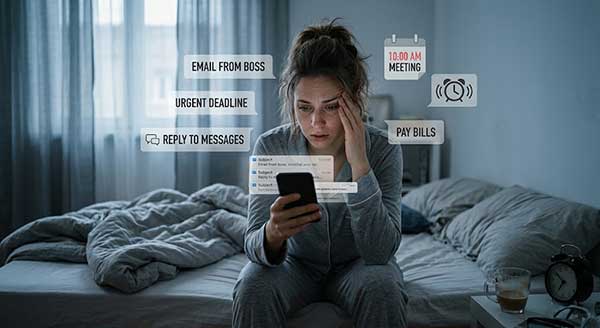
I used to wake up already behind. Not because I was late. Because the first thought in my head was always a list of everything that could go wrong. The meeting I was not prepared for. The email I was avoiding. The conversation I needed to have but did not know how to start. By the time my feet hit the floor, I had already lived through a version of the day that had not happened yet. And that version was exhausting.
Here is what I did not know then: the expecting itself was the problem.
There is real research behind this. A study published in the Journals of Gerontology: Psychological Sciences followed 240 adults for two weeks, asking them about their stress levels multiple times a day through a smartphone app. The team, led by Martin Sliwinski at Penn State’s Center for Healthy Aging, found something that should make all of us pause. People who woke up expecting a stressful day performed worse on memory and attention tasks — even when nothing stressful actually happened. The anticipation alone was enough to drain their cognitive resources.
Sliwinski put it plainly in a Penn State news release: “When you wake up with a certain outlook for the day, the die is already cast. If you think your day is going to be stressful, you’re going to feel those effects even if nothing stressful ends up happening.”
That is the trap. We think we are preparing for the worst. We are actually creating it.
Watch What You Tell Yourself Before Your Feet Hit the Floor
The first step is noticing the prediction. Not fixing it. Noticing it. For one week, keep a small notebook by your bed. Before you get up, answer a single question: Do I expect today to be stressful? Write yes or no. Do not judge it. Just record it.
What you will probably find is that the answer is almost always yes. Not because your life is unusually hard. Because the predicting has become a habit. The brain likes to prepare for threats. The problem is that most of the threats it prepares for are imaginary.
Research on gratitude suggests a way to interrupt this. A study published in the Journal of Personality and Social Psychology found that people who wrote down things they were grateful for reported fewer physical symptoms and felt better about their lives overall. Gratitude does not eliminate stress. But it shifts the frame. It reminds the brain that the day is not only going to be hard. There will also be coffee. And light through the window. And a message from someone you like. The small good things are real too.
What Actually Matters Ten Minutes from Now
Here is a strategy that has pulled me out of more spirals than I can count. It is called the 10-10-10 rule, and it comes from Suzy Welch, the journalist and author who wrote a whole book about it. The idea is embarrassingly simple. When you are stressed about something, ask yourself three questions. How much will this matter in ten minutes? How much will it matter in ten months? How much will it matter in ten years?
The first time I tried this, I was panicking about an email I had sent with a typo in the first sentence. Ten minutes? Felt enormous. Ten months? I could not remember a single typo from a year ago. Ten years? The email would not exist in anyone’s memory. The panic did not vanish. But it shrank to a manageable size.
Welch’s framework works because it forces your brain out of the immediate threat response and into a longer view. The thing that feels catastrophic right now is almost never catastrophic in the long run. It is just loud. The 10-10-10 rule turns down the volume.
Move Your Body Before Your Mind Convinces You Not To
When stress arrives, the temptation is to avoid it. To scroll. To snack. To busy yourself with something, anything, that is not the thing you are stressed about. Avoidance feels like relief. It is actually just postponement. The stress does not go away. It sits in the next room, waiting for you to notice it again.
The alternative is action. Small action. Not solving the whole problem. Just moving. A walk around the block. Five minutes of stretching. Standing up from the desk and shaking out your hands. Physical movement interrupts the stress response. It tells the nervous system that the threat is not immediate.
The American Psychological Association has long recommended exercise as a stress management tool, not just for long-term health but for immediate relief. A brisk walk can lower cortisol levels and improve mood within minutes. The walk does not solve the problem. It just gives you enough distance to think clearly about it.
You Cannot Control the Day, but You Can Control the Frame
The last thing I want to say is this. You do not get to choose what comes at you today. The traffic. The boss. The news. The unexpected expense. None of that is under your control. But the way you greet the day before it arrives — that is yours.
I started changing my mornings after I read about Sliwinski’s work. Not with a big ritual. Not with a cold plunge or a five-step journaling routine. I just started pausing before I reached for my phone. I would lie there for thirty seconds and ask myself: What am I expecting from today? And then I would ask: What if I am wrong?
That second question was the key. Because I was wrong, most days. The day was not the catastrophe I had imagined. It was just a day. With some hard parts and some easy parts. The predicting had been the heaviest thing I was carrying.
This morning, I woke up before the alarm. The room was dark. The heat had not kicked on yet. I felt the familiar pull to start rehearsing the day. Then I stopped. I took a breath. I told myself, very quietly, “Let’s see what actually happens.”
That is not a magic spell. It is just a small act of defiance against the part of me that wants to suffer in advance. The day will bring what it brings. I would rather meet it awake than already exhausted.
A Few Things People Ask About Morning Stress
How do I know if I am predicting stress or actually experiencing it?
Predicting has a future tense. It starts with “what if” and “I just know” and “this is going to be bad.” Experiencing has a present tense. It is the actual tightness in your chest, the actual difficulty focusing. If you are lying in bed feeling dread about a meeting that starts in four hours, that is prediction. The meeting has not happened yet. The dread is the rehearsal.
What if the stressful thing actually happens?
Then you deal with it then. But you will deal with it with more energy if you have not already spent the morning fighting it in your imagination. The anticipation does not make the event easier. It makes it longer. You do not have to live the hard thing twice.
Do I need to meditate or journal for this to work?
No. Those can help, but they are not required. The core practice is just noticing. What am I expecting? Is that expectation based on evidence or habit? Can I let the day arrive before I decide what it is? That noticing can happen in bed, in the shower, in the car. It takes thirty seconds. It costs nothing. And it changes everything.