What It Really Means to Become a Master of Life
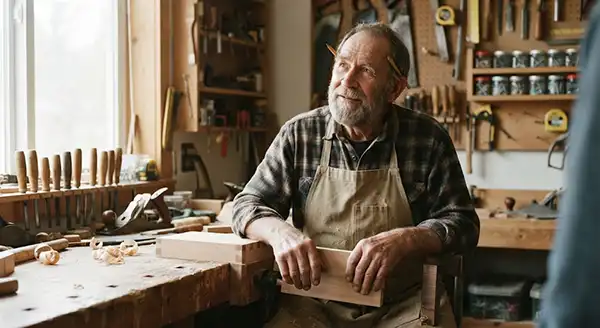
I met a man once—I’ll call him Frank—who had spent forty years as a carpenter. He wasn’t famous. He hadn’t written any books. But when he talked about wood, about grain and knots and the way a joint holds over decades, you could feel the weight of everything he’d learned. Not just skill. Something deeper. A kind of quiet knowing that only comes from doing the same thing, with attention, for a very long time.
I thought about Frank when I started reading about the concept of a “life master.” The idea that we carry within us the accumulated wisdom of all our experiences—not just in this life, but across time. I’m not sure I believe in reincarnation in the literal sense. But I do believe that by the time you’ve lived through enough seasons, enough losses, enough unexpected turns, you start to recognize patterns. You start to trust your instincts in ways you couldn’t in your twenties. You become, in a sense, your own elder.
That’s the mastery I’m interested in. Not the kind you get from a certificate or a title. The kind you earn by showing up, failing, learning, and showing up again. And I think most of us are closer to it than we realize. We just haven’t learned to listen to what we already know.
The First Awakening: Realizing You’re Not Just Here to Survive
The first time I felt something shift in me was in my mid-thirties. I had been running on autopilot for years—job, bills, relationships, the usual rhythm of adult life. I wasn’t unhappy, exactly. I was just… busy. So busy that I never stopped to ask why I was doing any of it.
Then a close friend died suddenly. It wasn’t expected. One week he was there, the next he wasn’t. And in the days after, I found myself staring at the ceiling at 3 AM, asking questions I had never asked before. What am I actually doing here? What matters? If I died tomorrow, would I have lived the way I wanted to?
That moment of disorientation—the sense that you don’t quite belong to the life you’ve built—is what I’ve come to think of as the first awakening. It’s the crack in the routine that lets light in. It’s uncomfortable. It’s destabilizing. And it’s essential.
Psychologists call this “existential awareness.” It’s the recognition that your life is finite, that your time is limited, and that you are responsible for how you use it. Most people avoid this awareness as long as they can—through distraction, through busyness, through the relentless pursuit of things that don’t matter. But at some point, it catches up with you. And that catching up is the beginning of mastery.
The Second Awakening: Finding What You’re Meant to Do
Once you’ve acknowledged that you’re not just here to survive, the next question becomes: What am I here to do?
This is where things get tricky. We’ve been conditioned to think of purpose as a destination—something you find and then you’re done. But in my experience, purpose is more like a conversation. It changes over time. It deepens. It surprises you.
I spent years chasing what I thought was my purpose. I wanted a clear answer, a straight line. But the people I admire most—the ones who seem grounded in their own lives—didn’t get there by finding a single answer. They got there by committing to a process. They showed up for what was in front of them. They paid attention to what energized them and what drained them. They made adjustments. Slowly, over time, their life began to reflect what they actually valued.
There’s a Buddhist concept called upaya—skillful means. It’s the idea that wisdom isn’t abstract knowledge. It’s the ability to respond appropriately to whatever is happening right now. That’s what second awakening is about. Not knowing all the answers, but trusting that you’ll know what to do when the moment comes. Because you’ve been practicing. Because you’ve been paying attention. Because you’ve been learning from every experience, even the hard ones.
The Weight of Everything You’ve Carried
Here’s something I’ve noticed about people who seem wise: they don’t pretend their past doesn’t exist. They don’t forget the hard parts. But they also don’t let the hard parts define them. They carry their history differently—not as a burden, but as a reference. A library of lessons they can consult when life gets confusing.
I think of this as the long tail of experience. Every disappointment, every mistake, every moment of heartbreak—it all stays with you. Not as pain, but as texture. It changes how you see things. It gives you patience with others because you remember when you were the one who didn’t know better. It gives you compassion because you’ve been on both sides of the door.
A study from the University of Chicago found that people over sixty report higher levels of emotional well-being than people in their twenties and thirties—not because their lives are easier, but because they’ve developed better emotional regulation. They’ve learned to let things go. They’ve learned to choose their battles. They’ve learned that most of what worries you today won’t matter in five years.
That’s mastery. Not the absence of difficulty, but the ability to hold difficulty without being destroyed by it.
Why We’re Afraid to Open Our Hearts
The part that resonates with me most from the old texts is the idea that opening the heart means feeling everything—not just the good parts. Joy, yes. But also grief. Also disappointment. Also the ache of wanting something you can’t have.
Most of us close ourselves off without realizing it. We build little walls. We stop trusting. We avoid vulnerability. And we convince ourselves we’re being strong. But real strength isn’t numbness. Real strength is staying present even when it hurts.
I learned this the hard way. After a painful breakup, I spent months avoiding anything that reminded me of my ex. I deleted photos, stopped going to certain cafes, changed my routine. I thought I was protecting myself. What I was actually doing was shrinking my life. I was making myself smaller so I wouldn’t feel the pain.
But pain doesn’t go away because you avoid it. It just waits. And it takes up space. It prevents you from feeling anything fully—including the good things.
The only way through, I eventually learned, is through. You have to feel it. All of it. Not in a dramatic, wallowing way. But with honesty. With presence. With the understanding that this is part of being human, and you are not broken for feeling it.
What Mastery Actually Looks Like in Daily Life
If you’re waiting for a lightning bolt moment—a sudden enlightenment that transforms everything—you might be waiting a long time. Mastery doesn’t usually arrive that way. It arrives in small increments.
It looks like pausing before you react to something that would have triggered you years ago. It looks like saying “I don’t know” when you used to pretend you had all the answers. It looks like staying calm when things fall apart, because you’ve seen things fall apart before and you know they eventually come back together.
It looks like forgiveness—not because the other person deserves it, but because holding a grudge is a prison you don’t want to live in. It looks like gratitude, not as a platitude, but as a genuine recognition that even the hard days are teaching you something.
And it looks like service. Not the performative kind, but the quiet kind. Showing up for people without expecting anything in return. Sharing what you’ve learned because you remember when you were the one who needed to hear it.
What Happens When You Stop Fighting Life
I spent a long time fighting life. I wanted things to be different than they were. I wanted people to act differently. I wanted outcomes I couldn’t control. And every time life didn’t cooperate, I felt angry, resentful, exhausted.
The shift came when I started accepting what was—not as resignation, but as a starting point. This is where I am. These are my circumstances. What can I do from here?
Acceptance doesn’t mean you stop trying to improve things. It just means you stop wasting energy on the fantasy that they could be something else right now. And when you stop fighting, you free up energy. Energy you can use to actually make a difference—in your own life, and in the lives of others.
A friend of mine who survived cancer told me something I’ll never forget. She said: “I used to think I was in charge. I planned everything. I controlled everything. And then my body said no. And I realized I had been fighting a battle I was never meant to win. The only thing I could do was show up and let life happen through me.”
That’s the master’s stance. Not the controller. The participant. The one who knows that life is not a problem to be solved, but a mystery to be lived.
Three questions I keep getting
Does this mean I have to be spiritual to become a life master?
Not at all. You can call it wisdom, maturity, or just plain life experience. The language doesn’t matter. What matters is the practice: paying attention, learning from your mistakes, and showing up fully for what’s in front of you. If “spiritual” feels heavy, drop it. The substance remains.
What if I’m young and feel like I have no wisdom to draw from?
You have more than you think. Wisdom isn’t about age—it’s about attention. A twenty-five-year-old who reflects on her experiences, learns from them, and adjusts her behavior is further along than a sixty-year-old who has repeated the same patterns for decades. Start where you are. The accumulation begins now.
Can I really change the direction of my life at this point?
Yes. And the best time to start is exactly where you are. Not ten years ago. Not tomorrow. Now. Mastery isn’t about having a perfect track record. It’s about learning to steer the ship you’re already on. It won’t turn instantly, but it will turn. Every small adjustment changes the eventual destination.
A question to sit with
What would it look like to trust yourself completely—not because you have all the answers, but because you have enough experience to know you can handle the questions?
Sit with that. Not to find an answer, but to feel the shape of it. Because the person who can ask that question, who can even consider the possibility, is already closer to mastery than they realize.
You don’t become a master overnight. You become one by showing up, day after day, paying attention, learning, failing, and learning again. And one day, without noticing, you look back and realize you’re not the same person who started. You’ve become someone who can hold more. Someone who can see more. Someone who can carry the weight of life without being crushed by it.
That’s the becoming. Not a destination. A direction. And you’re already on your way.