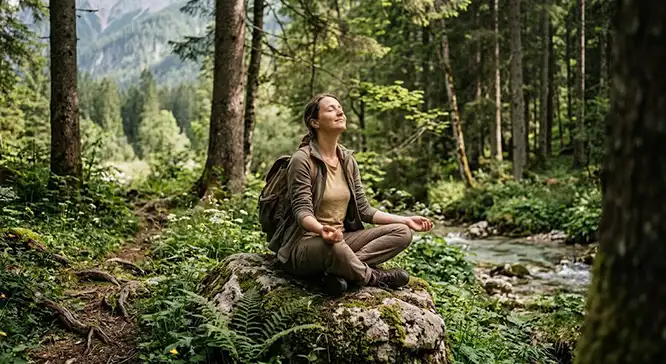
Listening to Nature’s Voice: It’s Time to Become One Again
I’ve been thinking a lot about the sound of leaves. Not the ones in parks, carefully planted and tended. The wild ones. The ones that grow without permission, that have been there longer than the buildings around them. There’s something in that sound that cities can’t replicate. Something ancient. Something steady.
The short answer to whether we’re connected to nature is this: we never stopped being connected. We just forgot. And forgetting doesn’t change the reality of the connection. It just makes us blind to it. It just makes us act as if we’re separate when we’re not.
The Separation We Didn’t Notice
For decades, we’ve been moving away from the natural world. We told ourselves it was progress. More opportunities in cities. Better jobs. Higher standards of living. More choices. More convenience. Everything we could want, all in one place. It felt like the future. It felt like freedom.
But something got lost in that trade.
The crowds thickened. The traffic grew. The green spaces shrank. The trees that once lined our streets became fewer, smaller, more isolated. We traded the sound of wind through branches for the hum of traffic. We traded open sky for ceilings. We traded the rhythm of seasons for the rhythm of deadlines. We traded silence for noise.
And we didn’t notice what we were losing because we were too busy gaining everything else.
We adapted. We adjusted. We told ourselves this was normal. This was how life was supposed to be. We forgot that for most of human history, we lived differently. We forgot that our bodies and minds evolved in a different environment. We forgot that we need what we’ve been losing.
What the Pandemic Revealed
Then came the lockdowns.
Suddenly, we were forced to stop. To stay. To be in one place for longer than most of us had been in years. The world outside our windows became our world. The sky became something we looked at, not just rushed under. The trees became companions, not just scenery. The birds became neighbors.
Some people left the cities entirely. They retreated to summer houses, rented cabins, small towns. They rediscovered what it felt like to have space around them. To hear birds instead of sirens. To see stars instead of streetlights. To breathe air that didn’t taste like exhaust.
Those of us who stayed found ourselves craving even fifteen minutes in a park. A walk around the block. A moment of green in a landscape of concrete. A few seconds of looking up instead of looking down. We started to remember something we’d forgotten: that we need the natural world not just for our health, but for our sanity.
A Question to Sit With
When was the last time you really heard nature? Not just noticed it in the background, but actually listened? The kind of listening where you stop thinking about everything else and just let the sounds in? The kind of listening that changes something in you?
The Fire That Shook Us
Just as we were starting to emerge from the isolation, the fires came. Not distant fires, seen on a screen. Fires in places we knew. Places we’d visited. Places that held memories. Places we’d planned to visit again. Places that were part of our story.
Every tree that burned was a reminder. Every animal that perished. Every home that turned to ash. Every family displaced. Every life uprooted. We felt it in our chests. We felt the loss. We felt the helplessness. We felt the anger. We felt the grief.
And some of us felt something else. A recognition. That we’re not separate from what’s burning. That when the earth burns, we burn too. When the forests die, something in us dies as well. When the animals perish, part of us perishes. The connection isn’t spiritual. It’s physical. It’s real. It’s been there all along. We just hadn’t been paying attention.
The Two Roads Ahead
Now we stand at a fork. Two paths stretch out before us.
The first path is familiar. Smooth. Paved. It’s the road we’ve been walking for decades. On that road, the fires will be forgotten. We’ll return to our routines. We’ll go back to buying things we don’t need, using things we don’t need, ignoring things we don’t want to think about. We’ll tell ourselves that someone else will handle it. That it’s not our problem. That we can’t make a difference anyway.
On that road, the next disaster will come as a shock. We’ll feel angry again. Helpless again. We’ll wonder how this keeps happening. We’ll wonder why no one is doing anything. We’ll forget that we are the ones who could be doing something.
The second path is harder. It’s rough. It twists and turns. It requires effort. It requires change. It requires us to look at things we’d rather not see. It requires us to admit that our convenience has come at a cost. It requires us to change how we live.
But at the end of that path, there’s something worth reaching for. A clarity. A peace. A way of living that doesn’t depend on forgetting. A way of living that’s in alignment with what’s real.
That path starts with one recognition: that we are not separate from nature. We are part of it. And everything we do to it, we do to ourselves. Every choice we make affects it. Every choice affects us.
Small Ways to Reconnect
The recognition is the foundation. But it needs practice. It needs everyday habits that keep the awareness alive. It needs more than just knowing. It needs doing.
Touch a tree. Not in a rushed way. Not while scrolling through your phone. Put your palms against the bark. Close your eyes. Feel the roughness. Feel the solidity. Feel the life that’s still moving through it, even when it looks still. Feel the history it carries. Feel the connection.
Walk barefoot on the earth. Not on pavement. On grass. On sand. On soil. Feel the ground under your feet. Feel the texture, the temperature, the connection. It’s not just metaphor. It’s physics. The earth absorbs what we carry. It grounds us. It reminds us where we came from.
Listen to the birds. Not with the intention of naming them. Just listen. Notice the different songs. The variety. The patterns. The way they communicate without words. The way they’ve been singing longer than we’ve been listening.
Sit by the water. Watch it move. Watch it never stay the same. Watch it carry things away and bring things back. There’s a rhythm there that our bodies recognize. A rhythm that matches something inside us. A rhythm that predates our awareness of it.
A Few Things I’ve Noticed
I’ve noticed that the people who are most grounded are often the ones who spend the most time in nature. Not necessarily the ones who go on wilderness retreats. Just the ones who make time for it. The ones who have a relationship with the natural world that’s not just occasional but regular. The ones who don’t treat nature as a luxury but as a necessity.
I’ve also noticed that when I’m overwhelmed, a walk in nature helps more than anything else. It doesn’t fix the problem. But it changes my relationship to the problem. The distance from it creates perspective. The rhythm of walking creates calm. The presence of something older and bigger than my worries puts things in perspective. It reminds me that I’m part of something larger.
Why Connection Changes Everything
When we feel connected to nature, our choices change naturally. We don’t have to force ourselves to recycle or reduce plastic or conserve water. It becomes obvious. It becomes second nature. Because we’re protecting ourselves. We’re protecting our home. We’re protecting something we love.
That’s not guilt-driven. It’s love-driven. And love is more sustainable than guilt. Guilt fades. Love deepens. Guilt makes you feel bad. Love makes you act. Guilt is about obligation. Love is about connection.
When you love something, you care for it without effort. You don’t have to remind yourself to be careful. You just are. The connection creates the care. The care creates the action. The action creates the change. It’s not a formula. It’s a natural progression.
One Thing Before You Go
Today, find one way to connect with nature. It doesn’t have to be dramatic. It doesn’t have to be a weekend in the mountains. It just has to be intentional. It just has to be real.
Notice the tree on your street. The flower that’s growing through a crack in the pavement. The clouds moving across the sky. The light changing at sunset. The sound of rain. The smell of earth after it’s been watered.
Pay attention. That’s the beginning. Everything else grows from there. Everything else follows.
Let Me Be Honest About Something
I don’t always prioritize this. I get busy. I get distracted. I spend too much time inside, looking at screens. I know the value of connection and I still forget to practice it. I still let the urgency of the day crowd out the importance of the moment.
That’s not failure. That’s human. The point isn’t to be perfect. The point is to keep coming back. To keep noticing. To keep choosing the path that leads toward connection instead of away from it.
What I Keep Coming Back To
The earth doesn’t need us to save it. It’s been through worse than us. It’s survived ice ages and meteor strikes and mass extinctions. It will survive us too. What needs saving is our relationship with the earth. Our ability to see ourselves as part of something larger. Our capacity to remember what we’ve forgotten.
That’s the real work. Not fixing everything. Not solving every problem. Just remembering. Just reconnecting. Just allowing ourselves to be part of the natural world again.
Where This Leaves Me
I’m still learning how to live in a way that honors connection. I still fall into the patterns of separation. I still get caught up in the busyness and the screens and the noise. I still forget what I know.
But I’m also learning to catch myself. To notice when I’ve drifted. To come back. To touch a tree. To stand on the earth. To listen to the birds.
And every time I do, something shifts. The weight lifts, even a little. The fear quiets, even a little. The connection returns, even a little. The separation starts to dissolve.
That’s enough. Not as a solution. As a practice. As a beginning.
The river is waiting. Not somewhere far away. Here. Now. In the space between you and the tree. In the sound of the wind. In the ground beneath your feet. That river is always flowing. We just need to remember how to enter it.
We just need to remember that we’ve never left. We just need to feel what’s always been there.