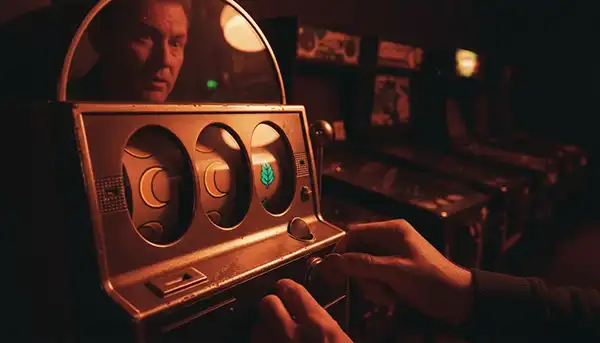
Why a near-miss doesn’t change you (and what actually does)
The call came at 2:47 a.m. A father in Cleveland, Ohio, woke to the sound of his phone vibrating on the nightstand. His son, seventeen, was supposed to be home by midnight. It was now nearly three. The father answered. It wasn’t his son. It was a friend. The friend said the son had fallen asleep at a party. The friend said the son was fine. The friend said they were on their way home.
The father hung up. He sat on the edge of the bed for a long time. His heart was pounding. His hands were shaking. And then he made a silent promise. If the kid walks through that door, he thought, I will never take him for granted again. I will stop yelling about the grades. I will stop complaining about the messy room. I will be patient. I will be present.
The kid walked through the door forty minutes later. He was fine. He was tired. He was apologetic. The father hugged him. The father cried. The father told him he loved him.
Two weeks later, the father was yelling about the messy room. The grades were back on the table. The distance was back. The promise was forgotten.
A phone that didn’t ring
This is not a story about a bad father. It is a story about a human brain. And it is not an isolated incident. It is a pattern that researchers have been documenting for decades, across domains as different as traffic safety, disaster preparedness, and parenting. The pattern is simple: a close call does not teach you what you think it teaches you. It seduces you. It convinces you that you have learned something when you have learned nothing at all.
The research on near-misses is unambiguous. A 2019 study published in Safety Science examined 614 drivers and their experiences with accidents and near-accidents. The findings were startling. People who had been in actual accidents did not become more cautious. People who had experienced repeated near-accidents became less cautious. The near-misses, the study concluded, were “inherently ambiguous.” They signaled that margins were good enough, inspiring increased risk-taking rather than increased caution.
Read that again. The near-miss made people more reckless.
What the traffic studies actually show
Robin Dillon and Catherine Tinsley at Georgetown University spent years studying how people interpret near-misses. Their research, published in Management Science and Risk Analysis, found that when a near-miss is interpreted as a disaster that didn’t happen, people feel safer. They underestimate the danger of the next situation. They make riskier decisions.
Dillon and Tinsley gave participants a scenario: a project manager whose decisions resulted in either a mission success, a near-miss, or a failure. The participants rated the near-miss manager almost identically to the success manager. The failure manager was rated significantly lower. The near-miss was treated as a win. And the participants who received near-miss information were more likely to choose a riskier alternative in a subsequent decision.
This is the first lie of the near-miss. It tells you that you got away with it. It tells you that the system is resilient. It tells you that you don’t need to change.
Near-miss paradox: safer or riskier?
The paradox is that the near-miss contains information that could save your life. It is a warning. But the warning is buried under the relief. And the relief is louder.
A 2001 paper by Peter Lovibond at the University of New South Wales described the near-miss as a “fourth pathway to anxiety.” In a near-miss, he wrote, a person learns anxiety despite the fact that the feared outcome did not actually occur. The near-miss creates an expectation of harm that cannot be disconfirmed because the harm never happened. The anxiety persists because the evidence that would relieve it is never generated.
So the near-miss does two contradictory things. It makes you feel safer in the short term. It makes you more anxious in the long term. You become both complacent and fearful. You take more risks and you worry more about them. This is not a stable state. It is a trap.
When relief becomes amnesia
I call this relief amnesia: the psychological phenomenon where the relief of a crisis passing wipes out the intention to change that the crisis created. The bigger the relief, the bigger the amnesia. The near-miss doesn’t teach you. It sedates you. It convinces you that you’ve learned something when you haven’t learned a thing.
The father in Cleveland experienced relief amnesia. The relief of his son walking through the door was so powerful that it erased the terror that had preceded it. The terror had contained information. The terror had contained motivation. The relief washed it all away.
Hot-cold gap: why promises fade
George Loewenstein at Carnegie Mellon University coined the term “hot-cold empathy gap” to describe the difficulty people have in predicting how they will behave in a future emotional state. When you are in a “hot” state—angry, scared, desperate—you cannot imagine ever feeling calm. When you are in a “cold” state—calm, comfortable, relaxed—you cannot imagine ever feeling desperate.
The father in Cleveland was in a hot state when he made his promises. He was terrified. He was desperate. He would have promised anything to get his son back. Two weeks later, he was in a cold state. He was calm. He was comfortable. He was annoyed about the messy room. The promises he made in the hot state felt like they belonged to a different person. They didn’t feel relevant to the cold state.
This is not hypocrisy. It is neuroscience. The brain that makes promises in a crisis is not the same brain that has to keep them in the calm. The hot state is a different operating system. The cold state is the default.
How to make the lesson stick
The mistake most people make is assuming that the lesson will stick because the feeling was strong. The feeling fades. The lesson doesn’t stick. The behavior reverts. To make the lesson stick, you have to do something while the feeling is still strong. You have to create a structure that will outlast the feeling. You have to build a bridge between the hot state and the cold state.
The first step is to write it down. Not in your head. On paper. The father in Cleveland should have written down what he promised. He should have written down the specific behaviors he wanted to change. Not “be more grateful.” But “stop yelling about the messy room.” Not “be more present.” But “ask one question about his day every night at dinner.” Specific behaviors are harder to forget than vague intentions.
The second step is to create a cue. The promise has to be tied to something that happens regularly. The messy room is a cue. The report card is a cue. Dinner is a cue. The father could have decided that every time he saw the messy room, he would take a breath before speaking. He could have decided that every time he sat down to dinner, he would ask one question about his son’s day. The cue triggers the behavior. The behavior becomes a habit.
The third step is to tell someone. The promise has to be witnessed. The father could have told his wife. He could have told a friend. He could have told his son. The witness creates accountability. The accountability creates pressure. The pressure creates follow-through.
The fourth step is to expect to fail. You will forget. You will revert. You will yell about the messy room. The goal is not perfection. The goal is to catch yourself. The goal is to notice when you’re slipping back into the old pattern and to course-correct. The noticing is the skill. The skill can be developed.
What the research says about making change last
The research on habit formation has shown that habits are context-dependent. They are triggered by cues in the environment. The cue for yelling about the messy room is the messy room. The cue for worrying about grades is the report card. The cue for distance is the daily routine. The promises made during the crisis don’t have a cue. They are abstract. They are not tied to a specific moment. So they don’t get triggered. So they don’t get kept.
A 2014 study published in Risk Analysis by Dillon, Tinsley, and William Burns found that the key variable is not the near-miss itself. It is the interpretation of the near-miss. When people interpreted the near-miss as evidence that the system was resilient, they took more risks. When they interpreted it as evidence that the system was vulnerable—that disaster had almost happened—they took more precautions. The interpretation determined the behavior.
The father in Cleveland interpreted his near-miss as a success. The system—his family—was resilient. His son had come home. The danger had passed. He felt safe. He felt relieved. He reverted.
He could have interpreted it differently. He could have interpreted it as a vulnerability. His son could have been in a ditch. His family could have been destroyed. The system was not resilient. It was lucky. And luck is not a strategy.
A second chance you’re already wasting
If you’re reading this, you’re probably still alive. That means you have a second chance. You have a third chance. You have as many chances as there are mornings. The sun came up today. That’s a chance.
But the chance is not the point. The point is what you do with it. The father in Cleveland got his chance. He got his son back. He got his relief. He got his amnesia. He wasted his chance.
You don’t have to waste yours.
The next time you get a near-miss—the next time the kid comes home late, the next time the boss doesn’t fire you, the next time the test comes back negative—don’t just breathe a sigh of relief and move on. Stop. Write down what you promised. Create a cue. Tell someone. Expect to fail. Catch yourself.
The relief is not the lesson. The relief is the trap. The lesson is what you do after the relief fades.
The father in Cleveland is not a bad father. He is a human father. He is doing what humans do. He is forgetting. He is reverting. He is getting caught in the relief amnesia. But he can change. You can change. Not by making a big promise. Not by having a dramatic moment. By doing one small thing differently. Today. Right now.
The next time you see your kid, ask one question. Not “how was school.” Not “did you do your homework.” A real question. “What made you laugh today?” “What was the hardest part of your day?” Then listen. Don’t interrupt. Don’t advise. Don’t fix. Just listen.
That’s it. That’s the practice. One question. One act of attention. One small deposit in the relationship bank account. Do it every day. The account grows.
The father in Cleveland didn’t need a near-miss to learn this. He needed a practice. He needed a structure. He needed to do the small thing before the big thing happened. He needed to build the habit before the crisis.
You can build it now. The sun is up. The chance is here. The messy room is still messy. The kid is still there. The question is waiting. Ask it.