Panic Attack vs Heart Attack: How to Tell the Difference and What to Do
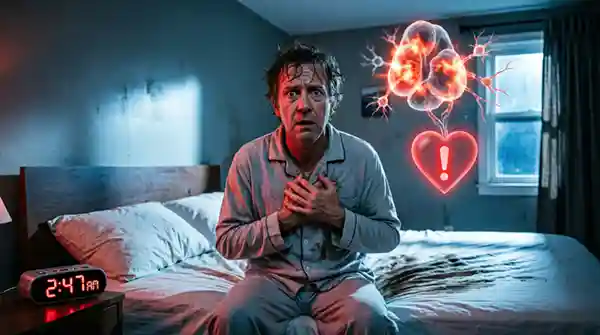
It is 2:47 a.m. A woman in Denver wakes up with her heart slamming against her ribs. Her chest is tight. Her left arm is tingling. She is sweating through her t-shirt. And she is absolutely certain, in a way that feels beyond doubt, that she is dying. She calls 911. The paramedics arrive in eight minutes. By the time they hook her up to an EKG, the symptoms have faded. The monitor shows a normal rhythm. The hospital sends her home with a pamphlet about stress and a phone number for a therapist she will not call for another six months.
This scene repeats itself in emergency rooms across the country every single night. More than 800,000 Americans have heart attacks each year. But upwards of 37 million experience panic attacks. The overlap in symptoms is so complete that even seasoned emergency physicians admit the distinction is not always obvious without testing. And the cost of that ambiguity is enormous: unnecessary hospital visits, delayed diagnosis of actual cardiac events, and a cycle of fear that keeps people from seeking help because they are too embarrassed by what happened the last time.
Why Your Brain Fires the Wrong Alarm
There is a name for what happens during a panic attack. I call it alarm misfire — the neurobiological event in which the brain’s threat-detection system triggers the full cascade of fear responses in the absence of any actual danger. The fight-or-flight response is not malfunctioning. It is working exactly as designed. The problem is that it has been activated at the wrong time, in the wrong place, for no reason that the conscious mind can identify.
The fight-or-flight response is governed by the autonomic nervous system. When the brain perceives a threat, it floods the body with adrenaline and other stress chemicals. Heart rate accelerates. Breathing becomes shallow and rapid. Blood is shunted away from the digestive system and toward the muscles. Pupils dilate. The body prepares for combat or escape.
The system is designed to be activated briefly and then to return to baseline. But for people with panic disorder, the system activates spontaneously. It is not responding to a snake on the hiking trail. It is responding to nothing at all. Or rather, it is responding to a misfire — a false alarm that feels exactly like a real one.
The Symptoms That Mimic a Heart Attack
The diagnostic criteria for a panic attack require at least four of thirteen symptoms to be present. And the list reads, in part, like the warning signs on a heart attack poster.
Chest pain or discomfort. Palpitations, a pounding heart, or an accelerated heart rate. Shortness of breath or the feeling of being smothered. Sweating. Trembling or shaking. Dizziness, unsteadiness, or faintness. Numbness or tingling sensations, especially in the lips and fingers. Chills or hot flushes. Nausea or abdominal distress.
The overlap is not coincidental. Both panic attacks and heart attacks activate the same physiological systems. The body does not distinguish between the threat of a predator and the threat of a perceived catastrophe. It responds to both with the same cascade of chemicals. And the conscious mind, which is receiving the same input from the body in both cases, is not always able to tell the difference either.
How Doctors Tell Them Apart
The most reliable predictors are age and history. Patients under forty, especially those who are healthy and have had previous panic attacks, are far more likely to be experiencing a panic attack. Middle-aged and older adults, especially those with risk factors for coronary artery disease — hypertension, diabetes, obesity, high cholesterol, a history of smoking, a family history of heart disease — are more likely to be experiencing a heart attack.
The pattern of symptoms also offers clues. Heart attack pain typically starts slowly and progresses to a feeling of tightness, squeezing, and heaviness. It often radiates to the left arm, jaw, or neck. It tends to worsen with exertion. Panic attack symptoms come on quickly, reaching peak intensity within ten to twenty minutes. The pain is often sharp and intense rather than a dull pressure. And it tends to improve with movement rather than worsen.
But the only way to be certain is to be evaluated. If you have risk factors for heart disease and you are experiencing chest pain, call 911. Do not try to talk yourself out of it. Do not assume it is just anxiety. The cost of being wrong in one direction is a wasted emergency room visit. The cost of being wrong in the other direction is your life.
How Long Does a Panic Attack Last?
Most panic attacks peak within ten minutes and resolve within twenty to thirty minutes. Some last up to an hour. The physical and emotional effects can linger for hours afterward, leaving a person exhausted, shaken, and hypervigilant for the next attack.
The brevity of the attack is one of its cruelest features. By the time most people reach an emergency room, the attack has already passed. They are told there is nothing wrong with their heart and sent home without an explanation for what just happened. The lack of explanation is often worse than the attack itself. It leaves the person with a terrifying experience, no diagnosis, and a growing fear that it will happen again.
What Not to Do During a Panic Attack
The single most common mistake people make during a panic attack is to try to fight it. The second most common mistake is to try to escape it. Both responses make the attack worse.
Fighting the attack means tensing your muscles, holding your breath, and trying to force your body to calm down. This sends a signal to your nervous system that there is, in fact, something to fight. The alarm system interprets the tension as confirmation that the threat is real. And it escalates.
Escaping the attack means leaving the situation, fleeing to a safe place, and avoiding the triggers. This provides short-term relief but reinforces the belief that the situation was dangerous. Over time, the avoidance generalizes. The person stops going to the places where attacks have occurred. They stop doing the things that might trigger one. And their world shrinks.
The research on panic disorder and agoraphobia is clear. Avoidance is the mechanism through which a manageable problem becomes a disabling one. A study of 239 patients diagnosed with panic disorder found that 98 percent exhibited situational avoidance, 90 percent experienced experiential avoidance, and 80 percent endorsed interoceptive fear and avoidance. The avoidance does not protect the person. It traps them.
What Actually Helps in the Moment
The first thing to do when you feel a panic attack coming on is to remind yourself that it is not dangerous. This is not positive thinking. It is a factual statement. Panic attacks do not cause heart attacks. They do not cause you to stop breathing. They do not cause you to lose control. They do not cause you to go crazy. No one has ever died from a panic attack. No one has ever gone insane from a panic attack. The symptoms are terrifying, but they are not harmful.
The second thing to do is to ground yourself. There are several techniques, but the most widely used is the 5-4-3-2-1 method. Acknowledge five things you can see. Four things you can touch. Three things you can hear. Two things you can smell. One thing you can taste. The technique works by forcing the brain to engage with the external environment instead of the internal alarm.
The third thing to do is to slow your breathing. Not by taking deep breaths — that can actually make things worse by altering the balance of oxygen and carbon dioxide in the blood. By breathing slowly through the nose, into the belly, and out through the mouth. The goal is not to take more air. The goal is to take less air, more slowly. Slower breathing signals to the nervous system that the threat has passed.
The Role of Caffeine and Other Triggers
The research on caffeine and panic disorder is unambiguous. A meta-analysis of studies examining the effects of caffeine on panic disorder found that doses of 400 to 480 milligrams — equivalent to four to five cups of coffee — induced panic attacks in approximately half of individuals with panic disorder. Even lower doses produced significantly greater increases in anxiety, nervousness, fear, nausea, palpitations, restlessness, and tremors in patients with panic disorder compared to healthy controls.
The mechanism involves adenosine receptors. Caffeine blocks adenosine, a neurotransmitter that promotes calm and sleepiness. For people with panic disorder, the blockade produces a state of hyperarousal that the brain interprets as a threat. The result is a panic attack that was triggered not by a psychological stressor but by a chemical one.
Caffeine is not the only trigger. Alcohol, nicotine, stimulant medications, and even intense exercise can produce the same effect in susceptible individuals. The research does not suggest that everyone with panic disorder must eliminate all of these things. It suggests that people with panic disorder should be aware of the connection and should consider whether their consumption patterns are contributing to their symptoms.
Treatments That Actually Work
The first-line treatments for panic disorder are cognitive behavioral therapy, selective serotonin reuptake inhibitors, and serotonin-norepinephrine reuptake inhibitors. The evidence for these treatments is robust.
A meta-analysis of 27 randomized controlled trials found that cognitive behavioral therapy is significantly more effective than placebo for panic disorder. The effect sizes are moderate to large. A systematic review of internet-delivered CBT for panic disorder found high efficacy for reducing symptoms of panic disorder and agoraphobia compared to waitlist. A recent randomized controlled trial found that videoconference-delivered CBT produced remission in 66.7 percent of participants, compared to zero percent in the usual care group.
Cognitive behavioral therapy for panic disorder works by targeting the catastrophic misinterpretations that drive the fear. The person who experiences a racing heart and interprets it as a heart attack is taught to recognize the misinterpretation and to replace it with a more accurate appraisal. The person who avoids situations because they fear having a panic attack is gradually exposed to those situations until the fear extinguishes.
Medication can also be effective. Antidepressants, particularly SSRIs and SNRIs, reduce the frequency and intensity of panic attacks. Benzodiazepines can provide rapid relief but carry a risk of dependence and are generally recommended for short-term use only.
When to Seek Professional Help
If you have experienced a panic attack, the first step is to be evaluated by a medical professional to rule out physical causes. Chest pain, shortness of breath, and heart palpitations can have cardiac or pulmonary origins. You cannot diagnose yourself. You cannot assume it was just anxiety. You need to be checked.
If the evaluation rules out a physical cause and you are diagnosed with panic disorder, the next step is to find a mental health professional who specializes in anxiety disorders. The research on treatment is clear. Cognitive behavioral therapy is effective. Medication is effective. The combination is often more effective than either alone.
If you are experiencing panic attacks that interfere with your daily life, if you are avoiding situations because of fear, if you are living in constant dread of the next attack, you do not have to manage this alone. The 988 Suicide and Crisis Lifeline is available 24 hours a day, seven days a week. You do not have to be in crisis to call. You just have to be struggling.
The Woman Who Called 911
The woman in Denver eventually found her way to a therapist who specialized in panic disorder. The therapist did not tell her that her fear was irrational. The therapist told her that her fear made perfect sense. The body had been sending her signals that felt like dying. The fact that the signals were false did not make the experience less real.
The therapist taught her the 5-4-3-2-1 method. She taught her the breathing techniques. She taught her to recognize the catastrophic thoughts — I am having a heart attack, I am going to die, I am losing control — and to challenge them with evidence. My EKG was normal. My blood work was normal. The paramedics said it was a panic attack. Panic attacks do not kill people.
It took time. It took practice. It took several more attacks before she could get through one without calling 911. But eventually, she did. She rode out an attack on her living room floor, breathing slowly, naming the colors she could see, touching the carpet, listening to the sounds outside her window. And when it was over, she was still there. She had survived. And that, according to the research and according to her, is the beginning of the end of the fear. Not the absence of the alarm. The willingness to sit with it until it passes.