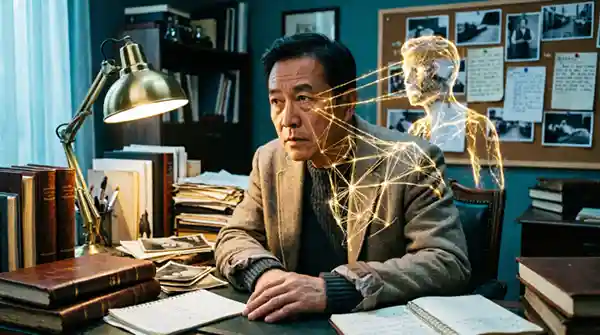
Body Language: What Your Posture, Hands, and Eyes Are Really Saying
The forensic analyst sits across from me in a diner in Baltimore. She has spent nineteen years studying nonverbal behavior. She has consulted for police departments, law firms, and Fortune 500 companies. She has watched thousands of hours of video, frame by frame, cataloging the micro-expressions and postural shifts that most people never notice. And she has reached a conclusion that surprises almost everyone she tells.
“Most of what you have been taught about body language is wrong,” she says. “Not the broad strokes. The broad strokes are fine. Crossed arms can mean defensiveness. Avoiding eye contact can mean discomfort. But the specifics, the confident claims about what this gesture means or that posture reveals, those are mostly fiction. The body is not a codebook. It is a conversation. And most people do not know how to listen.”
What Does Crossed Arms Body Language Really Mean
The popular interpretation is that crossed arms signal defensiveness, resistance, or disagreement. The research is more complicated.
A 2008 study published in the European Journal of Social Psychology found that arm crossing can actually increase persistence on difficult tasks. The gesture is not always a wall. Sometimes it is a brace. Sometimes it is concentration. Sometimes it is simply a comfortable way to stand.
The forensic analyst explains it this way. “You have to look at the whole body. The arms are one sentence. The shoulders are another. The feet are a third. If the arms are crossed and the shoulders are tight and the feet are pointing toward the door, you have a different message than if the arms are crossed and the shoulders are relaxed and the feet are planted. The gesture is not the message. The gesture is a word in a sentence.”
How to Read Body Language at Work
The workplace is where body language becomes expensive. The person who does not understand the signals they are sending is at a disadvantage. The person who does not understand the signals they are receiving is flying blind.
A 2025 review published in Europe PMC synthesized the neural mechanisms underlying nonverbal communication. The researchers identified the key brain structures involved in decoding body language cues, including the amygdala, the prefrontal cortex, and the mirror neuron systems. These structures collaborate to interpret the social and emotional meaning embedded in posture, gestures, and facial expressions.
The analyst describes the workplace version. “In a meeting, the person who is leaning forward is engaged. The person who is leaning back is evaluating. The person who is mirroring your posture is building rapport, whether they know it or not. The person whose feet are pointing toward the door has already left. You can learn more in thirty seconds of watching than in thirty minutes of listening.”
What Are the Signs of Attraction in Body Language
The research on nonverbal cues of attraction is specific and consistent. A 2001 study published in Evolution and Human Behavior identified a set of courtship signals that appear across cultures. Women who are interested often lean forward, cant their heads, and maintain eye contact. Men who are interested smile more, laugh more, and gaze downward less often.
But the analyst warns against overconfidence. “Attraction is a cluster of signals. One sign is not a verdict. The person who leans in might be interested. They might also be hard of hearing. The person who touches their hair might be flirting. They might also have an itch. The signal is real. The interpretation is probabilistic. You are not reading a code. You are making a guess.”
Why the Body Language of Lying Is Not What You Think
The most persistent myth in nonverbal communication is that there are specific tells that reveal deception. The research says otherwise.
A 2024 article in Psychology Today cited research on TV quiz show contestants that showed blinking is not a reliable indicator of lying. People blink faster under stress. But stress can be caused by telling the truth, telling a lie, or trying to remember the answer to a difficult question. The same is true of every nonverbal cue. The body is not a lie detector. It is a stress detector.
“There is no Pinocchio’s nose,” the analyst says. “The person who looks away might be lying. They might also be shy. They might be thinking. They might be distracted. The only reliable way to detect deception is to compare behavior to a baseline. What does this person do when they are telling the truth? What changes when the topic shifts? The change is the signal. The behavior itself is noise.”
How to Improve Your Body Language for Confidence
The research on power posing has been both celebrated and contested. The original claims about hormonal changes have not replicated. But the behavioral effects remain.
A 2015 study published in Harvard Business Review tested whether adopting expansive postures before a high-stakes social evaluation could improve performance. The high-power posers performed better and were more likely to be chosen for hire. But the effect was not due to the hormones. It was due to presentation quality — how captivating and confident they appeared.
The analyst is direct about what works. “Stand up straight. Not because it changes your hormones. Because it changes how people see you. And how they see you changes how they treat you. And how they treat you changes how you feel. The loop is real. You do not need to believe in the pose. You just need to do it.”
What Nonverbal Communication Examples Actually Show
The analyst has spent nineteen years watching bodies. She has seen the barista ignored. The man on the train bracing against the door. The executive nodding while his feet point toward the exit. The woman leaning in. The candidate holding herself together. The couple on their phones. The man leaning in. The woman leaning back.
She says the most important lesson is not about reading others. It is about noticing yourself. “You are always communicating. Even when you are silent. Even when you are alone. The body is always speaking. The question is whether you are listening.”
When Body Language Becomes More Than a Signal
There is a limit to what observation can accomplish. If you are struggling to understand the nonverbal signals of someone you love, if you are feeling disconnected despite being in the same room, if the silence has become a source of distress rather than information, you do not have to figure it out alone.
The research on couples therapy and communication training is robust. Emotion-focused therapy, cognitive behavioral therapy for couples, and communication skills training have all been shown to improve relational outcomes. These treatments work. But they work best when delivered by someone trained to deliver them.
This is not a disclaimer. It is the same logic that runs through everything else in this piece. You do not try to fix a broken bone with positive thinking. You go to a doctor.
The Last Thing the Analyst Said
I asked her what she wanted people to understand about body language. She thought for a long time. And then she said something I will not forget.
“The body is not a weapon. It is not a tool for manipulation. It is a language. And like any language, it is meant to be learned, practiced, and understood. But most of all, it is meant to connect. The person who uses body language to read others without being read themselves is not communicating. They are performing. The person who uses it to hide is not communicating either. They are hiding. The only real communication is the kind that goes both ways. The kind where you are seen as much as you see.”
She paid her bill. She stood up. She walked out. And I watched her go, noticing the way she carried herself, the way she moved through the room, the way the people around her responded without knowing why. She was not performing. She was not hiding. She was just present. And that, she would tell you, is the whole thing.