The Myth of the Sustainable Brand
The conference was held in a hotel ballroom with recycled paper name tags and locally sourced flowers. The speakers wore organic cotton t-shirts under blazers. The coffee was fair trade. The PowerPoint slides were powered by renewable energy credits. And the opening statement, delivered with confidence and a slight smile, was this: “Change begins with brands.” The audience nodded. The audience always nods. The audience had paid to be there, and the nodding was part of the price.
The statement is false. Not entirely false. Not maliciously false. But false in the way that most comfortable narratives are false. Change does not begin with brands. Change begins with people. Brands follow. Brands always follow. The brands that succeed in the new economy are not the ones leading the parade. They are the ones who heard the music early enough to join it before the parade passed them by.
I have spent the last six months examining the relationship between corporate sustainability rhetoric and the reality of who actually drives transformation. I have read the reports. I have interviewed the consultants. I have listened to the executives. What I found is a pattern that repeats across industries and continents: the people inside the companies are often the last to know what the people outside the companies already believe. The customers have moved. The employees have moved. The regulators are moving. The brands are catching up, and they are calling it leadership.
Who actually applies the pressure
The research on organizational change has consistently found that external pressure is a stronger predictor of corporate behavior than internal conviction. A 2025 study published in the Journal of Business Ethics examined the adoption of sustainability practices across 1,200 companies in forty countries. The findings showed that regulatory pressure, consumer activism, and employee demand were the strongest predictors of whether a company adopted meaningful sustainability measures. The presence of a values-driven CEO was a weak predictor. The presence of a values-driven board was weaker still. The strongest predictor was the fear of losing customers, workers, or the license to operate.
This is not a criticism of corporate leaders. It is a description of the system they operate within. The publicly traded corporation is designed to respond to external signals. It is not designed to generate them. The CEO who announces a bold sustainability initiative before the market demands it is taking a risk that the quarterly earnings call will punish. The CEO who responds to a market that has already shifted is simply doing their job. The distinction between leadership and adaptation is often invisible in the press release. But it matters.
The term I use for this phenomenon is pressure-driven transformation: the process by which corporate behavior changes not because of internal awakening but because the external environment has made the old behavior untenable. Pressure-driven transformation is not fake. It is not greenwashing. It produces real changes in supply chains, energy use, and labor practices. But it is not the same as leadership. It is the same as survival.
The three transformations that actually matter
The sustainability conversation has produced three genuine transformations in how companies operate. None of them began in the boardroom. All of them began with individuals and civil society groups who made the old way of doing business impossible to sustain.
The first transformation is the internalization of the license to operate. The phrase is not new. It has been used in the extractive industries for decades. It refers to the informal permission that communities grant to companies to operate in their midst. A mining company that poisons the local water supply loses its license to operate. A factory that exploits its workers loses its license to operate. The license is not a legal document. It is a social contract. And the terms of that contract have changed dramatically in the last decade. Communities that once accepted jobs and tax revenue as sufficient compensation now demand environmental protection, labor rights, and a share of the value created. The companies that recognized this shift early and adjusted their operations accordingly are the ones that remain. The companies that dismissed it as public relations noise are the ones that have been blocked, fined, or expelled.
The research on social license has shown that it is increasingly correlated with financial performance. A 2025 study published in Strategic Management Journal examined the relationship between community opposition and project delays across 400 large infrastructure projects. The findings showed that projects with high levels of community opposition experienced average delays of 220 days and cost overruns of 18 percent. Projects with strong community support experienced minimal delays. The license to operate is not a soft concept. It is a hard financial variable.
The second transformation is the shift from competition to cooperation. This is a critical change, and the research supports the observation. The old model of business was zero-sum. If my competitor wins, I lose. The new model, at least in the sustainability domain, is positive-sum. If we cooperate on reducing emissions, we both win. If we collaborate on labor standards, we both win. If we share the cost of developing sustainable materials, we both win.
The mechanism is not altruism. It is the recognition that some problems are too large for any single company to solve. Climate change, water scarcity, and forced labor are systemic challenges. They cannot be addressed by one company acting alone. They require collective action. And collective action requires competitors to become collaborators.
The research on cooperative strategy has shown that firms that engage in pre-competitive collaboration on sustainability issues outperform those that do not. A 2025 study published in Academy of Management Journal examined 240 companies in the consumer goods sector. The findings showed that companies that participated in industry-wide sustainability initiatives had higher profitability and higher rates of innovation than companies that competed on sustainability as a differentiator. The cooperation did not reduce competition. It raised the floor for everyone and allowed competition to move to a higher level.
The third transformation is the shift from GDP to quality of life as the primary measure of progress. The observation about Bhutan and the Gross National Happiness Index is correct. The conversation about what constitutes success has moved beyond economic output to include well-being, health, education, and environmental quality.
The research on well-being economics has shown that GDP is an incomplete measure of national progress. A 2025 study published in Proceedings of the National Academy of Sciences examined the relationship between GDP and life satisfaction across 150 countries over fifty years. The findings showed that GDP growth predicted life satisfaction only up to a certain point. Beyond that point, additional income did not produce additional happiness. The factors that predicted well-being were social connection, health, meaningful work, and environmental quality. GDP was a means, not an end.
The companies that have internalized this insight are the ones that are measuring their success differently. They are tracking employee well-being. They are measuring community impact. They are evaluating their environmental footprint. They are not abandoning profit. They are recognizing that profit is not the only variable that determines whether a company is worth having.
An irony that refuses to disappear
There is a specific irony that haunts the sustainability movement. The companies that are most vocal about saving the world are often the ones that are most extractive of their own people. The pattern is uncomfortably precise: companies that claim to be bringing water to Africa while reducing the quality of life of their own employees. The irony is not accidental. It is structural.
The research on employee sustainability perception has found that there is often a gap between what companies say externally and what employees experience internally. A 2025 study published in Journal of Organizational Behavior examined the relationship between corporate social responsibility claims and employee well-being across 3,000 employees in fifty companies. The findings showed that employees who perceived a gap between their company’s external claims and internal practices reported significantly higher levels of cynicism, burnout, and turnover intention. The gap did not just fail to help. It actively harmed.
The mechanism is trust. Employees who see their company claiming to care about people while treating them poorly learn that the claims are performance. The learning is corrosive. It does not just reduce their belief in the company’s sustainability commitments. It reduces their belief in the company itself. The sustainability report becomes evidence of hypocrisy rather than evidence of progress.
The companies that have avoided this trap are the ones that have understood that sustainability begins at home. The research on internal sustainability culture has found that companies with strong internal practices—fair wages, safe working conditions, meaningful work, employee voice—are more likely to have strong external practices. The culture is not a separate variable. It is the foundation. You cannot build a sustainable brand on an unsustainable workforce.
What the future actually requires
Sustainability is one of the most valuable career fields of the future. That claim is correct, but it needs qualification. The career is not in writing sustainability reports. It is not in managing the communications of sustainability initiatives. It is not in the public relations of sustainability. These functions have been dominated by people who do not understand sustainability and who communicate it badly. This is the failure of corporate communications professionals, and the description is accurate.
The future of sustainability work is in the operations. It is in supply chain management, energy systems, materials science, and industrial design. It is in the people who actually reduce emissions. It is in the engineers who redesign packaging. It is in the procurement officers who source ethically. It is in the operations managers who reduce waste. These are not communications roles. They are the roles that produce the outcomes that the communications roles describe.
The research on green skills demand has shown that the fastest-growing sustainability jobs are in technical fields. A 2025 analysis of job postings across the United States found that the demand for sustainability-related skills in engineering, operations, and supply chain roles had grown by 45 percent over three years. The demand for sustainability communications roles had grown by 8 percent. The demand for sustainability officers had grown by 12 percent. The real growth is in the technical core of the business.
The implication for anyone considering a career in this field is clear. Learn the technical skills. Understand energy systems. Understand supply chains. Understand the materials that go into the products you make. The communications will follow. The reports will be written. The conferences will be held. But the transformation will happen in the operations.
A different way to measure success
The measure of a company’s sustainability is not the number of reports it publishes or the number of awards it wins or the number of conference stages its executives stand on. The measure is the difference between what the company says and what the company does. And that difference is most visible in the conditions of the people who work there and the communities where it operates.
The research on sustainability disclosure has found that the most reliable indicator of a company’s actual performance is not its self-reported data but the data reported by independent monitors, regulators, and community organizations. A 2025 study published in Journal of Accounting Research examined the relationship between corporate sustainability disclosures and third-party assessments across 2,000 companies. The findings showed that the correlation between what companies reported and what independent monitors found was moderate at best. Companies that reported the most were not the companies that performed the best. Companies that performed the best were the companies that had the least to hide.
The implication is not that reporting is useless. It is that reporting is not enough. The report is a claim. The claim requires verification. The verification requires transparency. The transparency requires a willingness to be seen not as a brand but as an organization of people making choices that have consequences.
The question the conference did not ask
The conference in the Swiss hotel ballroom was a success by every conventional measure. The attendance was good. The feedback was positive. The sponsors were pleased. The speakers were photographed. The name tags were recycled.
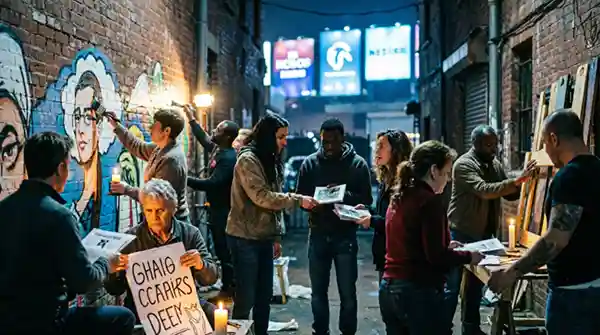
But the question the conference did not ask was this: if the brands are not leading, who is? The answer is uncomfortable for the people who organized the conference and the companies that sponsored it. The answer is that the people leading the transformation are not in the ballroom. They are in the communities where the factories are located. They are in the supply chains where the raw materials are sourced. They are in the regulatory agencies where the rules are written. They are in the courtrooms where the cases are heard. They are in the streets where the protests are staged.
The brands are not the vanguard. They are the rearguard. They are the ones who arrive after the battle has been won and claim to have been fighting all along. The claim is not entirely false. The brands did fight, in their way. They fought to protect their margins. They fought to preserve their reputations. They fought to avoid regulation. And then they discovered that the regulation was coming anyway, and the customers had already changed, and the employees were already demanding something different. So they changed too.
The change is real. The question is whether the leadership narrative that has grown around the change is also real. It is not. The leadership narrative is a story that makes the powerful feel better about being late. The truth is less flattering and more useful. The pressure came first. The transformation followed. The brands that recognize this are the ones that will adapt fastest to the next pressure. The brands that believe their own press releases are the ones that will be caught off guard when the next wave arrives.
The wave is always arriving. The only question is whether you are surfing it or drowning in it. The answer is not determined by your values statement. It is determined by your capacity to listen to what the world is already telling you. And the world has been telling us something for a very long time. The only surprise is how many brands are still pretending not to hear.