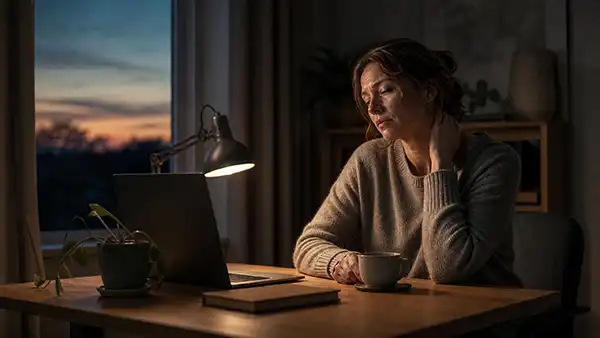
Breaking Free from Burnout: Why Rest and Support Are Not Optional
You know the feeling. You wake up exhausted, even after a full night’s sleep. The smallest tasks feel overwhelming. You snap at people you love. You can’t remember the last time you felt genuinely excited about anything. You’re going through the motions, but you’re not really there.
And you keep pushing. Because that’s what you do. Because there’s no other option. Because everyone else is tired too, right?
The short answer to whether burnout is real is this: it’s not just real—it’s recognized by the World Health Organization as a legitimate syndrome. It’s not a sign of weakness. It’s a sign that something in your life is fundamentally out of balance. And the way out is not through pushing harder. It’s through learning to listen.
The Symptoms You Might Be Ignoring
Burnout doesn’t arrive with a warning sign. It creeps in slowly, disguising itself as stress, as busyness, as just being tired. By the time you notice it, you’re already deep in it.
Here’s what it looks like. You’re not sleeping well. You’re exhausted but you can’t rest. You feel numb, disconnected from things that used to matter. You get angry quickly, over small things. You can’t find joy in activities you once loved. You feel like you’re running on empty, but you can’t stop running.
The World Health Organization defines burnout as a syndrome resulting from chronic workplace stress that hasn’t been successfully managed. It’s characterized by three dimensions: exhaustion, cynicism or detachment from work, and reduced professional efficacy.
But burnout doesn’t only happen at work. It happens in caregiving. In relationships. In the relentless pressure to keep going when everything inside you is screaming to stop.
The Data That Should Stop Us Cold
The pandemic revealed something most of us already knew but weren’t ready to admit. The way we’ve been living isn’t sustainable.
A 2020 study of 1,112 university employees in the United States found something striking. In 2019, 32% of participants reported feeling stressed. By 2020, that number had jumped to 70%. Two-thirds felt exhausted. A third felt angry—up from just 12% the year before.
Women were hit hardest. Female employees reported 16% higher stress levels than their male colleagues. The same study found that many were considering early retirement or changing jobs altogether.
These aren’t just numbers. They’re people. Your colleagues. Your friends. Your family. You.
And here’s what’s even more concerning. The research suggests that the effects of this prolonged stress will last well beyond the pandemic. We’re not going to bounce back overnight. The recovery will take time, intention, and structural change.
The Quiet Collapse
I’ve talked to people who’ve reached the breaking point. The moment when they couldn’t take another step. The moment when they walked away from everything—a job, a relationship, a life they’d built—because they simply couldn’t continue.
What I’ve noticed is that the signs were always there. The body had been sending signals for months, maybe years. The exhaustion. The irritability. The sense of meaninglessness. But they’d been ignored. Dismissed as normal. Pushed through.
This is what I call the quiet collapse. It doesn’t happen in a dramatic explosion. It happens in the slow erosion of your capacity to care. It happens in the endless postponement of your own needs. It happens in the belief that if you just push a little harder, you’ll finally get to rest.
And then one day, you can’t push anymore.
What Makes It Worse
There are factors that accelerate burnout. Understanding them is the first step toward prevention.
One of the biggest is the gap between what you’re expected to do and what you’re actually able to do. When the demands on you consistently exceed your capacity, something breaks. Not because you’re weak. Because you’re human.
Another factor is lack of support. We weren’t meant to do this alone. Humans are wired for connection, for community, for help. When that support is missing—when you’re carrying everything by yourself—the weight becomes unbearable.
The pandemic made this worse. We were isolated from the people who could have helped. We lost the informal support networks that had been sustaining us. And we were expected to keep going anyway.
The Body Keeps Score
There’s a reason why burnout feels physical. It is physical. The chronic stress that leads to burnout affects every system in your body. Your sleep. Your digestion. Your immune function. Your heart.
The research is clear: unmanaged stress is linked to a range of health problems. Heart disease. Diabetes. Depression. Anxiety. Weakened immune response. The body is always listening. And when you ignore its signals, it finds ways to get your attention.
This is why rest isn’t a luxury. It’s a biological necessity. It’s not something you earn. It’s something you require. The idea that you can keep pushing indefinitely is a myth. And it’s a dangerous one.
What Actually Helps
If you’re in the middle of burnout, the first step is often the hardest: stop. Not forever. Not completely. But enough to create space. Enough to hear what your body has been trying to tell you.
Simplify. Burnout is often exacerbated by overcommitment. You’re doing too much. You’re trying to be everything to everyone. The path out starts with subtraction, not addition. What can you let go? What can you say no to? What can you delegate?
Listen. Your body is sending signals. They’re not random. They’re information. Tune in. What does exhaustion feel like? What does overwhelm feel like? Where do you hold tension? What does your body need right now?
Rest. Real rest. Not scrolling through social media. Not watching TV to numb out. Real rest—the kind that restores your nervous system. Sleep. Silence. Doing nothing. Letting yourself be.
Connect. Isolation is a core driver of burnout. Reaching out to others is part of the solution. Not to unload your problems—to feel connected. To remember that you’re not alone. To receive support.
Seek help. If you’re in deep, you might need professional support. There’s no shame in that. Burnout is a serious condition. It deserves serious attention.
Something Worth Considering
When you stop long enough to notice, what do you feel? When you ask yourself what you actually need, what comes up? When you imagine a life that isn’t driven by obligation and exhaustion, what does it look like? These questions are not a luxury. They’re a starting point.
The Role of Support
We were never meant to do this alone. The research on resilience is consistent. People who have strong social support networks are more resilient to stress. They recover faster from setbacks. They’re less likely to burn out.
But support isn’t just about having people around. It’s about the quality of those connections. It’s about being able to be honest about how you’re doing without fear of judgment. It’s about having someone who will listen without trying to fix you. It’s about knowing that you’re not alone in your struggle.
The Other Side of It
Here’s something I’ve learned. The people who recover from burnout often describe it as a turning point. Not a failure—a revelation. An invitation to change how they live. A chance to realign with what actually matters.
They stop prioritizing things that don’t matter. They stop measuring their worth by productivity. They learn to set boundaries. They learn to say no. They learn to rest.
It’s not easy. It doesn’t happen overnight. But it’s possible. And the people who do it often emerge with a different relationship to work, to rest, to themselves.
A Way Forward
If you’re feeling the weight of burnout, start small. Give yourself five minutes of real rest. Notice what it feels like. Ask yourself what one small thing you can let go of today. Ask yourself who you can reach out to. Ask yourself what you actually need.
The answers might not come immediately. That’s okay. The important thing is that you’re asking the question. You’re paying attention. You’re not pushing through anymore.
What Remains
Burnout is a signal. It’s not a judgment. It’s your system telling you that something needs to change. It’s an invitation to pay attention. To reset. To realign.
You don’t have to fix everything at once. You just have to start. One small step. One moment of rest. One honest question.
The quiet collapse doesn’t have to be the end of your story. It can be the beginning of something else. A different way of being. A more sustainable way of living. A life that includes rest, not as an afterthought, but as a foundation.