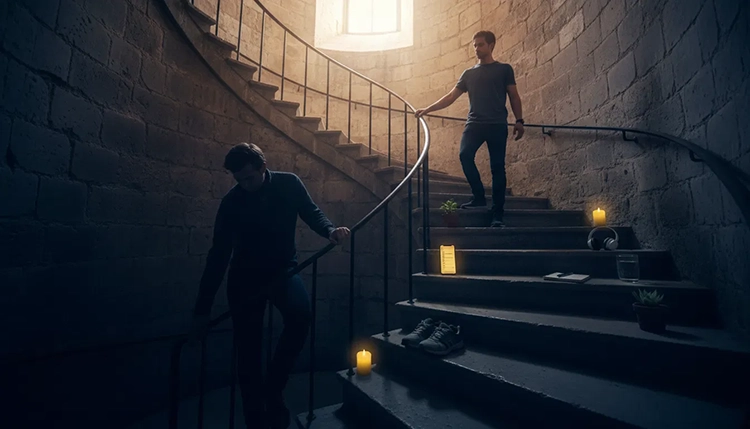
When the Horizon Disappears
There are moments when existence narrows to a single, suffocating point, and the future becomes a blank wall. You look ahead and find no anticipation, no spark of desire to reach what comes next. That is the quiet anatomy of hopelessness—the heavy, unshakeable conviction that no matter what you think, say, or try, nothing will ever shift.
When the weight of helplessness settles over you, even the simplest daily acts—stepping out of bed, opening a window, or washing your face—feel like insurmountable mountains.
Yet, even in the deepest trenches of despair, hope is not entirely dead; it is simply buried under the exhaustion of surviving too much at once. Reclaiming it does not happen through forced positivity or hollow optimism, but through a slow, deliberate return to the self.
The Anatomy of the Heavy Chest
Somatic Paralysis: A psychological and physiological freeze response where prolonged stress and grief sap the nervous system’s energy, transforming emotional exhaustion into physical heaviness and cognitive inertia.
Desperation often arrives wrapped in the illusion of permanence. When we suffer, the brain’s negative bias locks onto our pain, convincing us that the present moment is the final destination rather than a passage.
Trying to logic your way out of hopelessness usually fails because the mind is too tired to argue with its own shadows. Instead of fighting the darkness, the path forward begins by naming it, carrying it gently, and letting the body remember how to move.
The Gentle Return to Ground
When the ground beneath you feels entirely washed out, recovery is built through micro-movements rather than grand gestures:
- Articulating the Grief: Giving voice to sorrow—whether through journaling, reading poetry, or speaking aloud—so that unspoken pain stops crushing the heart from the inside.
- Radical Acceptance of the Void: Stopping the exhausting war against your own dark feelings, allowing yourself to feel sad or empty without judging yourself for lacking strength.
- Walking the Despair Out: Stepping into the open air for a brief, rhythmic walk to let physical movement discharge stagnant tension and invite a faint breath of clarity.
- Rejecting Toxic Consolation: Turning away from well-meaning clichés that dismiss your pain, choosing instead to sit with the raw, honest reality of where you are right now.
A Quiet Breathing Space
Bring your attention to the heavy places in your body right now—your shoulders, your chest, your hands. Take one slow, deliberate breath, and as you exhale, imagine releasing just a fraction of the pressure you have been carrying. You do not need to figure out tomorrow today; you only need to survive this single, quiet breath.