How to Improve Memory: What Dale Carnegie Got Right (And What Science Confirms)
A single image. That is where memory begins. Not with repetition. Not with willpower. With a picture so vivid, so strange, so specific that the brain cannot let it go.
I have been studying memory for fifteen years. Not as a neuroscientist. As a field guide author. I collect techniques the way other people collect stamps. I test them on myself. I test them on volunteers. I read the old books and the new studies. And after all that time, I keep coming back to a set of principles that a man named Dale Carnegie wrote about in 1936. He was not a scientist. He was a salesman turned writer. But he understood something about the human brain that most people still do not.
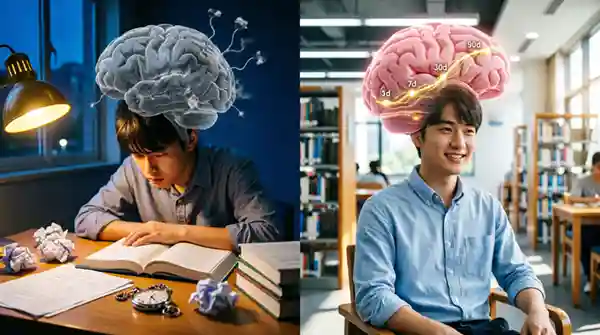
His advice was simple. To remember something, you need three things. A deep, vivid impression. Spaced repetition. And association. The science has spent the last ninety years catching up to him. And the science agrees.
The Forgetting Curve and the Case for Spaced Repetition
Hermann Ebbinghaus was a German psychologist who, in the 1880s, did something remarkable. He memorized lists of nonsense syllables. Thousands of them. He tested himself at different intervals. And he produced a graph that should be on the wall of every classroom in America. The forgetting curve.
Ebbinghaus showed that without review, we forget information at a predictable and terrifying rate. Within twenty minutes, we lose about 40 percent of what we just learned. Within an hour, over half is gone. Within a day, nearly 70 percent has vanished. Within a month, if we have done nothing to retain it, we remember almost nothing.
The forgetting curve is not a suggestion. It is a law. And most people ignore it.
The solution is not to study harder. It is to study at the right intervals. Ebbinghaus discovered that spaced repetition, reviewing material at increasing intervals, dramatically flattens the forgetting curve. Review after one day. Then after two days. Then after four. Then after eight. Each review strengthens the memory and slows the decay.
Dale Carnegie described this in plain language. He said: “Do not sit down and repeat a thing over and over in an effort to burn it into memory. Go over it once or twice, then drop it, and come back to it later.” His recommendation was a half-hour of review spread across a week. He was describing spaced repetition before the term existed.
A 2024 study published in PNAS confirmed what Ebbinghaus and Carnegie both understood. The researchers found that the effectiveness of learning through spaced retrieval practice can be further boosted by variability across practice sessions. The spacing matters. The retrieval matters. And the variability keeps the brain engaged.
A 2025 study in Fachportal Pädagogik examined spaced learning techniques in high school chemistry students. The spaced learning method outperformed the activity-oriented method across all cognitive domains. Remembering. Understanding. Applying. Analyzing. Evaluating. Creating. The spacing was not just a memory trick. It was a thinking tool.
Why Vivid Impressions Are Not Optional
Carnegie wrote that a camera cannot take a picture in fog. The mind, he said, does not retain misty impressions. He was right.
The brain is not a recording device. It is a prediction machine. It does not store every detail of every experience. It stores what matters. And what matters is determined by attention and emotional intensity. If you want to remember something, you have to make it vivid. You have to make it strange. You have to make it impossible to ignore.
Carnegie recommended that speakers use images, not notes. He told the story of Mark Twain, who struggled to remember his speeches when he used notes. When he switched to pictures, the problem disappeared. The images gave his brain something to grab onto.
Modern research confirms this. A 2024 study in Memory & Cognition investigated the role of visual imagery in prospective memory. The researchers found that visual imagery played an integral role in many aspects of human memory. Verbal stimuli were enhanced by the generation of visual images. The pictures did not just help. They were essential.
A 2025 study from the University of Texas at Austin expanded on this. Researchers taught older adults to link words like “pony,” “soldier,” and “jersey” to personal life experiences. The idea was to link words with autobiographical memories to strengthen recall. The technique worked. The personal connection made the words stick.
Carnegie understood this instinctively. He told his students to ask questions about new information. Why is this true? How is this true? When is this true? Where is this true? Who says this is true? The questions forced the brain to engage. Engagement creates the vivid impression that memory requires.
The Power of Association and the Method of Loci
The third principle is association. Carnegie said: “Every fact that comes into the mind is definitely tied to something already in the mind.” William James, the father of American psychology, made the same argument in 1890. He believed that an item could only be recognized as a memory once it was associated with other items from the past. Without association, memories appear as isolated dreams, disconnected from any context.
The ancient Greeks understood this. They developed the method of loci, also known as the memory palace. The technique involves associating each item you want to remember with a specific location along a familiar route. You walk through the route in your mind. You place the items in the locations. When you need to recall them, you walk the route again.
The method works. A 2025 study published in Europe PMC examined the method of loci and semantic link in healthy aging. The researchers found that associative memory naturally declines with age. But when associative memory is supported by semantic knowledge, older adults can compensate for this decline. The method of loci gave them a structure. The structure gave them a way to hold onto what they were losing.
A 2026 study in Europe PMC introduced a theory of memory for items and associations. The researchers showed that combining a Gestalt associative mechanism with retrieved-context theory provides a good account for many empirical phenomena concerning item and associative memory. The brain does not store isolated facts. It stores networks. The associations are the architecture.
Carnegie’s advice on remembering names is a perfect example of association in action. He told his students to ask questions about the person. How do you spell your name? What does it mean? He told them to look carefully at the person’s appearance. To find a connection between the name and the face. To create a phrase that links the name to the person’s occupation. The association did not just help them remember. It made the memory impossible to lose.
The 1890s Insight That Modern Science Confirms
William James wrote in 1890: “In a system, every fact is connected with every other by some thought relation. The consequence is that the combined suggestive power of all the other facts in the system makes forgetfulness well-nigh impossible.”
James was describing what modern researchers call a knowledge network. The more you know about a subject, the easier it is to learn more about it. The connections multiply. The network strengthens. The memory becomes more resilient.
Carnegie described the same phenomenon in his own way. He said: “When you wish to tie an event into your mind, consider it from every angle.” The angles are the connections. The connections are the memory.
A 2025 study in Scientific Reports examined the effects of combined cognitive training and transcranial direct current stimulation in older adults. The findings showed that cognitive training improved performance across multiple domains. The training worked because it engaged the brain’s existing networks. It built on what was already there.
A Note About Memory and Mental Health
I need to be direct about something. Memory problems are not always a matter of technique. If you are experiencing persistent difficulty remembering things that used to be easy, if you are forgetting important appointments or losing track of conversations, if the forgetfulness is interfering with your daily life, that is not a technique problem. That is a signal.
The research on cognitive decline, dementia, and Alzheimer’s disease is robust. Early detection matters. A doctor can help you assess what is happening and recommend an appropriate course of care. That is not weakness. That is wisdom.
And if you are struggling with anxiety or depression, those conditions can affect memory too. The brain under stress does not encode or retrieve information efficiently. Addressing the underlying condition is more important than any memory technique. A therapist or a doctor can help. Memory techniques are tools. They are not a substitute for professional care.
The Practice That Changes Everything
If you want to remember something, do not try harder. Try differently.
Make it vivid. Create an image so strange and specific that your brain cannot ignore it. A pony smoking a cigarette in front of Napoleon. A soldier eating a jersey on a park bench. The stranger the better. The brain remembers the unusual.
Space it out. Do not cram. Review the material after one day. Then after two. Then after four. Then after eight. Each review is a deposit in the memory bank. The interest compounds.
Connect it. Tie the new thing to something you already know. Ask the questions. Why? How? When? Where? Who? Find the relationship between the new fact and the existing network. The relationship is the memory.
Carnegie said: “The natural laws of remembering are the impression, repetition, and association.” He was not a neuroscientist. He did not have fMRI scans or Ebbinghaus curves. He just paid attention to what worked. And what worked for him works for us. Because the brain has not changed. The principles have not changed. Only the tools have.
The Single Image That Remains
I started this article with an image. A single image. That is where memory begins. Not with a list of tips. Not with a complicated system. With a picture. A picture that you create. A picture that you own. A picture that your brain will not let go of.
The field guide author does not tell you what to see. The field guide author tells you where to look. The rest is yours. The picture is yours. The memory is yours.
Make it vivid. Space it out. Connect it. And then let it go. The brain will do the rest.