Why Handwriting Analysis Failed Every Scientific Test and Still Won’t Die
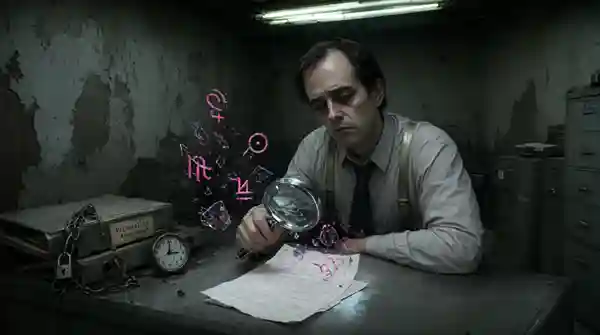
The hiring manager pulls a folder across her desk. Inside is a single sheet of paper, filled with loops, slant, pressure. The applicant wrote the same paragraph as everyone else. But this applicant crossed his t’s with a downward stroke and ended his signature with a sharp upward flick. The manager smiles. She has found her next sales director. She is absolutely, catastrophically wrong.
Graphology, the art of reading personality from handwriting, has been called a science for over a century. It has been used by intelligence agencies, HR departments, and forensic investigators. It has been the subject of hundreds of studies. And it has failed almost every single one of them.
Not failed by a little. Failed by the kind of margin that makes you wonder how the practice survived at all.
What 95 years of research actually says about reading handwriting
A 2025 meta-analysis published in Frontiers in Psychology delivered the verdict with clinical precision. The researchers examined 41 studies that used the Big Five personality framework, the gold standard in modern personality assessment, and tested whether graphological features predicted any of the five major traits. The answer was no. Handwriting features could not predict personality traits above chance. The effect sizes were, in the authors’ own language, “not practically useful for personality assessment.”
A separate 2025 study in Acta Psychologica was even more direct. Researchers asked whether graphology could predict personality dimensions using a large handwriting dataset. The correlation coefficients ranged from 0.005 to 0.297. Most were below 0.15. For context, a correlation of 0.15 means the handwriting explains about two percent of the variance in personality. The other ninety-eight percent is everything else: genetics, environment, mood, culture, the pen you happened to pick up.
The authors concluded that graphology had “almost no predictive effect on personality” and recommended it be used only as a “supplementary reference” in personality research. Not a diagnostic tool. A conversation starter. At best.
The forensic field that graphology pretends to be
Here is where the confusion starts. There is a legitimate forensic science called questioned document examination. It is used by the FBI, the Secret Service, and courts around the world. And it does not do what graphologists claim to do.
Forensic document examination can determine whether two samples were written by the same person. It can identify forgeries, alterations, and obliterations. It can analyze ink, paper, and writing instruments. It is a real science with real protocols, real training programs, and real error rates.
Graphology is something else entirely. It claims to read personality, health, intelligence, and criminal tendency from handwriting. Forensic examiners do not do this. They examine the physical act of writing (pressure, sequencing, pen lifts, stroke order) to answer a specific investigative question: who wrote this?
A 2025 study in Forensic Sciences International drew the line clearly. Graphology is not accepted by the mainstream scientific community. Its use in suspect prioritization and criminal profiling is, the authors wrote, an “insufficiently reliable and evidence-based practice.” The study’s findings were blunt. Graphology had a “near-zero association with criminal behavior characteristics” and its continued use by law enforcement is scientifically indefensible.
The origin story nobody tells you
Graphology did not start as a pseudoscience. It started as an attempt at a science.
In the late nineteenth century, a French priest named Jean-Hippolyte Michon coined the term graphologie. He believed that handwriting was a window into the soul, a physical manifestation of the immaterial self. His followers built an elaborate system of signs: the slant of the letters, the size of the loops, the spacing between words, each with a specific meaning. They wrote books. They trained practitioners. They claimed to diagnose illness, predict criminality, and assess intelligence.
The problem was not the ambition. The problem was the method. They never tested their claims against a control group. They never asked whether their interpretations were consistent across practitioners. They never asked whether the same handwriting analyzed by two experts would produce two different personalities.
When the tests finally came, the results were devastating. A 1998 meta-analysis by Geoffrey Dean published in the Journal of Social Behavior and Personality reviewed more than 200 studies on graphology. The conclusion was unambiguous. Graphology was “no better than chance” at predicting personality, intelligence, or job performance. The effect size was zero.
A 2007 study in Personality and Individual Differences tested whether graphologists could identify the handwriting of murderers, fraudsters, and ordinary people. They could not. The graphologists performed no better than a control group of laypeople who knew nothing about handwriting analysis.
The signature rules that sound profound and mean nothing
There is a particular genre of pop-psychology that circulates in magazine sidebars and corporate seminars. It offers a set of signature-reading rules. A long signature means patience. A short signature means logic. Sharp angles mean a cutting wit. Round shapes mean leadership potential. Three dots mean a sniper’s instinct. A rising line at the end means ambition. A falling line means pessimism.
Each rule sounds plausible. Each rule has a story behind it. And none of them have been validated by controlled research.
The problem is not that these rules are completely arbitrary. Some of them might have a kernel of intuitive sense. The problem is that they are unfalsifiable. You cannot test whether a signature’s sharp angles mean wit or aggression or hunger or sleep deprivation. The interpretation is infinitely flexible, and the interpreter is never wrong because the interpretation can always be adjusted to fit the outcome.
This is the structure of a cold reading. The graphologist offers a vague but emotionally resonant description (“you are a complex person who sometimes struggles with self-doubt but projects confidence to the outside world”) and the subject feels seen. The graphologist has not read the handwriting. They have read the human condition.
Why the hiring manager in Columbus will never learn
The hiring manager from the opening scene will never know she was wrong. She will hire the applicant with the upward-flick signature. He will either succeed or fail. If he succeeds, she will credit the graphology. If he fails, she will credit something else: the market, the training, the culture. The handwriting analysis will remain unexamined, unchallenged, and unrefuted.
This is the feedback loop that protects pseudoscience from correction. The prediction is never tested in a way that could disconfirm it. The belief persists because the evidence against it is never encountered.
A 2024 study in the Journal of Experimental Psychology found that people who were told they were “good at reading people” performed no better than a control group. But they were more confident in their assessments. The confidence made them harder to correct.
What handwriting can actually tell you
Your handwriting can tell you a few real things. It can tell a forensic examiner whether you wrote a document. It can tell a neurologist whether you are experiencing a tremor or a movement disorder. It can tell a graphologist absolutely nothing about whether you are extroverted, conscientious, neurotic, or likely to steal from the company.
The legitimate field of forensic document examination exists because the physical act of writing is distinctive. Your pen pressure, your letter sequencing, your stroke order: these are stable individual characteristics that can be analyzed with statistical rigor. But the analysis is about identity, not personality.
A 2025 paper in Cognitive Research: Principles and Implications examined what people believe handwriting reveals versus what it actually reveals. The gap was enormous. Participants believed handwriting could reveal honesty, intelligence, and emotional stability. The research showed it could reveal none of these things.
When the story does harm
The stakes are not theoretical. People have been denied jobs because of their handwriting. People have been told they have the “wrong” signature for leadership. People have been judged by a system that has no scientific standing and no accountability.
If you have been on the receiving end of this, if a handwriting analysis, a graphology report, or a signature reading has been used to define you in a way that felt wrong, the appropriate response is not to change your handwriting. It is to recognize the practice for what it is. And if the experience has left a mark that you cannot shake, if it has contributed to anxiety, self-doubt, or a persistent sense of being misread, speak with a mental health professional. The research on the psychological effects of labeling and misrecognition is robust. You are not your signature.
The thing the hiring manager never learned
She never learned that graphology has been tested and failed. She never learned that the forensic examiners who work for the FBI do not read personality from handwriting. She never learned that the correlation between a signature’s shape and a person’s character is zero.
She believed she could read people. The belief was the problem, not the solution.
The people who are actually good at reading others are not the ones with a system. They are the ones who ask questions, who listen to the answers, who notice when the story changes, who stay uncertain long enough for the truth to emerge. They do not read handwriting. They read the room.
And they know that the room is always more complicated than the theory.