Why Your Surroundings Shape Who You Become
You walk into a room. The walls are beige. The ceiling is low. The lighting is fluorescent. The air is stale. You feel something shift. Your shoulders tighten. Your jaw clenches. Your mood drops. You don’t know why. You just feel worse.
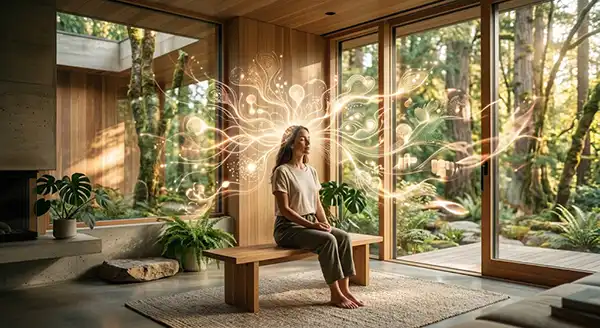
You walk into another room. The walls are warm. The light is natural. The space is open. The air is fresh. You feel something else. Your shoulders drop. Your breath deepens. Your mood lifts. You don’t know why. You just feel better.
The short answer to whether your environment affects your psychology is yes—profoundly. It’s not just about comfort. It’s about how you think, feel, and behave. The spaces you inhabit are not neutral. They’re active. They’re shaping you whether you notice or not.
What Environmental Psychology Actually Is
Environmental psychology is the study of the relationship between people and their physical surroundings. It’s not just about buildings. It’s about everything that surrounds you. The natural world. The built environment. The spaces you live in. The spaces you work in. The spaces you pass through.
This field sits at the intersection of psychology, architecture, anthropology, sociology, and design. It asks questions like: how does the color of a room affect your mood? How does the layout of a city affect your behavior? How does access to nature affect your mental health?
The field emerged in the 1960s. But its roots go deeper. Early psychologists like Willy Hellpach studied the effects of sunlight, color, and shape on human experience. Later, pioneers like Egon Brunswik and Kurt Lewin laid the foundation for systematic research on human-environment interaction.
The environment doesn’t just affect you. You affect it too. The relationship is reciprocal. Your behavior changes the environment. And the environment changes you back. It’s a dance. A constant exchange.
A Question to Sit With
What does your environment say about you? Not your interior design choices. The deeper message. The message about who you are and how you live. What would someone learn about you from the spaces you inhabit?
The Four Dimensions of Environment
Environmental psychologists divide the environment into four categories. Each one affects you differently. And each one deserves attention.
The physical environment. This is the tangible world around you. The buildings. The rooms. The furniture. The objects. The colors. The textures. The sounds. The smells. The temperature. The light.
The natural environment. This is the world outside human construction. The trees. The water. The sky. The soil. The air. The animals. The plants. The natural rhythms of the seasons.
The built environment. This is what humans create. The cities. The neighborhoods. The streets. The parks. The schools. The offices. The homes. The infrastructure that supports daily life.
The social environment. This is the people around you. The culture. The community. The relationships. The norms. The expectations. The way people interact with each other and with the space.
All four dimensions interact. They overlap. They influence each other. They influence you. And you influence them.
What the Research Reveals
The research on environmental psychology is extensive. And the findings are consistently surprising. The physical environment doesn’t just affect your mood. It affects your cognition. Your behavior. Your health. Your relationships.
Lighting. Natural light improves mood, productivity, and sleep. It reduces stress and depression. It’s not just about visibility. It’s about biology. Your circadian rhythm depends on light. When you’re deprived of natural light, your body doesn’t function optimally.
Color. Different colors evoke different psychological responses. Blue is calming. Yellow is energizing. Green is restorative. Red is stimulating. The effects are not universal. They’re mediated by culture, context, and personal experience. But they’re real.
Space. Cramped spaces increase stress. Open spaces promote relaxation. The feeling of being enclosed or confined triggers the stress response. The feeling of having room to move promotes ease. The relationship between space and stress is well-documented.
Nature. Access to nature is one of the most powerful predictors of mental health. People who live near green spaces have lower rates of depression, anxiety, and stress. They have better cognitive function. They have stronger social connections.
Noise. Chronic noise exposure increases stress hormones. It disrupts sleep. It impairs concentration. It’s not just annoying. It’s harmful. The World Health Organization has identified noise as a significant public health threat.
Air quality. The air you breathe affects your brain. Poor air quality is linked to cognitive decline, mood disorders, and behavioral problems. It’s not just a physical health issue. It’s a mental health issue.
The Historical Development of the Field
Environmental psychology emerged in the 1960s. The first studies focused on buildings. How do office layouts affect productivity? How do hospital designs affect patient recovery? How do school designs affect student learning? These were practical questions. They had real-world implications.
The second wave of research focused on environmental problems. Pollution. Noise. Urban decay. Sustainability. By the late 1960s, researchers were studying how people perceive environmental risks, how they respond to environmental threats, and what motivates them to act.
Today, environmental psychology is often called “the psychology of sustainability.” The focus has shifted to how human behavior contributes to environmental problems and how to change that behavior. The research is more urgent than ever. The stakes are higher than ever.
What the Research Says About Built Environments
The built environment has a profound effect on human behavior. It’s not just about aesthetics. It’s about function. It’s about how the space facilitates or inhibits what you want to do.
Office design. Open offices reduce privacy and increase distraction. They also reduce face-to-face interaction because people retreat to headphones and corners to focus. The theory that open offices promote collaboration has been largely disproven.
Hospital design. Patients in rooms with natural light recover faster. They require less pain medication. They have shorter hospital stays. The physical environment is part of the treatment.
School design. Schools with natural light and good ventilation have higher test scores. They have lower absenteeism. They have better student behavior. The environment supports learning.
Neighborhood design. Walkable neighborhoods promote physical activity. They increase social interaction. They reduce crime. The design of a neighborhood affects everything from health to safety.
A Question That Might Unsettle You
What is your environment telling you? What message does your home send about your values? What does your workspace communicate about your priorities? What does your city say about what matters? These messages are not neutral. They shape how you see yourself and the world.
The Sustainability Imperative
The environment is changing. Rapidly. Irreversibly. The research on climate change is clear. Human behavior is the primary cause. The question is not whether we need to change. It’s whether we will.
Environmental psychology is at the forefront of this question. The research focuses on understanding what motivates sustainable behavior. What makes people conserve energy? What makes people reduce waste? What makes people choose sustainable transportation? What makes people care about the planet?
The findings are consistent. People are more likely to act sustainably when they have a connection to nature. When they have information. When they have social support. When they see others acting. When they believe their actions matter.
The challenge is not just changing behavior. It’s changing the systems that shape behavior. It’s redesigning cities. It’s redesigning infrastructure. It’s redesigning the spaces that people inhabit. The goal is to make sustainable choices the easy choices.
A Question That Could Change Everything
What if the spaces you inhabit are not neutral? What if they’re active participants in your life? What if the design of your home, your workplace, your city is helping or harming you? What if you could change your environment to change your life?
One Thing to Consider Today
Take a moment to look at your immediate surroundings. The room you’re in. The light. The color. The furniture. The noise. The air. Ask yourself: does this environment support my well-being? Does it help me be who I want to be?
If the answer is no, what can you change? A lightbulb? A chair? A wall color? A plant? Small changes can have significant effects. You don’t need to redesign your entire life. You just need to start with one thing.
A Final Reflection
Environmental psychology is not just an academic discipline. It’s a practical guide to living better. The spaces you inhabit shape you. The places you spend time in affect your mood, your behavior, and your health. The buildings you live and work in are not just structures. They’re active participants in your life.
The research on this is clear. The environment matters. It matters more than most people realize. It matters in ways that are subtle and significant.
The good news is that you can change your environment. You can make choices. You can adapt the spaces you inhabit. You can seek out natural light. You can create calm. You can reduce noise. You can add plants. You can design your life.
You are not just a product of your environment. You are an agent within it. You can shape it. And in shaping it, you can shape yourself.