When Everything Feels Wrong: What Your Hatred for Your Life Is Trying to Tell You
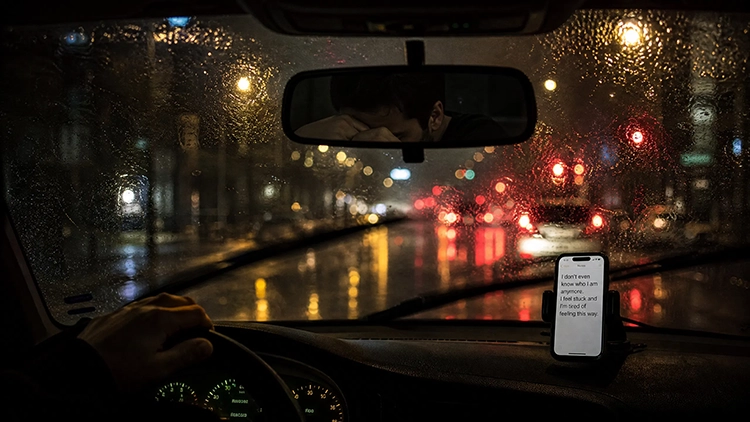
Have you ever laid in bed at night, staring at the ceiling in the heavy quiet of your room, only to have a single, cold thought drift through your mind?
“I hate my life.”
It rarely arrives as a dramatic shout. More often, it surfaces as a quiet, exhausted whisper—a heavy realization settling right in the center of your chest.
If you have felt this, you are not broken, and you are certainly not alone. When life feels like an endless series of obligations, exhausting relationships, or unrewarding routines, it is completely human to feel a deep sense of resentment toward the reality you are living in.
The most important thing to realize right now is that this feeling is not a verdict on your future. It is a vital, high-volume alarm from your inner world signaling that something fundamental in your life needs to change.
The Alarm System: Why Painful Emotions Exist
We live in a culture that pressures us to stay positive, forcing a smile even when we feel like we are falling apart. But human emotions didn’t evolve to make us look pleasant on social media. They evolved to keep us alive and aligned.
Think of your feelings as a dashboard in a car:
- Pleasant feelings (joy, satisfaction, curiosity) tell you that your needs are met and your environment is safe.
- Uncomfortable feelings (anger, anxiety, resentment) act as warning lights. Anger tells you a boundary was crossed. Anxiety warns you of potential danger.
┌────────────────────────────────────────────────────────┐
│               THE EMOTIONAL DASHBOARD                  │
│                                                        │
│  Warning Light (Resentment) ──► Indicates Upset Needs  │
│  Action (Courageous Change) ──► Restores Life Alignment│
└────────────────────────────────────────────────────────┘
When you feel a lingering hatred toward your life, it isn’t an attack on who you are. It is your mind’s check-engine light. It means the gap between how you are living and what you actually need to thrive has grown too wide to ignore.
Life Dissatisfaction Alarm
An acute emotional state triggered when an individual’s daily reality chronically conflicts with their core values, emotional needs, or desire for personal agency.
Where the Heaviness Actually Comes From
When people say they hate their lives, they rarely hate every single second of their existence. Instead, a deep frustration in one or two core areas spills over, contaminating everything else.
Imagine coming home after spending eight hours under a hyper-critical boss who undermines your work. By the time you sit down for dinner with your family, your patience is gone, the food tastes bland, and even your favorite hobby feels like a chore. The toxicity of one environment bleeds into every corner of your day.
                  ┌────────────────────────┐
│    PRIMARY STRESSOR    │
│  (Toxic Job / Strain)  │
└───────────┬────────────┘
│
▼
┌────────────────────────┐
│   SPILLOVER EFFECT     │
│  (Irritability, Fog)   │
└───────────┬────────────┘
│
▼
┌────────────────────────┐
│ OVERALL DISSATISFACTION│
│ ("I hate my life")     │
└────────────────────────┘
This spillover often stems from recurring daily friction:
- The Career Trap: Spending forty hours a week doing work that drains your energy and offers no sense of purpose.
- Relational Fatigue: Walking on eggshells around a partner, family member, or friend who invalidates your feelings.
- Learned Helplessness: Believing that no matter what you do, your situation will never get better—so you stop trying altogether.
The Trap of Learned Helplessness
The most dangerous part of feeling unhappy with your life isn’t the unhappiness itself; it’s the paralysis that often follows it.
When you feel stuck for a long time, your brain adapts by developing learned helplessness. You tell yourself, “What’s the point? Nothing ever changes.” You settle into a familiar misery because trying to change feels far more terrifying than staying in the pain you already know.
[ Chronic Discomfort ] ──► (Fear of Failed Change) ──► [ Resignation / Paralysis ]
│
▼
[ Small, Courageous Choice ]
│
▼
[ Agency Restored ]
Surrendering to helplessness feels protective in the short term because it shields you from the risk of failure. But in the long run, it breeds deep hopelessness that wears down both your mental peace and physical health. Long-term life dissatisfaction directly impacts sleep, immune function, and overall vitality.
How to Start Turning the Tide
Reclaiming your life does not require you to blow up your entire existence overnight. You don’t need to quit your job tomorrow morning or pack your bags for a distant island. Real, lasting change happens through small, intentional choices that prove to your brain that you still hold the steering wheel.
1. Isolate the Leak
Stop looking at your life as one giant, broken mess. Take a piece of paper and divide your life into sections: Work, Relationships, Health, Free Time, Environment.
Ask yourself honestly: Which specific bucket is leaking the most energy? Once you identify the primary source of stress, the problem becomes manageable instead of overwhelming.
2. Micro-Rebellions of Self-Care
When you feel powerless, regain your agency through small actions. Say “no” to an invitation you don’t want to attend. Change your morning routine. Rearrange your furniture. These tiny acts signal to your subconscious that you are capable of changing your environment.
3. Seek External Perspective
When you are trapped inside your own head, your thoughts spin in endless loops. Talking to a therapist, a trusted friend, or a mentor acts like opening a window in a stuffy room. They can help you see options you were too exhausted to notice on your own.
The Immediate Action: Finding Your Single Shift
To break out of the paralysis right now, try this simple 5-minute exercise:
The Single Shift Exercise
- Complete this sentence on a piece of paper: “The one thing in my daily routine that drains my spirit the most is _______.”
- Write down one tiny boundary or change you can implement within the next 24 hours to reduce that drain by just 10%.
- Execute that small change today, regardless of how minor it seems.
A New Chapter, Not the End
Feeling like you hate your life is exhausting, but it is also an invitation. It is proof that your spirit refuses to settle for a life that doesn’t fit you.
Listen to the alarm. Treat yourself with compassion, find the leak, and take one tiny step toward a reality that feels truly your own.
What is one small boundary or habit you have been keeping on hold that, if changed today, would give you a little more breathing room?