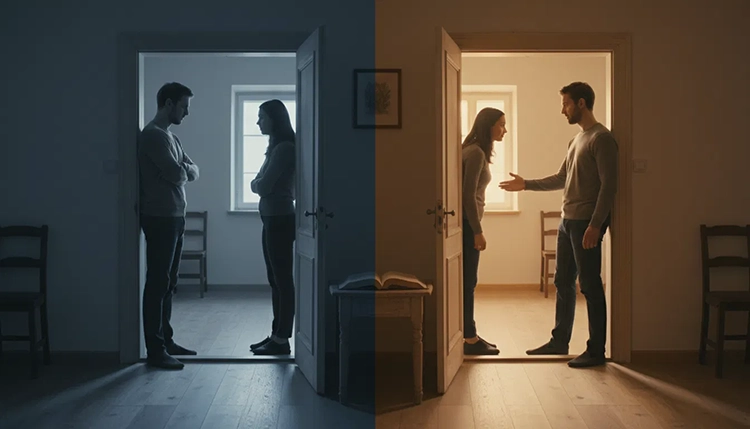
Can You Fix a Bad First Impression? Psychology Says Yes—Here’s How

Can You Fix a Bad First Impression? Psychology Says Yes—Here's How

Why a Terrible First Impression Is Surprisingly Easy to Overwrite You step into an elevator for a high-stakes meeting, clear your throat to introduce yourself, and immediately spill lukewarm coffee down your shirt. Or perhaps, seized by sudden social anxiety, you make a clunky, ill-timed joke, watch the other person’s smile freeze, and spend the … Read more

Why Saying “Yes” to Everyone Is Quietly Destroying Your Life

Why Saying "Yes" to Everyone Is Quietly Destroying Your Life

Your Need to Please Isn’t Kindness—It’s Self-Defense You say yes before the request has even fully left their mouth. Your weekend is a crowded landscape of commitments you made entirely out of obligation, and your evenings belong to everyone’s emergency except your own. To the outside world, you are a saint: reliable, self-sacrificing, warm, and … Read more

Why Your Brain Always Assumes the Worst (And How to Break the Cycle)

Why Your Brain Always Assumes the Worst (And How to Break the Cycle)

Why Your Mind Secretly Prefers Worst-Case Scenarios It is 2:15 AM. The bedroom is quiet, the house is asleep, but inside your head, a full-scale emergency is underway. An offhand comment from your supervisor yesterday afternoon has quietly morphed into an impending termination, which has spiraled into an unpaid mortgage, which has somehow concluded with … Read more

Why Your Brain Can’t Focus at Work (And the 60-Second Reset That Changes Everything)

Why Your Brain Can't Focus at Work (And the 60-Second Reset That Changes Everything)

Slowing Down Isn’t Lazy—It’s Cognitive Survival It is 3:15 PM on a Tuesday. You are sitting at your desk, staring at a half-written email, but your mind isn’t in the room. Half of your brain is stuck two hours in the past, endlessly replaying a tense exchange with a colleague and editing what you should … Read more

Why Your Brain Sometimes Checks Out (The Hidden Psychology of Dissociation)

Why Your Brain Sometimes Checks Out (The Hidden Psychology of Dissociation)

Checking Out Isn’t Forgetfulness—It’s Self-Defense You are sitting at a kitchen table across from a friend you haven’t seen in months. The coffee in your mug is still warm, their voice is steady and animated, but suddenly a strange, quiet distance opens up between you. You can hear their words, but you feel as though … Read more

The Person Everyone Loves Might Not Be the Real You (The Hidden Cost of People-Pleasing)

The Person Everyone Loves Might Not Be the Real You (The Hidden Cost of People-Pleasing)

What If the Person Everyone Loves Isn’t Actually You? You are standing at a crowded dinner party, nodding warmly as someone shares an opinion you secretly find exhausting. You smile, laugh on cue, and pitch your voice to match the gentle cadence of the room. On paper, you are charming, agreeable, and deeply liked. Yet … Read more

Your Brain Doesn’t Create Reality—It Filters It (And That Changes Everything)

Your Brain Doesn't Create Reality—It Filters It (And That Changes Everything)

Your Brain Doesn’t Manifest Reality—It Selects It Imagine walking into a crowded room filled with a hundred overlapping conversations, clinking glasses, and background music. You cannot possibly digest every sound. Yet the moment someone across the hall whispers your name, your attention locks onto them instantly. The universe did not suddenly realign itself to broadcast … Read more

Why Social Media Feels Impossible to Quit (The Psychology of Digital Addiction)

Why Social Media Feels Impossible to Quit (The Psychology of Digital Addiction)

Why the Red Heart Icon Feels Like Salvation The cinema lights dim, but for ten glorious minutes during the intermission, the house lights flicker back on. Around you, dozens of screens glow simultaneously in the dark auditorium. Fingers swipe frantically, thumbs scroll through endless feeds, and a collective, silent sigh ripples through the room. No … Read more