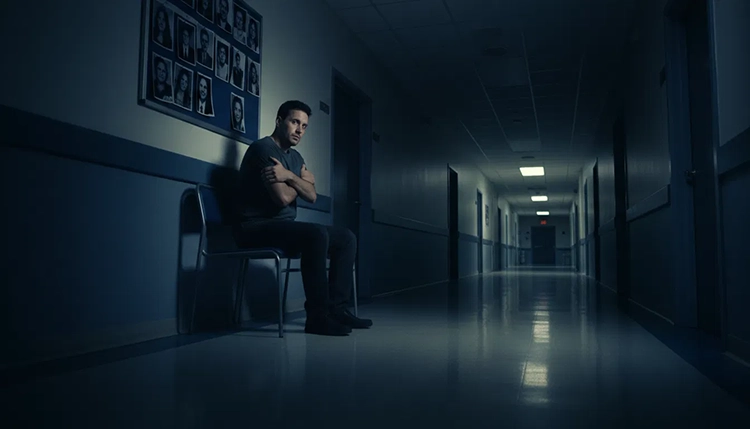
The Architecture of Underved Survival: Navigating Survivor’s Guilt and Vicarious Trauma
The silence in the room is heavy, fractured only by the relentless hum of a news feed or the haunting echoes of a catastrophe that you managed to escape unscarred. You sit surrounded by your own belongings, breathing the air that someone else was denied, and a quiet, toxic refrain begins to play on an endless loop in your mind: Why them and not me? What did I do to deserve walking away?
When survival feels like an accident rather than an earned outcome, the human mind often reacts with a profound, counterintuitive paradox. Instead of pure relief, we experience a devastating emotional debt. We parse through every second of a tragedy, searching for the micro-decisions that could have altered the ledger, convinced that if we had just moved faster, reached out farther, or known better, we could have changed the ending.
Yet, trapped beneath this crushing weight of unearned survival is an uncomfortable, liberating truth: feeling guilty for drawing breath does not make you responsible for the storm; it simply proves that you are a human being trying to process the unprocessable.
Standard wellness advice tells us to “be grateful you’re alive” or “stop beating yourself up,” completely missing the psychological reality of trauma. Those hollow clichés fail because they treat deep emotional survival like a simple math equation, ignoring the neurobiology of internal control, the cognitive distortions of self-blame, and the modern burden of vicarious trauma—where witnessing a catastrophe through a screen leaves us feeling as shattered as if we had stood in the wreckage ourselves.
The Architecture of the Internal Locus of Control
To understand why our brains instinctively weaponize our own survival against us, we have to look at how we process causality. When an overwhelming event shatters our sense of safety, the human psyche desperately seeks an explanation to restore a sense of order to a chaotic universe. If we accept that a disaster was entirely random, senseless, and outside of our control, we are forced to confront a terrifying reality: the world is fundamentally unpredictable, and safety is an illusion.
To escape that terrifying helplessness, the brain performs a dark psychological sleight of hand: it chooses guilt over powerlessness. It is far more comfortable—in a twisted, protective way—to believe “I caused this, I failed, I could have stopped it” than to accept “I was entirely helpless.” This is where The Phantom Ledger comes into play—our cognitive distortion where we tally imaginary debts, convincing ourselves that we must pay for our survival through perpetual psychological self-punishment.
Reclaiming your peace requires recognizing that this internal blame is a survival mechanism gone rogue. When you catch yourself running the tape backward to find where you “went wrong” by living, you are not exercising justice; you are simply refusing to accept the chaotic randomness of pain. It is an evolutionary pivot: by shifting your focus from punishing self-blame to acknowledging the external forces that actually drove the crisis, you allow your nervous system to finally step down from its self-imposed tribunal.
Guilt is the mind’s desperate attempt to master a tragedy by pretending it held the steering wheel of fate.
Redefining the Weight of Witnessing
Consider the individual who spent days glued to a screen watching a distant natural disaster or a collective tragedy, only to find themselves paralyzed by chronic fatigue, nausea, and deep, unexplainable grief. This is the quiet reality of vicarious trauma—our mirror neurons and empathetic systems absorbing the shockwaves of human suffering from afar, tricking the body into recording a battlefield experience from the safety of a living room.
True healing lives in the messy, deliberate middle ground between numbing yourself to the world’s pain and drowning in it. When you choose to step back, set firm digital boundaries, and allow yourself to feel both the profound luck of your survival and the heavy sorrow of another’s loss, you aren’t turning your back on humanity. You are quietly acknowledging that you cannot be an instrument of healing if you are systematically destroying your own mind.
In everyday life, this looks like giving yourself permission to grieve someone else’s pain without adopting it as your personal punishment. It looks like transforming the heavy debt of survival into deliberate acts of goodness—translating your unspent tomorrows into meaningful, quiet contributions to the world around you.
Reflection Prompt
Take a quiet moment today to step away from the relentless flood of external noise. Instead of interrogating your right to be here, bring your awareness inward and ask yourself one gentle, unsparing question:
Where am I currently using self-blame and guilt as a substitute for accepting things that were entirely outside of my control?
Do not try to force an immediate emotional fix. Place a hand over your chest, take one slow, deliberate breath, and let the quiet rhythm of your own pulse remind your nervous system that your survival is not a crime—it is simply an invitation to live with deeper awareness, fierce compassion, and uncompromising purpose.