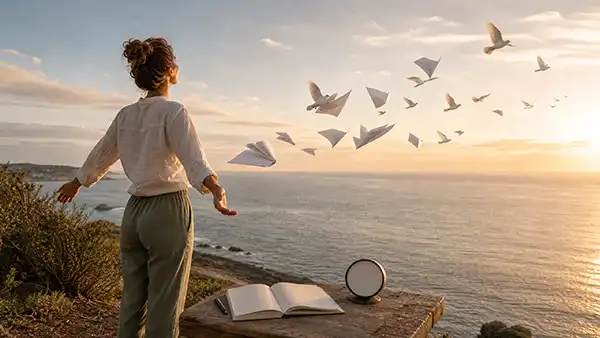
The Unbearable Lightness of Being Unplanned
For years, I was a planner. A relentless, obsessive, future-obsessed planner. I had goals, milestones, timelines. I knew where I was going and how I was going to get there. I mapped out my life in five-year increments. I calculated every step. I anticipated every obstacle. I left nothing to chance.
And I was exhausted.
The short answer to whether planning is always necessary is no. Sometimes the best thing you can do is stop planning. Sometimes the most productive thing you can do is nothing at all. Sometimes the most courageous thing you can do is surrender to the unknown.
The Weight of Always Having a Plan
I spent decades carrying the weight of my own expectations. One goal after another. One milestone after the next. I would finish something and immediately start planning the next thing. There was no pause. No celebration. No rest. Just an endless cycle of doing, achieving, and moving on.
I didn’t realize how heavy this was. I thought this was just what it meant to be ambitious. I thought this was how successful people lived. I thought if I stopped planning, I would stop achieving. If I stopped achieving, I would stop mattering.
The stress showed up in my body. Migraines. White hair. Constant tension. I could feel it in my shoulders, my neck, my jaw. But I couldn’t stop. I didn’t know how.
I was like a shark. If I stopped moving, I would die. Or so I believed. So I kept moving. And moving. And moving. Until I couldn’t anymore.
A Question to Sit With
What are you afraid would happen if you stopped planning? What would you lose? What would you gain? What’s the worst that could happen? What’s the best that could happen?
The Unexpected Pause
Then, something shifted. Not because I planned it. Because I couldn’t plan anymore. I was too tired. Too depleted. Too burned out to keep going.
I made a decision. I would stop. Not just take a break. Not just take a vacation. I would stop. I would let go of all the plans. All the goals. All the milestones. I would step off the treadmill and just… be.
It was terrifying. I had no idea what I would do. I had no idea how long it would last. I had no idea what would happen next. I had no plan. And that was the point.
The first few weeks were uncomfortable. I kept wanting to make a plan. I kept wanting to know what was next. I kept wanting to fill the space. But I didn’t. I just sat with the uncertainty. I just let myself be.
What Happened When I Stopped
Slowly, something changed. I started to feel lighter. The tension in my shoulders started to release. My sleep improved. My migraines became less frequent. I wasn’t doing anything differently. I was just… not doing.
And then, without looking for them, opportunities started to appear. Opportunities I hadn’t planned. Opportunities I couldn’t have anticipated. Opportunities that came because I was available.
I realized something. I had spent my whole life chasing things. I had been so busy pursuing that I had forgotten how to receive. I had been so focused on the destination that I had been blind to what was already around me.
When I stopped chasing, I started receiving. When I stopped planning, I started being present. When I stopped controlling, I started trusting.
The Feeling That Came
After a few weeks, I felt something I hadn’t felt in years. A sense of ease. A sense of peace. A feeling that things were unfolding as they should.
I didn’t know how it was happening. I didn’t know where it was leading. But I trusted it. I trusted that whatever was coming was better than anything I could have planned. I trusted that the universe knew something I didn’t. I trusted that the pause was not a detour. It was the path.
The writer Alexandre Dumas once said: “Everything happens for a reason, and everything is lived for a reason.” I had always thought that was just a saying. But I started to feel its truth. The things that had happened, the things that were happening, the things that would happen—they were all part of something bigger than me. And I didn’t need to control it. I just needed to be present for it.
A Question That Changed My Perspective
What if the plan you’re holding onto is keeping you from something better? What if the thing you’re chasing is not the thing you need? What if the pause is not a detour but the destination?
The Myth of Control
Control is an illusion. You can plan all you want, but you can’t control what happens. You can prepare, but you can’t predict. You can map out your path, but you can’t anticipate every twist and turn.
I used to think control was safety. I used to think if I could just plan enough, I would be safe. I would be protected. I would be prepared for anything.
But control is not safety. It’s a cage. It’s a cage that keeps you in a narrow lane. It’s a cage that prevents you from seeing what’s possible. It’s a cage that keeps you small.
When you let go of control, you open yourself to possibility. You let in the unexpected. You allow yourself to be surprised. You give yourself permission to receive.
What the Research Says About Letting Go
Studies on mindfulness and acceptance show that people who are less attached to specific outcomes are more resilient, less anxious, and more satisfied with their lives. They’re not less ambitious. They’re just less attached to how things should happen. They trust that things will work out. They’re open to possibilities they hadn’t considered.
Letting go of control doesn’t mean giving up on goals. It means holding them lightly. It means being willing to adjust. It means being open to a different path. It means trusting that the journey is as important as the destination.
What I Learned About Rest
Rest is not a reward for hard work. It’s part of the work. It’s what allows you to continue. It’s what gives you perspective. It’s what makes you available for new opportunities. It’s what gives you the energy to show up fully.
I used to think rest was something I had to earn. I couldn’t rest until I had done enough. I couldn’t rest until I had earned it. But I never earned it. I just kept pushing.
Rest is not a reward. It’s a necessity. It’s not optional. It’s not a luxury. It’s what makes everything else possible.
A Practical Reflection
Think about where you’re holding too tightly. What are you trying to control that you don’t actually need to control? What are you planning that you could let unfold? What are you chasing that you could allow to come to you?
The answers might surprise you. They might challenge you. They might make you uncomfortable. But they might also set you free.
What People Often Ask About Letting Go
Doesn’t letting go mean giving up?
No. Letting go means releasing your attachment to how things should happen. It doesn’t mean giving up on your goals. It means being open to different ways of achieving them.
What if I have responsibilities?
Responsibility and control are different. You can be responsible without being controlling. You can plan without being rigid. You can care without being attached to a specific outcome.
What if I’m afraid of what might happen if I let go?
That’s normal. It’s part of the process. The fear will be there. But the fear doesn’t have to stop you. The fear is not the truth. It’s just a feeling.
How do I know if I’m holding too tightly?
You know. You feel it. The tension in your body. The anxiety in your mind. The exhaustion in your soul. That’s how you know. That’s the signal. That’s the invitation to let go.
One Thing Before You Go
Take a moment to reflect on your own relationship with planning and control. Where are you holding too tightly? What could you release? What would it mean to trust the process? What would it mean to let yourself be surprised?
A Final Reflection
There is a lightness that comes from letting go. It’s not the lightness of not caring. It’s the lightness of trusting. It’s the lightness of knowing that you don’t have to control everything. It’s the lightness of being present with what is instead of always chasing what could be.
I spent years planning. Years controlling. Years chasing. And I was exhausted.
When I finally let go, I found something I wasn’t looking for. I found peace. I found presence. I found myself. I found a life that didn’t require constant effort. I found a way of being that was sustainable. I found a lightness that I had never known.
The philosopher Alan Watts once said that you can’t make music by focusing on the end of the song. The point of music is the playing. The same is true for life. The point is not to reach the destination. The point is to be present for the journey.
So stop planning for a moment. Just stop. Take a breath. Look around. Notice what’s happening right now. Trust that what’s coming is coming. Trust that you can handle it. Trust that you don’t need to control everything. And let yourself be surprised.