What It Takes to Stay Sharp When Life Turns Hard
The week my father lost his job, I learned something about attention. I was eleven, sitting at the kitchen table in Ohio, watching my parents talk in the low, careful voices people use when they are terrified. My father was not panicking. He was still. Too still. The kind of still that comes when a person is deciding which version of themselves to be.
Years later, I asked him about that week. He told me he had made one decision, very quietly, on the first morning: he would not let the fear make his choices. Not because he was brave. Because he knew that the moment he started acting from panic, he would start making mistakes he could not afford.
That is the thing about hard times. They do not just threaten your circumstances. They threaten your judgment. And judgment is the one asset you cannot recover once it is gone.
The source material I worked from this month is about exactly this — being careful in what it calls “reverse times.” Not careful in the timid sense. Careful in the way a pilot is careful in a storm. Careful with your attention, your decisions, your words. The times get hard, and the question becomes: what are you actually paying attention to?
Why Hard Times Wreck Our Decision-Making First
There is a reason we make bad choices when things fall apart. The brain is not designed for abstract threats. It is designed for predators. When you sense danger, your nervous system shifts. Blood moves away from the prefrontal cortex — the part that weighs options, considers consequences, thinks long-term — and toward the amygdala, the part that reacts.
Amy Arnsten, a professor of neuroscience at Yale School of Medicine, has spent decades studying exactly this mechanism. Her research shows that even mild stress impairs prefrontal cortex function. Under acute stress, the thinking brain goes offline. The reactive brain takes over. You do not plan. You flinch.
I have felt this in my own body. The time I sent an angry email I should have sat on. The time I made a money decision from a place of scarcity and regretted it for a year. The time I walked away from something good because I was afraid it would be taken from me. None of those choices were made by the rational, patient person I like to think I am. They were made by a version of me that was flooded with adrenaline and trying to survive a threat that was not actually a threat.
The first step in being careful during hard times is understanding this: your brain is not on your side right now. It is trying to protect you, but it is using old tools. The protection it offers — fight, flight, freeze — does not work well in a financial crisis, a relationship breakdown, or a health scare. It just makes you reactive.
The Practice of Slowing Down on Purpose
The most useful thing I have learned is embarrassingly simple: pause. Not forever. Just a beat. A breath. A moment between the trigger and the response.
The psychologist and author Daniel Goleman, whose book “Emotional Intelligence” has shaped how we talk about self-regulation, calls this the “amygdala hijack.” The emotional brain fires before the thinking brain can catch up. The hijack lasts about six seconds. Six seconds. That is the window. If you can pause for six seconds before reacting, the prefrontal cortex can regain control.
I have started using this in small, undramatic ways. When the hard email arrives, I do not reply. I stand up. I walk to the kitchen. I pour a glass of water. I breathe. Then, and only then, do I decide whether to respond, and how. The pause does not make the problem go away. It makes me available to solve it.
This is not about suppressing emotion. It is about not letting emotion drive the bus. There is a difference between feeling fear and acting from fear. The first is information. The second is danger.
What Hard Times Reveal About Your Business
The source material includes a long section on what “reverse times” mean for business — financial strain, shifting markets, unpredictable competition. I do not run a business in the traditional sense, but I have watched friends who do. The ones who survive the hard stretches are not the ones with the most cash. They are the ones who can see clearly when everyone else is panicking.
The clearest pattern I have noticed: the survivors slow down. They do not chase every opportunity. They do not slash every budget line in a blind attempt to cut costs. They watch the market with a kind of calm attention, and they make fewer decisions, but better ones.
The management thinker Jim Collins has written about this in books like “Good to Great.” He studied companies that thrived during recessions while their competitors collapsed. The difference, he found, was not genius. It was discipline. The successful companies had what he called “productive paranoia” — a state of heightened awareness paired with calm action. They were not reckless. They were not frozen. They were careful.
That word again. Careful. It does not mean afraid. It means full of care. Attentive. Present. The opposite of careless, which is what most people become when fear takes over.
Financial Decisions, Fear, and the Long Game
Money is where this gets most concrete. When times get hard, money anxiety spikes. And money anxiety is one of the most powerful disruptors of good judgment.
The source material talks about financial risk in terms of diversification, basic analysis, stop-loss orders, liquidity. These are the tools of the careful investor. But underneath all of them is a psychological truth: most bad financial decisions are not caused by a lack of information. They are caused by fear.
I have a friend in Denver who pulled all her money out of the market during the 2008 crash. She was terrified. She sold at the bottom, converted everything to cash, and watched the market recover without her. The mistake was not the decision to sell. It was the decision to sell from fear. She did not have a plan. She had a panic.
The careful move is different. It is made from a plan, not from a feeling. The plan can be simple. It can be “I will not make any major financial decisions during the first 48 hours of a crisis.” That rule alone would save people from more damage than any amount of market knowledge.
The People Side of Hard Times
One thing the source material does well is connect caution to relationships — with customers, with employees, with the people around you. Hard times are not just financial. They are personal. And the way you treat people during the hard stretch determines whether they are still there when it is over.
The customer who had a bad experience, handled well, becomes more loyal than the customer who never had a problem at all. The employee who feels seen during a crisis works harder than the one who feels like a cost center. The friend who receives your patience during their hard season remembers it for years.
This is not soft stuff. It is the infrastructure of resilience. The Harvard Business Review has published years of research on this. Amy Edmondson’s work on psychological safety, which I keep coming back to, applies here too. Teams that feel safe to speak up, admit mistakes, and ask for help are the teams that survive turbulence. The connection is not sentimental. It is practical.
What Careful Means When You Are Tired
I want to be honest about the hardest part. Being careful during hard times is exhausting. The vigilance costs energy. The slowing down costs time. The refusal to panic costs something I do not have a name for.
There have been days when I did not want to be careful. I wanted to be reckless. I wanted to burn something down just to feel like I was doing something. The careful path felt too slow, too quiet, too uncertain. But every time I have taken the reckless path during a hard stretch, I have paid for it later. Every single time.
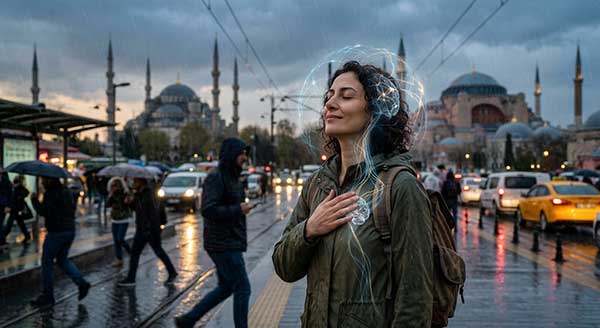
The careful path does not feel good in the moment. It feels like standing still while the world shakes. But it is not standing still. It is standing your ground. It is refusing to let the storm decide who you are.
What I Am Practicing Now
I do not have a clean system. I have a few rules, learned the hard way.
Slow down. Pause before responding. Do not make big decisions in the first wave of fear. Pay attention to the people who are still there. Watch the situation, not the panic about the situation. Ask for help when the picture is not clear.
And most of all, remember that hard times end. They always have. The question is not whether the storm will pass. The question is who you will be when it does.
The careful ones are not the ones who avoided the storm. They are the ones who walked through it without losing themselves. That is the whole work. Not survival. Presence. Not getting through. Getting through intact.
The next time life turns hard, do not ask, “How do I get out of this?” Ask, “What is the most careful thing I can do right now?” The answer may be small. A pause. A phone call. A walk. A night of sleep. But small, careful acts, repeated, become something sturdy. They become the ground you stand on when the wind picks up.
And the wind always picks up. The only question is whether you have built a self that can stand in it.