The Surprising Psychology Behind Our Love for Stories
The short answer is that fairy tales serve a profound psychological function for adults, offering a space to process emotions, explore complex life transitions, and reconnect with a sense of wonder that modern life often suppresses. Research in narrative psychology shows that stories help us make meaning of our experiences, develop empathy, and navigate uncertainty. As the beloved author Antoine de Saint-Exupéry wrote in The Little Prince, “All grown-ups were once children—but only a few of them remember it.” Fairy tales help us remember.
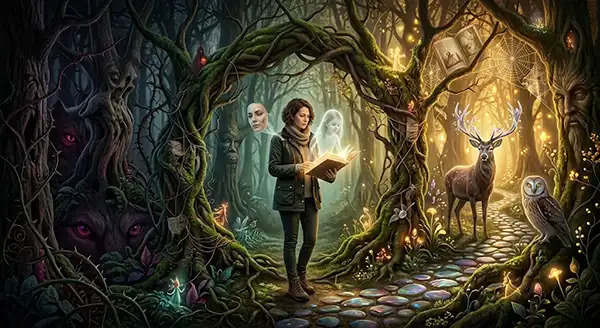
I was thirty-four when I rediscovered fairy tales. I had just gone through a difficult breakup, and I found myself unable to focus on anything serious. My therapist suggested I do something childish—not as an escape, but as a way to access parts of myself that had been buried under years of adult responsibility. I bought a collection of Grimms’ fairy tales and started reading them before bed. What I found surprised me. These weren’t the sanitized Disney versions I remembered. They were dark, strange, and often unsettling. But they were also deeply honest about human nature. They didn’t pretend the world was fair or that life was easy. They acknowledged the wolves, the witches, the dark forests. And they also showed that people—ordinary, imperfect people—could find their way through. That reading changed how I understood stories. I realized that fairy tales weren’t just for children. They were maps of the inner world, guides to the emotional terrain that adulthood often forces us to ignore.
What Makes Fairy Tales So Essential for Adults?
Fairy tales operate on a symbolic level that speaks directly to the unconscious mind. The psychologist Carl Jung believed that fairy tales and myths contain archetypal patterns—universal themes that appear across cultures and time periods. These patterns, like the hero’s journey, the wicked stepmother, or the transformative quest, resonate because they reflect deep psychological truths about human development. When you read a fairy tale as an adult, you’re not just following a plot. You’re engaging with a symbolic language that bypasses your rational defenses. The abandoned child, the impossible task, the magical helper—these aren’t just plot devices. They’re representations of real psychological experiences: feeling alone, facing overwhelming challenges, finding unexpected resources within yourself. A 2020 study published in the Journal of Personality and Social Psychology found that people who engage deeply with narratives—reading them, reflecting on them, and discussing them—show higher levels of emotional intelligence and empathy. Stories, especially those with archetypal resonance, help us practice understanding others’ perspectives and processing complex emotions in a safe, contained way.
I noticed this in my own life. When I was struggling with the breakup, I found myself drawn to stories about loss and recovery. I read fairy tales about characters who lost everything and had to rebuild. I didn’t consciously choose them—they chose me. And through them, I processed emotions I couldn’t name directly. The stories gave me a language for my grief.
How Do Fairy Tales Help Us Process Our Emotions?
One of the most powerful functions of fairy tales is their ability to help us process difficult emotions in a safe, symbolic way. The darkness in fairy tales—the villains, the dangers, the fears—mirrors the darkness we all experience. But because it’s framed as story, we can engage with it without being overwhelmed. The psychoanalyst Bruno Bettelheim argued in his classic work The Uses of Enchantment that fairy tales help children and adults grapple with existential fears. They provide a structure for understanding that life involves challenges, that evil exists, and that resilience and courage can overcome adversity. They don’t deny the darkness—they show how to move through it.
For adults, this function becomes even more important. We face complex emotional challenges—career transitions, relationship struggles, aging parents, the loss of identity. These aren’t the simple conflicts of childhood. They’re layered, ambiguous, and often unspoken. Fairy tales offer a framework for these experiences, giving us permission to feel fear, loss, and hope without having to resolve everything immediately. A 2022 study in the Journal of Applied Arts and Health explored the use of fairy tales in therapeutic settings with adults. Researchers found that participants who engaged with fairy tales reported reduced anxiety, increased self-awareness, and a greater sense of agency. The stories helped them see their own struggles from a different perspective, finding meaning where they had previously seen only chaos.
The storyteller Judith Liberman, known for telling fairy tales to adults, puts it this way: “As a society, our biggest problem is that we’ve become individualistic. Fairy tales are a counterbalance to that movement. We need to come together, to imagine together. Fairy tales are coming back because there’s a universal dimension to the matter.” Adults, she suggests, need to rediscover their imagination, open their hearts, and remember their emotions. Like the heroes in fairy tales, we need to stay in the moment and live it fully.
Why Are Adults Turning Back to Fairy Tales Now?
In recent years, there’s been a resurgence of interest in fairy tales among adults. Podcasts, books, and storytelling events dedicated to adult fairy tales have grown in popularity. This isn’t a coincidence. In a world that feels increasingly fragmented, uncertain, and overwhelming, fairy tales offer something we’re desperate for: meaning. Fairy tales provide a counter-narrative to the relentless demands of modern life. They remind us that life isn’t just about productivity, achievement, and optimization. It’s about transformation, about finding your way through the forest, about discovering that you have resources you didn’t know you possessed. They slow us down. They invite us to reflect. They connect us to something ancient and enduring.
Liberman notes that “the idea that we need to live as rational individuals has made our boundaries increasingly clear and confining. That’s exactly when adults start needing something different.” The rational mind, while valuable, can’t address the full range of human experience. We need imagination. We need wonder. We need stories that remind us of our capacity for change and growth. A 2023 study from the University of Cambridge found that adults who engaged with imaginative narratives—including fairy tales, fantasy, and mythological stories—reported higher levels of life satisfaction and lower levels of existential anxiety. The researchers suggested that narratives provide a sense of coherence and meaning that can’t be fully achieved through purely analytical thinking.
What Can Fairy Tales Teach Us About Resilience and Hope?
At their core, fairy tales are about transformation. The protagonist faces an impossible challenge, often through no fault of their own. They’re thrust into the dark forest, the treacherous journey, the unbearable loss. And somehow, through a combination of courage, kindness, resourcefulness, and help from unexpected sources, they find their way through. This is a profoundly hopeful message. It doesn’t say the world is fair or that good always triumphs easily. It says that transformation is possible. That even in the darkest moments, there is a path forward. That help may come from unlikely places. That you have more strength than you know.
For adults facing real-world challenges—job loss, illness, grief, betrayal—this message is vital. It doesn’t offer easy answers. But it offers something just as important: a framework for understanding that struggle is part of the human experience, and that growth often emerges from difficulty. The Turkish writer Eflatun Cem Güney, known as “Masalcı Baba” (Storyteller Father), captured this beautifully: “Don’t dismiss fairy tales. They have roots in the past, standing like a mountain. They have branches above us, greening like a vine.” Fairy tales are not trivial. They are deeply rooted in human experience, and they continue to grow and evolve with us.
A Note on Mental Health
If you find yourself struggling with persistent feelings of hopelessness, anxiety, or depression, please know that while stories can be supportive, they are not a substitute for professional care. Reading fairy tales can be a meaningful part of emotional processing, but it doesn’t replace the support of a licensed therapist or counselor. If you’re having thoughts of harming yourself or others, call or text the 988 Suicide & Crisis Lifeline immediately. Help is available, and you are not alone.
Questions people often ask
Are fairy tales just escapism for adults? Not at all. Escapism is about avoiding reality. Fairy tales are about engaging with reality at a deeper level. They don’t deny the darkness—they acknowledge it and show a path through it. They’re not an escape from life; they’re a way of re-entering life with more understanding and hope.
Can fairy tales actually help me with real problems? Indirectly, yes. They won’t give you a step-by-step solution to your specific problem. But they will help you see your problem from a different angle. They’ll remind you that challenges are a normal part of being human. They’ll show you that transformation is possible. And they’ll connect you to emotions you might have been avoiding, which is often the first step toward real change.
Why do fairy tales feel different when I read them as an adult? Because you’re different. As a child, you experienced fairy tales with a child’s mind—focused on plot, magic, and simple morality. As an adult, you bring the full weight of your experience, your losses, your understanding. You see the symbolism. You recognize the psychological patterns. The stories haven’t changed—you have. And that’s what makes them so powerful.
I still read fairy tales. Not every night, but when I need to remember something I’ve forgotten. When I’m stuck. When the world feels too sharp and literal. I pick up a story, and I let it work on me. I don’t analyze it—I just let it be. And I find myself changed. Not dramatically, but subtly. A little more open. A little more willing to trust the path ahead. A little more convinced that transformation is real, even when I can’t see it yet. Fairy tales aren’t a luxury. They’re a necessity. They remind us of who we are beneath the roles and responsibilities. They remind us that we’re still the child who believed in magic—and that perhaps that child was right all along.