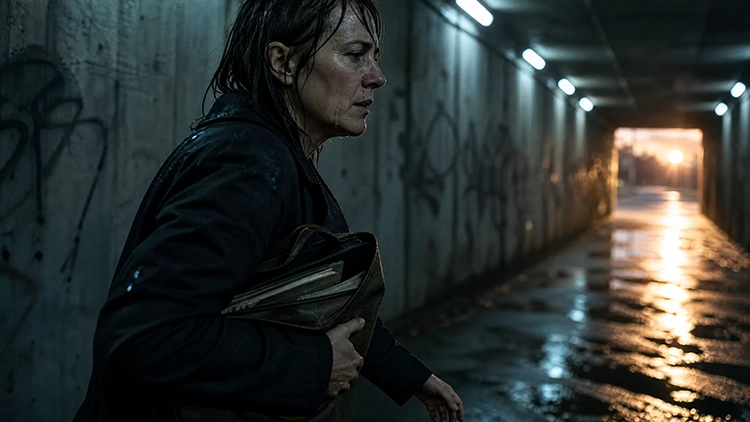
The Myth of Effortless Living: Why Life Feels Hard and Why That is Not a Mistake
There is a recurring whisper that visits almost everyone at some point: Why does everything have to be so difficult?
You look around at school, relationships, building a career, earning a living, or simply staying healthy, and the sheer volume of required effort feels overwhelming. It is completely natural to wonder if you are doing something wrong—if there is a hidden, effortless way to navigate existence that everyone else somehow figured out while you were looking away.
The quick, comforting answer would be to tell you that it is all just a matter of perspective, and that life becomes easy once you change your mindset.
But that would be a lie.
The reality is far more interesting: Life feels hard not because your perception is broken, but because living requires continuous action against the natural friction of the world. The moment you stop demanding that life should be easy, the weight of the struggle changes entirely.
The Chemistry of Action: Curiosity, Passion, and Execution
When a goal feels impossibly heavy, it is rarely because you lack talent or willpower. More often, it is because your internal engine is firing on missing cylinders.
Think of any meaningful pursuit—learning an instrument, leaving an unfulfilling job, or rebuilding a relationship—as a machine powered by three distinct elements:
                  ┌────────────────────────┐
│       CURIOSITY        │
│   (The Initial Spark)  │
└───────────┬────────────┘
│
▼
┌────────────────────────┐
│        PASSION         │
│   (The Sustained Fuel) │
└───────────┬────────────┘
│
▼
┌────────────────────────┐
│       EXECUTION        │
│  (The Physical Step)   │
└────────────────────────┘
- Curiosity: The spark that notices a possibility. Without curiosity, effort feels like a bland chore, and life grows painfully ordinary.
- Passion (Heves): The emotional fuel that absorbs the initial shock of difficulty. Without passion, the first minor obstacle convinces you to walk away.
- Execution: The physical step taken in the real world. Without action, even the most brilliant ideas remain trapped in the realm of comfortable fantasy.
When all three align, hard work doesn’t magically become effortless—it becomes engaging. The friction remains, but you no longer experience it as suffering.
Active Patience: The Art of Staying on the Track
Consider the story of Cambodian runner Bou Samnang at the 2023 Southeast Asian Games. During the 5,000-meter final, torrential rain soaked the track. As the leaders crossed the finish line, Samnang was nearly six minutes behind, running alone in a downpour that blinded her vision.
She had already lost the race. There was no medal waiting, no athletic record to break, and no applause from a packed stadium. Every logical instinct argued for stepping off the track.
[ Unfavorable Conditions ] ──► (The urge to quit) ──► [ Abandonment / Regret ]
│
▼
[ Choice: Honoring the Commitment ]
│
▼
[ Active Completion & Integrity ]
Yet she kept running, her face drenched in rain and tears, until her feet crossed the line.
Why does a moment like that go viral globally? Because deep down, we recognize that her victory had nothing to do with beating others and everything to do with Active Patience—the conscious decision to honor your effort even when the outcome offers no immediate reward.
Active Patience
Active patience is not passive waiting; it is the deliberate, ongoing choice to acquire skills, build resilience, and remain engaged with your goal while waiting for circumstances to align.
Re-Engineering “Failure”: The NBA Perspective
We live in a culture obsessed with binary outcomes: you either win or you fail. This creates an invisible, constant anxiety that makes every endeavor feel high-stakes and terrifying.
When the Milwaukee Bucks were unexpectedly eliminated from the NBA playoffs in 2023, a reporter asked superstar Giannis Antetokounmpo if he viewed the season as a failure. His response dismantled the premise entirely:
“Michael Jordan played 15 years, won 6 championships. Were the other 9 years a failure? … There is no failure in sports. There are good days, bad days. Some days you’re able to succeed, some days you’re not. That’s what sports is about. You don’t always win.”
          TRADITIONAL VIEW                      REALISTIC CYCLE
┌──────────────────────┐             ┌──────────────────────┐
│   Attempt ──► Success│             │  Attempt ──► Outcome │
└──────────┬───────────┘             └──────────┬───────────┘
│                                    │
▼                                    ▼
┌──────────────────────┐             ┌──────────────────────┐
│   Attempt ──► Failure│             │   Data ──► Adjustment│
└──────────────────────┘             └──────────────────────┘
When you adopt this perspective, a setback is no longer a verdict on your worth as a human being; it is simply information. It is the game asking you to rest, analyze what can be refined, and step back onto the court.
Moving Beyond the “Arrival” Trap
Imagine working late into the night on a project you care about. Your eyes are tired, your neck aches, and you still have hours of work left.
In that moment, if your mind is fixated on an imaginary future where you never have to work hard again, the present moment feels like punishment. But if you shift your focus to the craft itself—to the quiet satisfaction of solving one problem at a time—the discomfort transforms into quiet pride.
To break the cycle of feeling overwhelmed by life’s demands, apply this simple framework today:
The Re-Anchoring Practice
Identify one area in your life right now where you feel like giving up because progress feels too slow or painful.
Ask yourself two questions:
- “Am I upset because the task is hard, or because I expected it to be easy?”
- “What is the absolute smallest action I can take in the next 10 minutes to honor my effort, regardless of the result?”
Do that one small action, then give yourself permission to step away and rest.
The Undefeated Element: Hope
Life will test your resolve. It will ask you to wait when you want to run, to practice when you want to rest, and to rebuild when something you worked hard on falls apart.
You can survive exhaustion. You can recover from disappointment. You can analyze mistakes over a warm cup of tea and start again tomorrow. The only truly fatal mistake is letting go of hope—the foundational belief that your actions matter and that the struggle is forging something durable inside you.
The easy path doesn’t exist, but a deeply meaningful one does. Put on the teapot, clear your workspace, and take the next step.
What is one goal you are currently pursuing where shifting your focus from “winning” to simply “finishing” might change your entire experience?