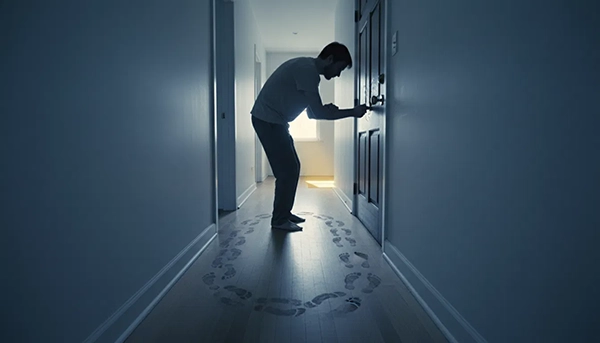
The Prison of Perfect Certainty
You have walked back to your front door three times in five minutes, your fingers pressing against the deadbolt to ensure it has caught, even though you watched it click shut the first time. Everyone knows the pop-culture caricature—the sitcom physicist who knocks on wood three times or insists on an exact seating arrangement. But beneath the televised eccentricities lies a deeply exhausting, private architecture of the mind.
We live with a baseline level of everyday anxiety that acts as a useful evolutionary alarm system. It keeps us from stepping into traffic or missing project deadlines. Yet when that alarm wiring shorts out, anxiety shifts from a functional warning light into an absolute tyrant.
We often treat obsessive-compulsive disorder as a mere behavioral quirk, but it is better understood as The Certainty Tax—an exorbitant, daily toll extracted by a brain that refuses to accept the inherent ambiguity of being alive.
Unlike general worry, which fixates on realistic, grounded pressures like bills or job security, OCD battles phantom apocalypses. The mind narrows its terror into six distinct trenches:
- Contamination: A paralyzing paranoia that microscopic grime carries physical or moral ruin.
- Loss of Control: A desperate, white-knuckled grip on autonomy, driven by the fear that loosening focus will lead to catastrophe.
- Taboo & Sexual Urges: The terrifying intrusion of unwanted, forbidden thoughts that feel entirely foreign to the person experiencing them.
- Religious Scrupulosity: An agonizing, rigid fixation on the boundary between absolute purity and transgression.
- Environmental Harm: The terror of inadvertently causing a fire, a flood, or a disaster simply through negligence.
- Perfectionism: The tyrannical demand that every detail must align flawlessly or the surrounding world will fracture.
For decades, cultural myths blamed bad parenting, weak character, or personal choices for these relentless loops. Science reveals a completely different reality: upbringing does not cause OCD. Instead, a vulnerable neurological baseline meets the spark of chronic stress or trauma, igniting a chemical fire that pure willpower cannot extinguish. You cannot reason your way out of a neuro-circuit loop with a stern internal lecture.
OCD is not an excess of caution; it is a desperate quest for absolute immunity in a world built on chance. When the brain mistakes a fleeting, unwanted thought for an imminent catastrophe, every ritual becomes a protective spell. Healing begins the moment we stop feeding the monster of certainty and learn to tolerate the quiet, terrifying discomfort of not knowing.
This is why traditional self-help advice routinely fails. True recovery requires specialized Cognitive Behavioral Therapy (CBT)—a systematic rewiring that trains the nervous system to sit with distress without performing the sacred rituals of appeasement.
Try This Today
When an old compulsion whispers at the edge of your routine—the urge to check, recount, or clean one more time—pause before you move. Do not fight the urge with logic; instead, name the physical tension in your chest, drop your shoulders, and take one full breath while standing completely still in the ambiguity.