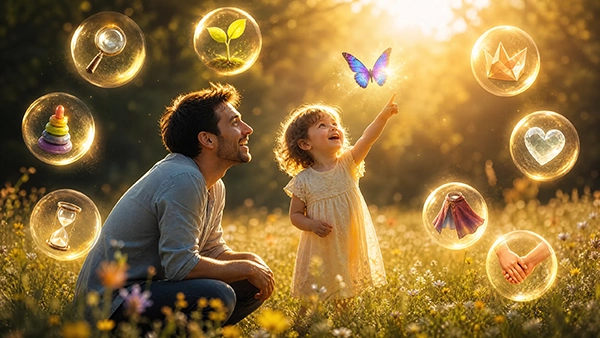
The Wisdom of the Playground: Well-Being Lessons We Can Learn From Children
It is abundantly clear that children possess a joy far eclipsing our own as adults. They run, play, laugh, savor the present moment, and gaze at every new day and every unfolding second with wide, curious eyes. In short, they live life deeply and fully. Yet, as we adults grow older, we slowly shed our childlike essence; we lock our perspectives into rigid frameworks and wall ourselves off from the wonders around us.
Even though we are supposed to be their guides—the ones steering their ships and teaching them the ways of the world—what if we stepped back and let children teach us this time? If we allowed ourselves to take inspiration from them, we could ignite profound and beautiful transformations within our own lives. Here are the essential well-being lessons we can learn from children:
1. Cultivating Boundless Curiosity and Excitement
One of the greatest gifts a child can offer us is a masterclass in re-enchantment—the art of marveling repeatedly at the beauty and joy of existence. Children are engines of endless curiosity. They wonder about everything, spark with excitement over the smallest discoveries, ask relentless questions, and constantly hunger to learn more. They never extinguish that innovation-seeking spirit burning inside them.
We adults, on the other hand, often forget what curiosity even feels like. We grow tired of exploring, abandon the habit of asking questions, and stop searching for fresh answers. The result? We lose our joy. But when we consciously rekindle that childhood spark of curiosity, we suddenly realize our lives are surrounded by thrilling moments—and we unlock the very motivation we need to chase our deepest dreams.
2. Fearlessness in the Face of the New
Have you ever witnessed a child paralyzed by the mere existence of something new? (Leaving aside actual danger, of course—we mean simply the unfamiliar and the different.) It is a rare sight indeed. Whenever something new enters their orbit, children bubble over with excitement. They take risks, they yearn to try, and they are driven by a burning wonder of what will happen next. Their internal drive to create and explore easily eclipses any fear.
As we grow older, however, the script flips. Fear takes over the steering wheel, and the new or different is swiftly exiled or viewed with suspicion. Yet, there is a profound truth in the old saying: “The true size of unopened wings remains unknown.” When we muster the courage to take risks, welcome differences, and dare to try something entirely untried, we open the door to magical, life-changing experiences and extraordinary achievements.
3. Anchoring in the Present: The Art of Mindfulness
Ah, mindfulness… How often do we lament our inability to truly quiet our minds and stay present? With our minds constantly tethered to past regrets or future anxieties, we adults desperately need to take a cue from children.
Children are absolute masters of living in the now. They experience every single moment with their whole being. The taste of a fruit, the scent of the earth, the sound of wind, the physical sensation of a texture—these details matter immensely to them. They direct their total, undivided attention to whatever is unfolding in the present. For them, only the “now” exists, and they are genuinely, powerfully there. Above all else, they actually succeed in enjoying the moment.
4. Reclaiming the Sanctuary of Play
Children play, they laugh, and they do so with complete disregard for what anyone else might think of them. They inhabit the present, relish tiny pleasures, and greet each dawning day with smiles and bubbling laughter.
Through play, they decode the world, mirror their inner landscapes, learn while they are having fun, and express their authentic selves. Playing is the most natural, intrinsic act of human existence. While simple games brought us ocean-sized happiness in our youth, the creeping emptiness we feel in adulthood is often simply the result of having completely forgotten how to play.
5. Unmuzzling Our Inner Artist
As Pablo Picasso famously declared: “Every child is an artist. The problem is how to remain an artist once he grows up.”
Creativity is an innate human trait possessed by everyone; it never truly vanishes—it simply buries itself deep beneath layers of conditioning. If you want to unearth your dormant creativity, watch how a child creates. They abandon themselves to imagination without being fenced in by rigid ideas of what is “possible” or “impossible,” and they create without a single shred of anxiety about what critics might say. Children do not follow a rulebook or standard operating procedure when they create; nor do they bend over backward to meet anyone else’s expectations.
6. Making Space for the Entire Emotional Spectrum
When children are happy, they laugh out loud; when they are sad, they weep without restraint; when they are angry, they express it fully. In short, they exteriorize every single emotion they feel without a drop of hesitation.
When an emotion arises within them, they let it flow freely: they scream into the air, cry until their tears are entirely spent, and the moment that wave passes, they transition instantly. A child who was sobbing uncontrollably just two minutes ago can be found belly-laughing a few moments later.
In the adult world, however, we are taught to police, force, suppress, deny, and sanitize our emotions into “socially acceptable” packages—and these psychological acrobatics inflict deep harm. The antidote is simple: give ourselves permission to feel our emotions fully, without hiding or burying them. This raw acceptance is the only healthy path to emotional release, and it is the highest form of self-compassion and self-acceptance.
7. The Unbreakable Will: Never Giving Up
Have you ever seen a baby attempt to take their first steps, fall flat on their face, and decide, “Well, I guess I’m just a professional crawler for the rest of my life”? Have you ever seen a child refuse to ever step foot in a park again simply because they weren’t tall enough to reach the swings on their first try?
Of course not. While we adults surrender to defeat at the slightest hint of friction, children keep pushing forward relentlessly until they get what they want. That is how they master walking, running, jumping, and every foundational life skill we take for granted. By drawing inspiration from their fierce resilience, we can tap into that hidden reservoir of childhood grit inside us just when we feel closest to giving up.
8. Moving with Unapologetic Freedom
We all intellectually recognize the profound mental health benefits of moving our bodies, yet exercise often masquerades as a punitive chore or a rigid obligation in our adult lives. The mere mention of sports, fitness, or workout routines can instantly fill us with dread and performance anxiety.
Yet, when we look at children, we see pure, unadulterated movement. They move simply for the joy of moving, without a single care in the world. They don’t waste energy overthinking the “correct” or “incorrect” way to move, nor do they care about anyone else’s judgment. We, too, can move like children—freely, authentically, and exactly how our bodies prompt us to, stripping away all self-consciousness.
Children—in their perpetual radiance, purity, and authenticity—serve as powerful mirrors reflecting our truest inner states and the sacred parts of ourselves we long to reconnect with. They remind us of a vital presence that never truly abandons us.
By stepping into the shoes of a child, or simply re-establishing a tender, loving connection with our own inner child, we can experiment fearlessly, unleash our creative spirits, approach life and people with genuine wonder, and gaze at the world with completely fresh eyes. The childlike miracle is still alive inside you, regardless of your age. It is simply a matter of opening your arms to embrace it. When we finally mend our relationship with our inner child, we unlock the doors to deep healing and true, lasting happiness. Let the children lead the way.