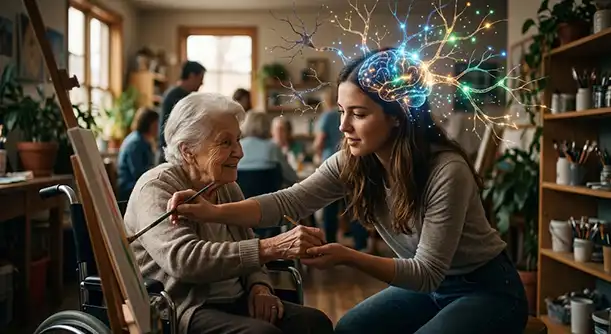
The Unexpected Cure: How Helping Others Heals You
She had been depressed for months. Not the kind of depression that keeps you in bed all day, but the kind that hollows you out from the inside. She went to work. She smiled at colleagues. She cooked dinner. But everything felt gray. The things she used to love—reading, hiking, spending time with friends—felt like obligations. She had tried therapy. She had tried medication. Neither had worked as well as she hoped. Then, almost by accident, she started volunteering at a local animal shelter. Two hours a week. Nothing dramatic. Just feeding cats and cleaning cages. Within a month, something shifted. Not a cure. Not a miracle. But a lightening. A sense that she was part of something beyond her own suffering.
That experience is not unique. It is part of a growing body of research suggesting that one of the most effective ways to heal yourself is to help someone else. The idea sounds almost too simple to be true. But the evidence is mounting. Acts of kindness, gratitude, and optimism do not just make you a better person. They change your brain chemistry. They interrupt the cycle of rumination. They reconnect you to the world when depression has convinced you that you are alone.
Before we go further, a brief but important note: this article explores the relationship between altruism, mood, and mental health from a general, educational perspective. It is not a substitute for professional mental health care. If you are experiencing persistent depression, anxiety, or thoughts of self-harm, please consult a qualified mental health professional. Only a trained specialist can provide the individualized care and diagnosis that serious concerns require.
The Science Behind Kindness
Researchers at the University of California have been studying this phenomenon for years. Their work suggests that positive behaviors—helping others, expressing gratitude, practicing optimism—have a measurable therapeutic effect on people with depression. The effect is not just psychological; it is biological.
When you do something kind for someone else, your brain releases oxytocin, often called the “love hormone.” It also releases dopamine, the neurotransmitter associated with reward and pleasure. These chemicals do not just make you feel good in the moment; they counteract the neurochemical imbalances that contribute to depression. The brain, in effect, rewards you for being generous.
This is what I call altruistic activation—the process by which helping others triggers a cascade of neurochemical events that improve mood and reduce symptoms of depression. It is not a replacement for therapy or medication. But it is a powerful complement. And it is available to anyone, regardless of income, education, or circumstance.
The research also highlights the role of gratitude. When you focus on what you have rather than what you lack, you shift your attention away from the negative thought loops that characterize depression. Gratitude does not deny hardship; it simply reminds you that hardship is not the whole story. There is also beauty, connection, and hope.
Why Depression Makes You Turn Inward
Depression is a condition that turns you inward. It makes you focus on your own pain, your own failures, your own inadequacies. It convinces you that you are a burden, that no one cares, that nothing will ever change. This inward focus is not a character flaw; it is a symptom. The brain, under the influence of depression, becomes hyper-aware of threat and hypo-aware of reward. It sees danger everywhere and pleasure nowhere.
This is why helping others can be so transformative. It interrupts the inward spiral. It forces you to look outward, to engage with someone else’s reality. And in doing so, it reminds you that you are not the only person who suffers. It reminds you that you have something to offer. It reminds you that you are capable of making a difference.
Psychologist Martin Seligman, the founder of positive psychology, has written extensively about this. He argues that meaning and purpose are essential components of well-being, and that one of the most reliable ways to find meaning is to contribute to something larger than yourself. Depression thrives on isolation and self-absorption. Connection and contribution are its antidotes.
Research on altruism supports this. A study published in the Journal of Health Psychology found that people who volunteered regularly reported lower levels of depression and higher levels of life satisfaction. The effect was not simply due to social contact; it was specifically linked to the act of giving. The givers benefited more than the receivers.
What Happens When You Help Someone Else
The mechanism is not mysterious. When you help someone, several things happen at once.
First, you shift your attention outward. Instead of dwelling on your own problems, you focus on someone else’s needs. This shift is not an escape; it is a reprieve. It gives your mind a break from the rumination that feeds depression.
Second, you experience a sense of competence. You realize that you have something valuable to offer. This directly challenges the feelings of worthlessness that often accompany depression.
Third, you experience connection. Helping someone else creates a bond, even if it is brief. You are no longer alone in your experience. You are part of a web of relationships, however small.
Fourth, you experience meaning. You are doing something that matters, however small. This sense of purpose is one of the strongest protective factors against depression.
These effects are well-documented, but they are not a substitute for professional treatment. If you are struggling with depression, please reach out to a licensed therapist, counselor, or physician. They can help you develop a comprehensive plan that may include therapy, medication, lifestyle changes, and yes, acts of service. Self-help strategies are valuable, but they are not a replacement for expert care.
The Ten-Minute Practice
The research suggests that you do not need to make dramatic changes to experience the benefits. Ten minutes a day of intentional kindness can be enough to produce measurable improvements in mood over time. That could mean sending a supportive text to a friend. It could mean holding the door for a stranger. It could mean writing a thank-you note. It could mean listening without interrupting.
The key is consistency. One act of kindness is nice. A habit of kindness is transformative. The brain responds to repetition. The more you practice, the more natural it becomes. The more natural it becomes, the more it shapes your identity. You stop thinking of yourself as a depressed person and start thinking of yourself as a helpful person, a kind person, a person who contributes.
This is not about denying your pain. It is about refusing to let your pain define you. It is about recognizing that you are more than your symptoms. You are a person with agency, with value, with something to give.
Gratitude and Optimism as Skills
Kindness is not the only tool. Gratitude and optimism are also powerful. But they are often misunderstood. Gratitude is not about pretending everything is fine. It is about noticing what is good, even when things are hard. It is about acknowledging that not everything is broken. Optimism is not about ignoring problems. It is about believing that problems can be solved, that effort matters, that the future is not fixed.
Both gratitude and optimism can be practiced. You can keep a gratitude journal. You can write down three things that went well each day. You can challenge negative predictions by asking yourself what evidence supports them and what evidence contradicts them. These are cognitive skills, and like any skill, they improve with practice.
Research on gratitude interventions has shown consistent benefits for mood and well-being. A study by Robert Emmons and Michael McCullough found that participants who wrote down things they were grateful for each week reported higher levels of optimism, better sleep, and greater satisfaction with life. The effects were not huge, but they were reliable. And they accumulated over time.
The Global Picture
Depression is not a niche problem. The World Health Organization estimates that more than 300 million people worldwide live with depression. In the United States alone, more than 16 million adults experience a major depressive episode each year. And the majority of them do not receive adequate treatment. Some cannot afford it. Some cannot access it. Some do not believe it will help.
This is why self-help strategies matter. They are not a replacement for professional care, but they are accessible. They are free. They can be practiced by anyone, anywhere, at any time. And they can make a real difference, especially when combined with other forms of support.
The research from the University of California is part of a larger movement in psychology toward understanding what makes life worth living, not just what makes it painful. This movement does not deny the reality of mental illness. It simply insists that there is more to recovery than symptom reduction. There is also growth, connection, meaning, and purpose.
The Trap of Waiting to Feel Better
One of the cruelest aspects of depression is that it convinces you to wait. Wait until you feel better to see friends. Wait until you have more energy to exercise. Wait until you are less sad to help someone else. This logic feels reasonable, but it is a trap. It keeps you stuck. It keeps you isolated. It keeps you passive.
The counterintuitive truth is that action comes before motivation, not after. You do not wait to feel better to help someone. You help someone, and then you feel better. You do not wait to feel grateful. You practice gratitude, and then you notice the good. The order matters. Waiting is the enemy.
This is not to say that you can simply will yourself out of depression. That is a myth, and a harmful one. Depression is a real illness, and it requires real treatment. But treatment works best when it is combined with action. When you take small steps toward connection, toward contribution, toward meaning, you create the conditions for recovery.
A Story of Two Therapists
There is a story about two therapists who worked with depressed patients. The first therapist focused entirely on the patient’s symptoms. They explored childhood trauma. They analyzed negative thought patterns. They prescribed medication. The second therapist did all of that too. But she also asked her patients a different question: “Who can you help this week?”
The first therapist’s patients improved. The second therapist’s patients improved more. And they were less likely to relapse. The difference was not the therapy. It was the addition of purpose. It was the reminder that even in the midst of suffering, you have something to give.
This is not a dismissal of traditional therapy. It is an expansion. It is a recognition that healing is not just about looking inward. It is also about looking outward. It is about finding meaning in the midst of pain. It is about remembering that you are part of something larger than yourself.
The Kindness That Costs Nothing
You do not need money to be kind. You do not need time you do not have. You do not need to be a saint. You just need to be willing. Willing to send a message. Willing to listen. Willing to offer a smile to a stranger. Willing to give someone the benefit of the doubt. Willing to be gentle, when the world is harsh.
These small acts do not cure depression. But they do something else. They remind you that you are still here. They remind you that you still matter. They remind you that even in the darkest moments, you have the capacity to make someone else’s day a little brighter. And that capacity is a lifeline.
So if you are struggling, try this. Just once. Do something kind for someone else. Not because you have to. Not because you should. But because it is one small thing you can control. And then notice what happens. Notice the flicker of warmth. Notice the momentary relief. Notice the sense that you are not entirely alone. That flicker is not a cure. But it is a beginning. And beginnings are where healing starts.