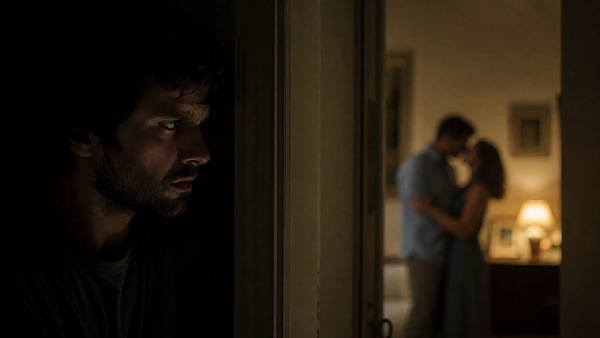
The Edge of Jealousy: Understanding the Othello Syndrome
When Shakespeare wrote Othello in the early 1600s, he laid bare a specific flavor of human madness that had very little to do with fantasy. It was born entirely inside a man’s head.
Othello loves his wife, Desdemona, deeply. Yet Iago plants a tiny, calculated seed of doubt in his mind—not with a grand betrayal caught red-handed, but with a missing strawberry-patterned handkerchief. A small piece of linen goes missing, and Othello spins an entire universe of betrayal out of thin air. Before reason can re-enter the room, lives are destroyed, revealing how quickly unchecked suspicion turns into self-destruction.
While we often view classic tragedy from a comfortable distance, English psychiatrists J. Todd and K. Dewhurst recognized in the 1950s that Shakespeare had accurately mapped a severe psychiatric condition. They named it Othello Syndrome—a state of delusional jealousy where ordinary human insecurity crosses a dark border into psychosis.
When the Internal Alarm Gets Stuck
Almost everyone has felt the cold sting of jealousy at some point. Maybe it was a sudden flutter of unease when a phone lit up late at night, or a brief surge of anxiety watching someone move on. In modest doses, jealousy is simply a protective alarm—a messy sign that we value a connection and fear losing it.
When Othello Syndrome takes root, however, that alarm gets welded in the “ON” position.
The most challenging aspect of delusional jealousy is how it hijacks the brain’s reasoning machinery. A person experiencing this syndrome doesn’t just feel suspicious; they become an obsessive detective hunting for evidence to prove a crime that never happened.
- A brief, polite glance at a barista becomes secret flirting.
- A three-minute delay in returning a text is treated as an alibi.
- A misplaced set of house keys becomes proof of a hidden visitor.
Every random occurrence gets woven into a single narrative. Denying the accusation is viewed as lying; staying silent is taken as a confession. The logic folds in on itself until reality cannot find a way inside.
The Erosion of Trust
You see this theme echoing across literature—from Guy de Maupassant’s quiet psychological stories to Namık Kemal’s İntibah. Writers return to it repeatedly because pathologized jealousy reveals how fragile trust becomes when fear takes complete control of our perception.
Living with this level of unshakeable paranoia, or trying to support a partner trapped inside it, gradually strips away the foundation of a relationship. It serves as a stark reminder of the difference between the natural, fleeting insecurities of being human and the consuming patterns that break our peace of mind.