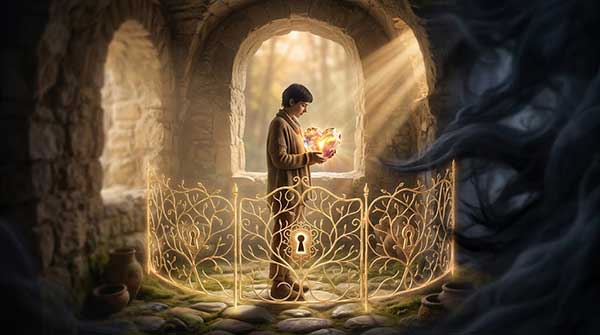
When Does the Heart Finally Open and Who Is Allowed Inside
The front door of my first apartment in Boston had three locks. Not because the neighborhood was dangerous. Because I was. I had spent years letting people in too quickly — friends who borrowed money and disappeared, partners who treated my kindness like a lobby they could walk through with their shoes on, colleagues who mistook my openness for permission to dump their baggage in my living room. So I installed locks. I stopped answering the door. I told myself it was protection. It was actually a slow, quiet grief.
The source text begins with a moment I recognized instantly: someone choosing, for the first time, to open a door that has always been closed. Not because they were finally ready to let everyone in. Because they were finally ready to be the host instead of the hallway. There is a difference between being empty and being available. I did not know that difference for a long time.
The deepest human dilemma here is not about who deserves to enter your heart. It is about whether you have ever truly inhabited your own heart enough to know what you are inviting someone into. Most of us do not open our doors. We leave them unlocked and wonder why the house feels violated.
Why the Door Stays Closed Even When We Want It Open
The text says something that rearranged my thinking: the heart keeps its door locked because it knows. Not because it is broken. Not because it is afraid. Because it is wise. The locked door was never a rejection of others. It was a recognition that the self was not ready to host.
I thought about the friends I had lost because I was too guarded. The invitations I declined because I did not trust myself to be seen. I had framed it as social anxiety, as introversion, as “not being good with people.” The text offered a different frame: the house was not ready. The rooms were not clean. The host did not yet know how to hold space without collapsing.
There is a particular kind of person we all know. They enter every space like they own it. They are charming, immediate, warm. And then they leave, and you realize you feel emptier than before. The text calls this out with a sharpness I admire: you do not hand the deed of your house to every person who walks through the door. You do not abandon your own home just because a guest arrived. The door opens when the host is ready to remain in the house, not when the guest is ready to enter.
I spent my twenties giving away the deed. Every relationship became a relocation. I left my body, my values, my quiet preferences, and moved into the other person’s life. Then I wondered why I felt homeless. The door was not the problem. I was. I had never actually lived in my own heart. I had only ever camped in other people’s.
What the Door Requires Before It Opens
The text is unflinching about this: the heart’s door opens to those who arrive with their shoes off. Not literally. But something like that. The ones who come with respect. With patience. With a willingness to wait outside without knocking louder. The ones who do not demand entry but remain present at the threshold.
I had a friend in Seattle who taught me this without saying a word. She was quiet in a way that felt like a room with good light. She never pushed. She never asked the questions people ask when they want to extract something from you. She just showed up, consistently, without needing to be entertained. Over time, I noticed I was telling her things I had never told anyone. Not because she asked. Because she waited.
The text says the door opens to those who know how to walk barefoot. That is the image that stayed with me. Barefoot is vulnerable. Barefoot is humble. Barefoot is the opposite of performance. You cannot enter a sacred space with the outside world still clinging to your soles. The adab — the etiquette — is not about rules. It is about shedding what you brought with you so that you can actually be present.
I think about all the conversations I have ruined by bringing my shoes inside. The defensiveness. The need to be right. The rehearsed stories. The polished self. The text says that when someone arrives with empty words and hollow sincerity, the door simply does not open. Not as a punishment. As a filter. The heart is not a public park. It is a dervish lodge. There is a training that happens at the threshold.
The Long Wait Before the Door Moves
The text describes someone standing outside like a dervish at a temple gate, shoes worn down by waiting, not knowing if they will be called inside or turned away until the next season. I have been that person. Waiting for someone to let me in. Waiting for my own heart to let me in. The waiting is not passive. It is a form of devotion.
There is a kind of impatience that masquerades as passion. It wants everything now. It wants the door to swing open on the first knock. But the heart does not work that way. The text says the one who perseveres, who waits with a kind of pure restlessness, is the one for whom the door opens quietly, almost without sound. Not with a bang. With a sigh.
I have started to notice the difference between waiting and demanding. Demanding has a clenched fist. Waiting has an open palm. The clenched fist knocks and knocks. The open palm simply remains. The door knows the difference. It always has.
What It Means to Be the Host of Your Own Heart
The text says something I have never heard anyone say: the heart opens to its own owner only when the owner learns respect. Not love. Respect. The kind of respect that says, “I will not treat this space casually.” The kind of respect that keeps the house clean, that does not invite in every passing stranger, that does not abandon the rooms when a guest arrives.
I have been the child who gave away the deed. I have been the teenager who left with every departing guest. I am learning, slowly, to be the adult who stays. Who says, “This is my house. I am not leaving. You are welcome here, but you do not own this.”
The text describes a house that keeps expanding. You think you have three rooms. Then five. Then eight. Each new room changes how you see the others. You become the interior architect of your own life. You start to arrange things not for the approval of guests, but for the integrity of the space. That is the shift. From waiting to be chosen to choosing. From being entered to entering yourself.
I have been practicing this in small ways. I have started saying no to invitations that feel like obligations. I have started sitting alone in my apartment without reaching for my phone. I have started noticing which people make me feel more myself and which people make me feel like a performance of myself. The noticing is the beginning of hosting.
What Changes When the Door Finally Opens
The text ends with a scene of quiet arrival. Shoes that once pointed outward now point inward. The door opens not onto a void but onto the scent of musk and rose. The one who enters does so with a bow, a hand on the chest, a quiet step. And then — this is the part I keep returning to — the host turns some shoes toward the exit.
Not everyone gets to stay. That is not cruelty. That is clarity. The door opens with love, but it also closes with love. The host who knows their own home knows who belongs in it. Not everyone who knocked was meant to enter. Not everyone who entered was meant to stay. The discernment is the point. The heart is not a storage unit. It is a living space.
I used to think boundaries were walls. I am learning that they are doors. A wall has no opening. A door has a threshold. You can stand at the threshold, bow, and decide. You can invite. You can wait. You can, when necessary, turn the shoes toward the outside and let someone go. Not with anger. With love. With the quiet confidence of someone who knows the house will still be standing when the guest is gone.
A Question to Sit With
Here is something to ask yourself tonight, not as a task but as a doorway: Who have you let into your heart without asking them to take off their shoes? And who have you kept waiting outside, not because they were unworthy, but because you were afraid to be seen without your armor? Do not try to answer. Just hold the questions. Let them sit in the house with you. They are guests too. And they have arrived barefoot.
What Readers Usually Ask
How do I know if someone is worthy of entering my heart?
Watch how they treat the threshold. Do they rush in? Do they demand? Do they notice the space and treat it with care? The worthy guest is not the one who arrives with the most charm. It is the one who arrives with the most attention. The way someone enters a room tells you everything about how they will treat the house.
Is it wrong to keep people out?
No. Keeping people out is not the same as building walls. A wall is fear. A locked door with a clear threshold is self-respect. The text is explicit: the heart opens when the host is ready, not when the guest demands. You are allowed to wait. You are allowed to be selective. That is not selfishness. That is stewardship.
What if I have already let too many wrong people in?
The door can close. The house can be cleaned. The rooms can be rearranged. You are not permanently stained by the guests who trampled through. You are the host. You can open the windows, air out the rooms, and start again. The heart is not ruined by bad visitors. It is just overdue for a deep cleaning.