How to Stop Living for Other People and Come Back to Yourself
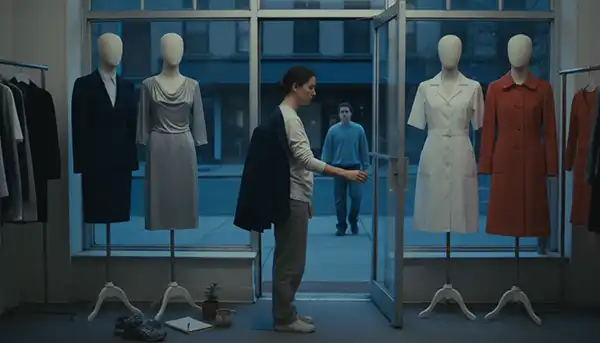
The moment I caught myself performing my own life was on a Saturday afternoon in a boutique in Austin, Texas. I was standing in front of a mirror, holding a blouse I did not particularly like, trying to decide whether it looked like the kind of thing a certain kind of person would wear. Not me. The person I had been trying to become for years.
I was thirty-five, working in marketing, and surrounded by people who seemed to know exactly who they were. They had the right clothes, the right opinions, the right weekend plans. I had spent a decade studying them, mimicking them, curating a version of myself that would fit in. And standing there with that blouse, I had a sudden, sickening realization: I had no idea what I would wear if no one were watching.
Not because I had no preferences. Because I had buried my preferences so deep, under so many layers of should and what will they think, that I could no longer hear them.
That was the beginning of a long, unglamorous return. Not to some perfect, authentic self I had lost. To a self I had never fully allowed to exist.
The Performance We Learn Early
We are not born performing. We learn it. We learn it when a parent praises us for being “good” and frowns when we are “difficult.” We learn it when a teacher rewards the quiet student and sighs at the loud one. We learn it when a friend laughs at our shoes and we never wear them again.
The psychologist Carl Rogers, one of the founders of humanistic psychology, believed that we all have a fundamental need for positive regard. When that regard is conditional—when we are loved only for being a certain way—we learn to hide the parts of ourselves that do not fit. We build what Rogers called a “false self,” a version of ourselves designed to earn the love and approval we are afraid of losing.
I built that false self carefully. I was the agreeable one. The helpful one. The one who never caused trouble. It worked. I was liked. I was included. I was successful by every measure that mattered to the people around me.
But the false self is expensive. It requires constant maintenance. And it has a way of erasing the person underneath.
The researcher and author Brené Brown, at the University of Houston, has spent her career studying this. She calls it the difference between fitting in and belonging. Fitting in is what you do when you shape yourself to be accepted. Belonging is what happens when you are accepted as you are. Most of us, she argues, spend our lives chasing the first and starving for the second.
I was starving. I just did not know what I was starving for.
What It Costs to Live for Approval
The cost of living for other people is not always dramatic. It is not a single, catastrophic loss. It is a slow, quiet erosion. It happens in the small choices: the yes that should have been a no, the laugh that was not genuine, the opinion you swallowed because it might make someone uncomfortable.
The author and psychologist Susan David, at Harvard Medical School, calls this “people-pleasing,” and she argues that it is not kindness. It is a form of self-abandonment. When you consistently prioritize other people’s comfort over your own truth, you are not being generous. You are disappearing.
I have felt that disappearance. The exhaustion of it. The way it shows up as resentment, as a low-grade irritability that you cannot explain. The way it creeps into your relationships, making you feel distant even when you are close. The way it hollows out your days, so that even the good moments feel a little flat.
There is a question that kept coming back to me during those years: Whose life is this? I would ask it late at night, or in the car, or in the middle of a conversation I did not want to be having. And I never had an answer. Because the life I was living had been assembled from other people’s expectations, and I had been too afraid to ask what I actually wanted.
The existential psychiatrist Irvin Yalom writes about this as a form of responsibility. We are the authors of our own lives, he argues, whether we acknowledge it or not. The refusal to choose is itself a choice. The life lived for others is still a life you have chosen, even if you chose it by default.
That was a hard truth to face. It was easier to believe I was trapped by circumstances—the job, the relationship, the expectations—than to admit that I had been making choices, every day, that were slowly erasing me.
How to Know When You Are Performing
The signs are not always obvious. They are quiet, subtle, easy to ignore.
You start to notice that you feel different around different people, and not in a good way. Not the natural adjustment we all make depending on context, but a deeper dissonance. You are one person with your boss, another with your partner, another with your friends. And you are not sure which one, if any, is actually you.
You start to feel tired in a way that sleep does not fix. Not physical exhaustion. The deeper exhaustion of holding up a performance. The effort of monitoring yourself, filtering yourself, managing other people’s impressions of you.
You start to lose touch with your own preferences. Someone asks what you want for dinner, and you genuinely do not know. Not because you do not care. Because you have been deferring to others for so long that your own wanting has gone quiet.
You start to feel a vague resentment. You cannot name it, but it is there, under the surface. It comes out in small ways—a sharp comment, a sudden withdrawal, a feeling of being unseen even when you are surrounded by people.
These are not signs that you are broken. They are signs that you are living out of alignment. The self you have been performing is not the self you are. And the gap between them is where the pain lives.
The Return to Yourself
The return is not a single moment. It is not a dramatic break. It is a slow, unglamorous process of listening for the small, quiet voice that has been saying this and not this all along.
The teacher and author Tara Brach calls this “the sacred pause.” It is the moment when you stop the automatic performance and check in with yourself. What is true right now? What do I actually want? What am I actually feeling? Not the polite answers. The real ones.
The first few times I tried this, I came up empty. The voice was there, but it was so quiet, so unpracticed, that I could barely hear it. I had been ignoring it for years. It had learned not to speak.
But I kept asking. Not as an interrogation. As an invitation. And slowly, the voice began to trust me. It told me things I did not want to hear. That I did not like the job. That I was afraid of being alone. That I had chosen a life based on what would impress other people, and it was not working.
The writer and teacher Pema Chödrön, in her work on Buddhist psychology, writes about the importance of staying with the discomfort of not knowing. The urge to escape—into the scroll, into the drink, into the performance—is strong. But the healing is in the staying. It is in the willingness to be with yourself, exactly as you are, without reaching for a distraction.
I started small. A minute here, a minute there. In the car before work. In the kitchen while the coffee brewed. I would pause and ask: Is this what I want? And if the answer was no, I did not immediately change anything. I just noticed. The noticing was the practice.
The Risk of Being Seen
The hardest part of this work is not the internal noticing. It is the external showing up. It is letting other people see the real you—the one with preferences and opinions and needs—and trusting that they will not leave.
This is the terrifying part. Because the false self exists for a reason. It exists because the real self was, at some point, rejected. Maybe not dramatically. Maybe just a small, subtle signal that being yourself was not safe. But the lesson stuck. And the false self has been protecting you ever since.
The risk of being seen is that you might be judged. You might be disapproved of. You might discover that some of the people in your life only loved the performance.
But there is another risk, and it is worse: the risk of never being seen at all. Of living an entire life behind a mask, surrounded by people who think they know you, and knowing, in the quiet moments, that they do not.
I took the risk slowly. I started saying the true thing instead of the pleasant thing. I started wearing the clothes I actually liked. I started admitting, out loud, when I did not know something or did not agree with something. The first few times, I was terrified. I waited for the rejection.
It did not come. Some people were surprised. Some were uncomfortable. But most of them, it turned out, were relieved. They had been performing too. And when I stopped, it gave them permission to stop as well.
That was the unexpected gift of authenticity. It is contagious. Not in a dramatic way. In a quiet way. When you let yourself be seen, you give other people permission to do the same.
A Different Kind of Life
I am not going to pretend I have fully arrived. I still catch myself performing. I still defer when I should speak. I still catch myself wondering what someone else will think before I wonder what I actually want.
But the gap is smaller now. The voice is louder. And the life I am living feels more like mine.
The other morning, I stood in front of my closet and picked out a shirt I liked. Not because it was fashionable. Because I liked it. And I left the house feeling a little more real.
It was a small thing. But the small things are the whole thing.
The life you are meant to live is not somewhere else. It is not waiting for you to become someone better. It is right here, underneath the performance, waiting for you to notice it.
The question is not How do I become more authentic? The question is What am I pretending not to know?
The answer is already there. It has always been there. And it is not as scary as the pretending makes it seem.
It is just you. The real you. The one who has been waiting, patiently, for permission to exist.
So give it. Not all at once. Not perfectly. Just a little, today, in the next small choice.
The choosing is the practice. The practice is the return. And the return, it turns out, is the only thing that ever felt like home.